In short: In winter the Canary Islands see around 21 °C during the day, and the most reliably sunny places are the south coasts of Tenerife and Gran Canaria. The biggest hurdle is accommodation: rents are high, and because of a new law the supply of holiday apartments will not grow for now. If you spend more than 183 days in a calendar year in Spain, you become tax resident there.
At a glance
- Weather: in January around 21 °C during the day, around 15 °C at night (AEMET, 1981 to 2010)
- Rent levels: 12.7 to 21.3 € per square metre depending on the location (Idealista, September 2026)
- Deposit for a seasonal rental: two months’ rent
- Tax: resident in Spain once you spend more than 183 days there in a calendar year
What is the weather really like in winter?
Mild, but not high summer. At the AEMET stations in Santa Cruz de Tenerife and at Gran Canaria Airport, the average daily maximum in January is 21.0 and 20.8 °C, with a minimum of around 15 °C (reference period 1981 to 2010). December and January are the wettest months, with an average of four to five rainy days in Santa Cruz.
Very few apartments have heating, and indoors it gets cool in the evening. Ask about a heater before you book. All the monthly figures are in the article Canary Islands weather.
Which places are suitable for several months?
For several months, different things count than on holiday: a supermarket and a doctor within walking distance, level paths, bus connections and a town that is still alive in January.
- Tenerife North, Puerto de la Cruz: a historic town with a promenade, markets and everyday Canarian life. Milder, but more often cloudy.
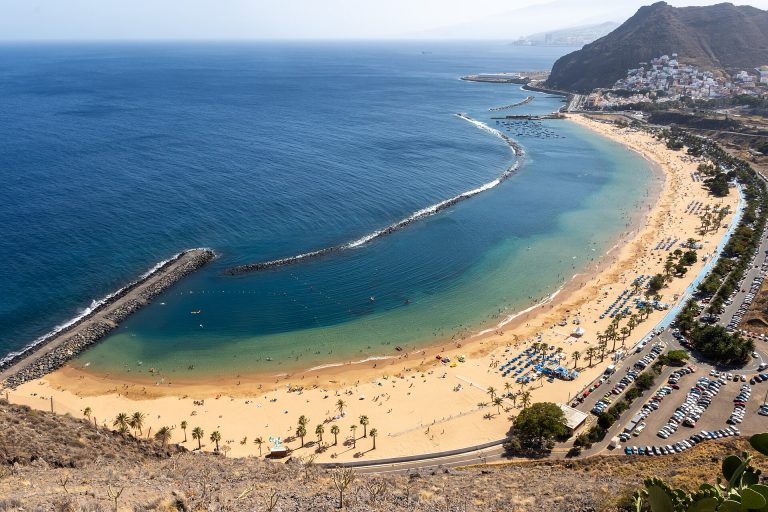
- Tenerife South, Los Cristianos and Costa Adeje: the most sun, lots of apartments, flat promenades. The comparison is under North or South Tenerife.
- Gran Canaria, Las Palmas: a big city with the Las Canteras city beach, hospitals and culture.
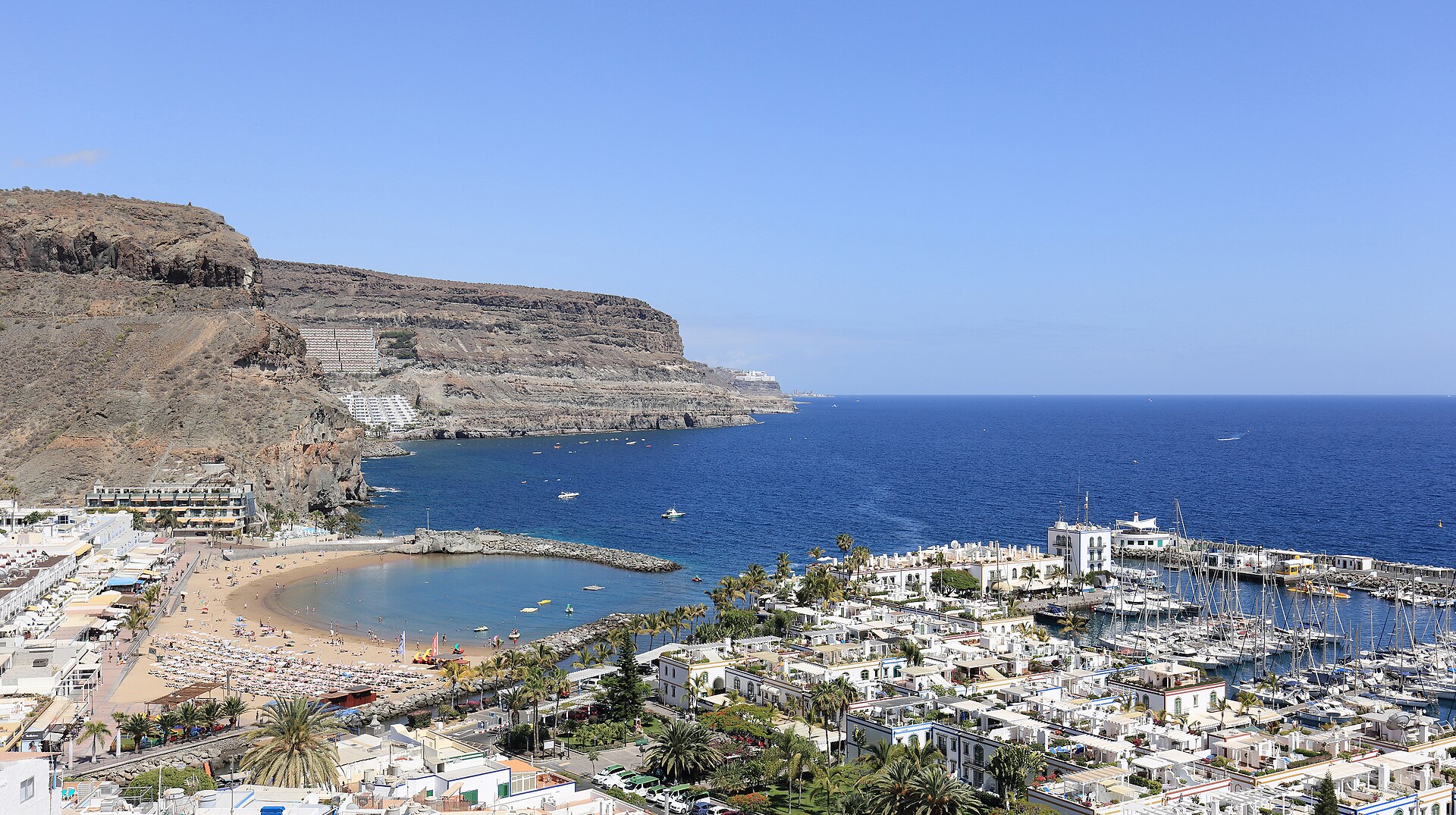
- Gran Canaria South, Maspalomas, Playa del Inglés, Puerto de Mogán: sunny and warm, very touristy and correspondingly expensive.
- Lanzarote and Fuerteventura: dry, windy, quiet.
How much does rent cost?
There are no official statistics for temporary winter rentals. The best point of reference is the Idealista rental price report. It shows asking prices from listings for regular rental apartments, as of September 2026. The third column is our own projection for 70 square metres. Small apartments are usually more expensive per square metre, and so are furnished seasonal apartments.
| Location | € per m² per month | 70 m² (calculated) |
|---|---|---|
| La Laguna (Tenerife) | 12.7 | 889 € |
| Las Palmas de Gran Canaria | 14.6 | 1,022 € |
| Puerto de la Cruz (Tenerife) | 16.5 | 1,155 € |
| Arona including Los Cristianos (Tenerife) | 18.9 | 1,323 € |
| Adeje (Tenerife) | 19.0 | 1,330 € |
| San Bartolomé de Tirajana including Maspalomas (Gran Canaria) | 21.1 | 1,477 € |
| Mogán (Gran Canaria) | 21.3 | 1,491 € |
The Canary Islands average was 15.2 € per square metre, 4.3 percent above the previous year. You can work out what everyday life costs otherwise in the article Cost of living in Spain.
How do you find an apartment for the winter?
There are two ways: a holiday apartment via a booking platform, often with a monthly discount, or a seasonal rental contract (alquiler de temporada) directly with the landlord. The second option is usually cheaper but requires more groundwork.
- Start looking early. Good apartments for November to March are taken months in advance.
- Never transfer money before you or someone you trust has seen the apartment.
- A written contract with the period, rent, utilities and an inventory list.
- Deposit: for seasonal contracts, according to the Canary Islands government, it is two months’ rent. In the Canary Islands the landlord must lodge it with the regional government’s housing institute.
According to media reports, short-term rentals have needed a registration number in the listing since 1 July 2025. Platforms, contract types and pitfalls are explained in the guide Finding an apartment in Spain.
The new holiday rental law
On 12 November 2025 the Canary Islands parliament passed a law that reorganises the tourist rental of homes (Ley 6/2025). The key points according to the regional government:
- 90 percent of residential buildings must be reserved for permanent housing, and no more than 10 percent may be holiday apartments. On El Hierro, La Gomera and La Palma the ratio is 80 to 20.
- New buildings may only be rented to tourists after ten years.
- The municipalities decide where and how many holiday apartments are allowed. Until then, a five-year moratorium on new licences applies.
For you this means: supply will not grow for now. Book early.
The 183-day rule: when do you become liable for tax in Spain?
According to the tax authority, the Agencia Tributaria, anyone who spends more than 183 days in a calendar year in Spain is tax resident there. Three details matter for people wintering there:
- It is the calendar year that counts. A winter from November to March is spread over two years. What matters is the total of all days in Spain from January to December, including a second stay in autumn or a summer holiday in Andalusia.
- Short absences count too. A flight home over Christmas does not automatically interrupt the count, as long as you do not prove your tax residence in another country.
- Days are not the only criterion. You are also resident if the core of your economic interests is in Spain. If your spouse and minor children live in Spain, residence is presumed.
Spain does not have a split tax year: you are either resident for the whole year or not at all. If you become resident, you pay tax on your worldwide income in Spain, softened by the double taxation agreements with Germany and Austria. So keep a simple calendar of your entry and exit dates and hold on to your boarding passes. The details are in the guide Taxes in Spain. If you want to move for good, start with Where in Spain should you move to?
Health insurance for a long stay
The European Health Insurance Card covers treatment during temporary stays that is medically necessary and cannot wait until you return. It is only valid with public doctors and hospitals. Planned treatment, private clinics, rescue and repatriation are not covered.
For several months you therefore also need travel health insurance that is valid for as long as you stay. Many annual policies only cover trips of a few weeks at a time. How the Spanish system works and what applies if you move permanently is explained under Health insurance in Spain.
Frequently asked questions
Which Canary Island is warmest in winter?
The warmest and sunniest are the south coasts of Gran Canaria and Tenerife.
How long can I stay without becoming tax resident in Spain?
Up to 183 days in a calendar year, provided the core of your economic interests is not in Spain either.
When should I book the apartment?
As early as possible, ideally in spring or summer for the following winter.
Can I work from there in winter?
Yes. Check beforehand with your employer or tax adviser what working from Spain for a longer period means for tax and social security. More under Moving to Spain as a digital nomad.
Sources
- Agencia Tributaria: habitual residence in Spain
- Government of the Canary Islands: law on the tourist use of homes
- Idealista: Canary Islands rental price report
- Government of the Canary Islands: rental deposits
- Your Europe: European Health Insurance Card
- AEMET: climate data for Santa Cruz de Tenerife, 1981 to 2010
Last updated: October 2026
As of October 2026. Opening hours, prices and entry rules change. Check them on the official websites before your visit.
Cover image: Martin Falbisoner · Wikimedia Commons · CC BY-SA 4.0
Free
The moving checklist as a PDF (in German)
All steps in the right order to tick off. Plus the key tips by email over the next weeks (in German). Free, unsubscribe at any time.