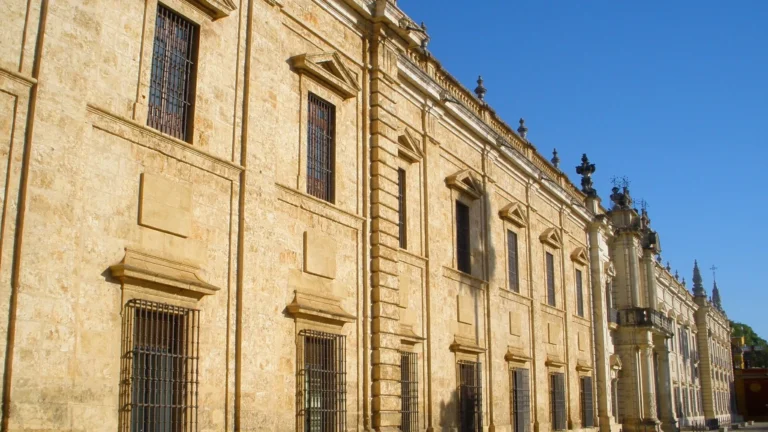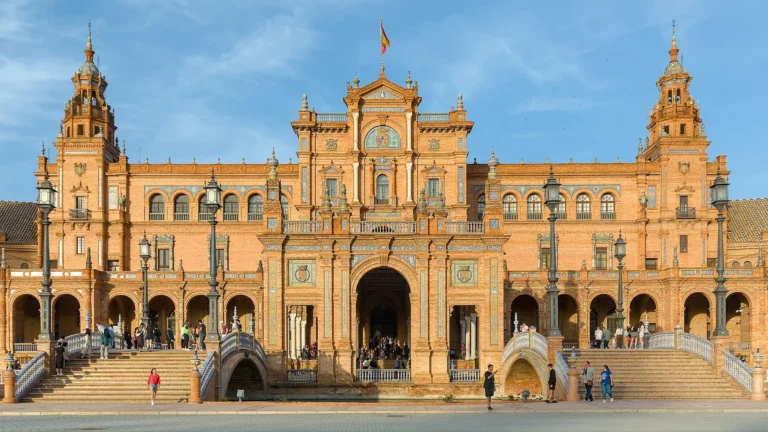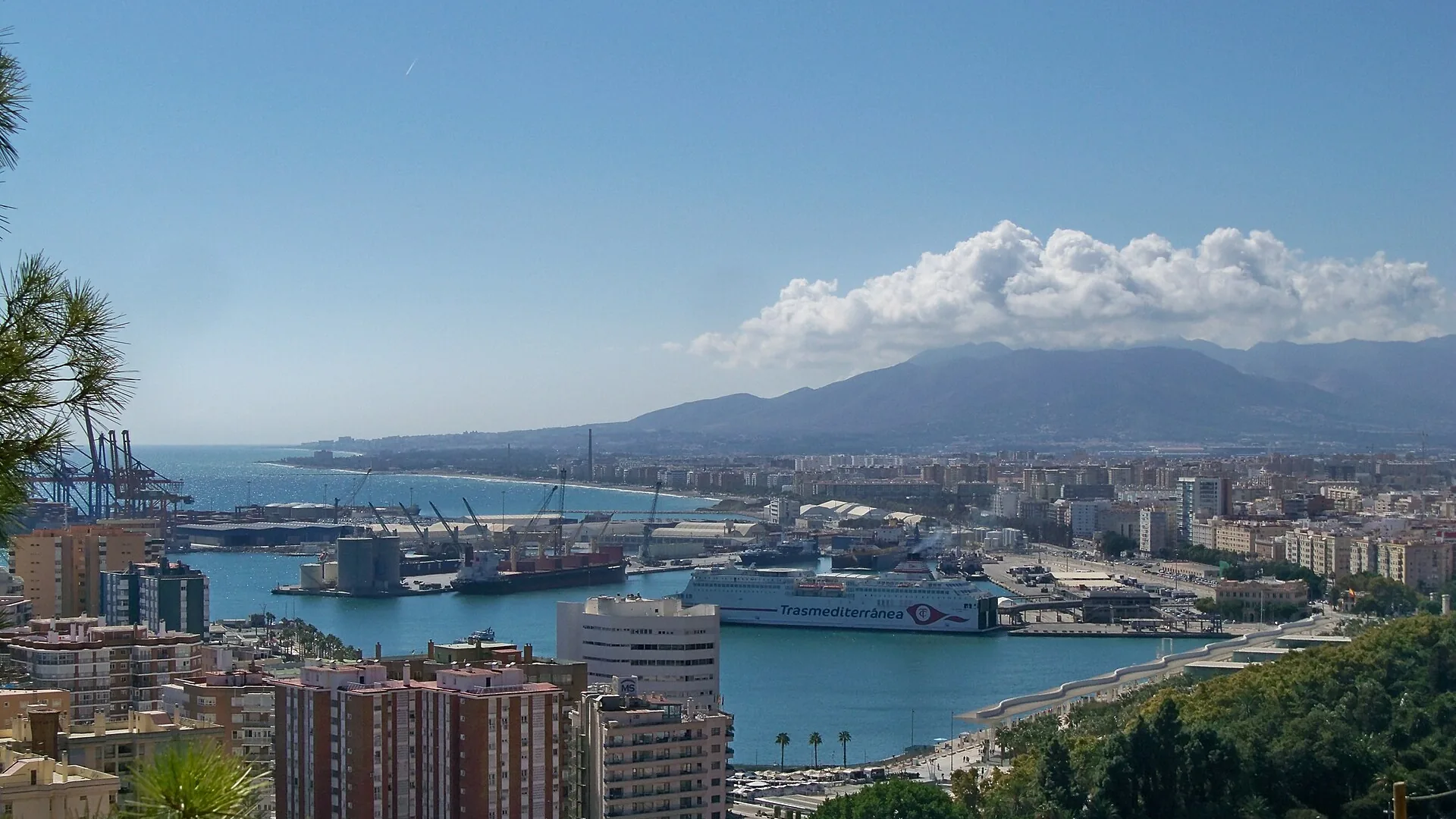
In short: At the Universidad de Málaga you study for 12.62 € per ECTS, which means 757.20 € in the first year (as of October 2026), in a big city by the sea with the largest airport in Andalusia. You get your place with the Abitur or Matura (German or Austrian school-leaving certificate) through UNEDasiss and the central Andalusian application. The price you pay for this is the rent: Málaga is the most expensive of the eight Andalusian university cities, and the university has no halls of residence of its own.
At a glance
- University: Universidad de Málaga (UMA), founded 1972, public
- Campus: Teatinos in the west (most faculties) and El Ejido near the old town
- Tuition fees: 12.62 € per ECTS for the Grado, from the second year a 99 percent discount on passed credits
- Admission: UNEDasiss certificate, then application through the Distrito Único Andaluz (2026: 11 to 22 June)
- Rent: 16.5 € per square metre (Idealista, September 2026), room in a shared flat 437 € on average (first quarter of 2026)
- Language of instruction: Spanish
The Universidad de Málaga: campuses, faculties, focus areas
The Universidad de Málaga, UMA for short, is the only public university in the city. It was founded in 1972, which makes it young but big: it covers almost every field, from medicine and engineering to fine arts. For your everyday life, what matters most is which of the two campuses your faculty is on.
Campus Teatinos
Teatinos lies in the west of the city, a few kilometres from the old town and the beach, and is the main campus. According to the UMA, it is home to medicine, law, sciences, humanities (Filosofía y Letras), education, psychology, tourism and communication, as well as the engineering schools for computer science and telecommunications. The campus extension (Ampliación) adds industrial engineering, the Escuela Politécnica Superior, the Faculty of Health Sciences, Social Work and the Faculty of Commerce and Management. The Servicio de Relaciones Internacionales (international office) also has its office here.
Campus El Ejido
El Ejido is the smaller, older campus on the edge of the city centre. Here you’ll find the School of Architecture, the Faculty of Fine Arts and the Faculty of Economics and Business (Ciencias Económicas y Empresariales). If you study here, you can walk to the old town.
Language of instruction
Teaching is in Spanish. The UMA itself tells its visiting students that classes are held in Spanish and only a few subjects are offered in English. For a full degree, this means you write exams, papers and your final thesis in Spanish. Whether your chosen degree has a bilingual group is stated in the curriculum of the respective Grado on the faculty’s website. A detail that surprises many people: in Andalusia you have to prove a foreign language at B1 level before you graduate. With German as your native language and English from school, this is usually no obstacle; the university decides what form the proof takes.
Admission with Abitur or Matura
Your Abitur or Matura entitles you to study in Spain, but you need it converted into the Spanish grading system. This is done by UNEDasiss, a service of the distance university UNED. With this certificate (Acreditación) you then don’t apply to the UMA directly, but centrally through the Distrito Único Andaluz, the joint online application of all public universities in Andalusia.
-
Apply for the Acreditación at UNEDasiss
The application is online; in 2026 the window was open from 4 February to 1 December. You upload your ID, your school-leaving certificate and your grades from the last two school years. Processing only starts after payment. The result is your access grade on a scale up to 10.
-
Decide on the PCE
The admission grade (nota de admisión) goes up to 14 points. You can only get the four points above 10 with subject exams, the Pruebas de Competencias Específicas (PCE). Without PCE you stay at a maximum of 10 points. For subjects with a high bar, that isn’t enough.
-
Apply through the Distrito Único Andaluz
In 2026 the ordinary phase ran from 11 to 22 June, and the first allocation came on 3 July. You can list as many degrees as you like, and the order is binding. As a German or Austrian applicant, you compete in the general quota with Spanish school leavers.
-
Accept your place
After each allocation you only have a few days to enrol or reserve your place. In 2026 that was 3 to 9 July. If you miss the deadline, you lose your place.
The dates for 2027/28 haven’t been published yet. All details on UNEDasiss, PCE dates and later allocation rounds are in the main guide Studying in Spain.
How high is the bar? Notas de corte at the UMA
The nota de corte is the grade of the last person who got a place. It isn’t a fixed value, but is set anew every year by supply and demand. The following values come from the UMA’s official list for the first allocation of the ordinary phase on 2 July 2025 (general quota, admission for the 2025/26 academic year). In later allocations the values usually drop a little.
| Grado | Nota de corte (out of 14) | What this means |
|---|---|---|
| Medicine | 13.230 | hopeless without very good PCE |
| Nursing (Enfermería) | 12.507 | PCE needed |
| Physiotherapy | 12.351 | PCE needed |
| Mathematics | 12.060 | PCE needed |
| Psychology | 10.931 | PCE needed |
| Computer science (Ingeniería Informática) | 10.874 | PCE needed |
| Law (Derecho) | 9.081 | possible without PCE with good school grades |
| Business administration (ADE) | 8.417 | possible without PCE |
| Tourism | 8.090 | possible without PCE |
What does studying cost?
Prices are set by the regional government for all public universities in Andalusia, so Málaga isn’t more expensive than Jaén or Almería. As of October 2026 these rates apply:
- Grado, first enrolment: 12.62 € per ECTS, 757.20 € for a full year with 60 ECTS.
- Second enrolment in the same subject: 25.25 € per ECTS. Failing doubles the price for that subject.
- Máster: 13.68 € per ECTS, 12.62 € for professionally qualifying Másters.
- Administrative fees: 59.10 € for opening your file, 5.70 € for the student card.
From the second year, the 99 percent discount kicks in: for every credit you passed at the first attempt in the previous year, Andalusia waives 99 percent of the price. There is no income limit and no nationality requirement. You only have to submit the corresponding declaration when you enrol. If you pass everything, from the second year you pay almost nothing but administrative fees. You can pay in one go, in two or in up to eight instalments.
Enrolling on site: the Matrícula
The allocation doesn’t secure your place yet. Only the Matrícula, the enrolment with course selection and payment, makes you a student. It is done online through the university portal, and you hand in your documents at your faculty’s administrative office. Which documents are required in the original is stated in the enrolment instructions of your centre. Expect the following:
- ID card or passport
- UNEDasiss certificate and allocation notice from the Distrito Único Andaluz
- bank details for payment, as a direct debit if you pay in instalments
- the declaration for the 99 percent discount from the second year
- your NIE, as soon as you have it: see Applying for the NIE
We haven’t found any documented official minimum level of Spanish for admission to the Andalusian universities. In practice you need a solid B2 from day one, otherwise you’ll fail subjects in the first semester and lose the discount the following year. The UMA’s Spanish language centre is called the Centro Internacional de Español.
Living there for several years: neighbourhoods and rents
Housing is the real cost issue in Málaga. For September 2026, Idealista gives an asking price of 16.5 € per square metre for whole flats in the city. In Granada it’s 10.8 €, in Almería 9.4 €. A notional 70 square metre flat therefore costs around 1,155 €. According to Idealista, a room in a shared flat averaged 437 € in the first quarter of 2026; the UMA itself gave its visiting students a range of 350 to 500 € for 2024/25.
The UMA doesn’t provide housing of its own. Its social service runs a free portal that connects students with private landlords, but the university isn’t liable in case of disputes. Private halls of residence with meals, laundry and cleaning exist; the UMA put them at around 800 to 900 € a month in 2024/25.
- Teatinos: young new-build district right by the main campus, lots of shared flats, bars and supermarkets. Practical, but far from the sea.
- Cruz de Humilladero and the area around the train station: ordinary residential area between campus and centre, good metro and bus connections, often a bit cheaper.
- Centre, La Victoria, Lagunillas: close to El Ejido and city life. Many flats here are holiday rentals, so supply for long-term tenants is tight.
- El Palo and Pedregalejo: old fishing districts on the beach in the east. Beautiful, but the way to Teatinos takes you right across the city.
For a degree lasting several years, a proper residential tenancy agreement is worth it instead of a seasonal contract: the deposit is then legally one month’s rent, and the contract extends for up to five years. Many students live in a shared flat in their first year and then look for a flat of their own with people they know. Portals, deposits and the typical pitfalls are explained in Finding a flat in Spain.
Monthly budget, part-time jobs and transport
The following table is an estimated range for one person in a shared flat. Rent and bus pass are documented; the rest are experience-based values that you can adjust to your situation with the calculator in Cost of living in Spain.
| Item | Per month | Basis |
|---|---|---|
| Room in a shared flat | 400 to 500 € | Idealista: average 437 € (Q1 2026) |
| Utilities and internet (share) | 40 to 70 € | Estimate |
| Groceries | 200 to 280 € | Estimate |
| Bus (monthly student pass) | 13.50 € | EMT fare, as of end of 2025 |
| Mobile phone | 5 to 15 € | Tariff comparison 2026 |
| Leisure, going out, other | 120 to 200 € | Estimate |
| Tuition fees (spread out, first year) | around 63 € | 757.20 € divided by 12 |
| Total | around 850 to 1,150 € | Estimated range |
Working alongside your studies
As an EU citizen you may work in Spain without a permit. All you need is your NIE and a social security number. Thanks to tourism and hospitality, Málaga offers lots of casual jobs, plus language teaching and the growing tech sector around the technology park in the west of the city. German is a real advantage here. Be honest with your numbers: wages in hospitality and retail are close to the minimum wage, and Spanish timetables with compulsory attendance leave less room than you might be used to. More in Working in Spain.
Transport
Metro line 1 connects Universidad station with the centre, and since March 2023 it has run to the terminus Atarazanas on the edge of the old town. With the Tarjeta Joven for 15 to 29 year olds, a metro ride most recently cost 0.33 €. On the EMT city buses a single ride costs 1.40 € and the monthly student pass 13.50 €. These prices are based on discounts from the national government, the region and the city, which were extended for 2026. Check the current situation with EMT and Metro de Málaga. From the airport, the Cercanías commuter train takes you to the centre.
Life in Málaga: what’s good and what gets on your nerves
After Seville, Málaga is the second-largest city in Andalusia. You have a city beach, a compact old town with the Alcazaba and the Picasso Museum, and a mild climate where you can sit outside at lunchtime even in January. What the city has to offer is in Málaga sights, and ideas for days off in Day trips from Málaga. The airport is the largest in the region, so trips home are easier than from any other Andalusian university city.
The honest downside: Málaga is touristy and international, and you notice that in more than just the rent. In the centre you hear a lot of English, flats are let to holidaymakers, and landlords often prefer short contracts. The main campus is away from the beach and the old town, and there is no classic student quarter in the city centre like in Granada. If you come on a tight budget, life in other Andalusian cities is much more relaxed.
Paperwork for a degree lasting several years
If you stay for several years, you should set yourself up properly in Spain. You should tackle four things in the first few weeks:
- NIE: you need the foreigner identification number for an employment contract, many tenancy agreements and dealings with authorities. Guide: Applying for the NIE.
- Padrón: registering at the town hall proves your place of residence and is required for some benefits. See Empadronamiento.
- Bank account: an account from Germany or Austria is enough for SEPA payments. A Spanish account with Bizum makes everyday life in a shared flat easier: Opening a bank account in Spain.
- Health insurance: with the European Health Insurance Card (EHIC) from your insurer, you are treated in the public system. Before you leave, check with your insurer how you stay covered over several years, especially if your family insurance ends or you work in Spain. Background: Health insurance in Spain.
Only coming for one or two semesters? Then read Erasmus in Málaga.
Frequently asked questions
Can I study in English in Málaga?
You shouldn’t expect a complete Grado in English. The UMA teaches in Spanish and only offers a few subjects in English. Whether there is a bilingual group in your degree is stated in the faculty’s curriculum.
Do I need the PCE exams for the UMA?
That depends on the subject. Without PCE you can reach at most 10 out of 14 points. In the first allocation of 2025, for example, medicine (13.230), nursing (12.507) and psychology (10.931) were above that, while business administration (8.417) and tourism (8.090) were below.
Is studying in Málaga more expensive than in Granada or Almería?
No. The price per ECTS is the same at all public universities in Andalusia: 12.62 € for the Grado. What’s more expensive is living, especially the rent.
Is there a university hall of residence?
No. The UMA doesn’t offer housing of its own, but arranges private rooms and flats through a free portal. Private halls of residence with meals exist, but they cost considerably more than a room in a shared flat.
Which neighbourhood should I live in?
Go by your faculty. For Teatinos, Teatinos itself and Cruz de Humilladero are good choices; for El Ejido, the centre and the neighbouring districts. The beach in the east is beautiful, but it means a long way to the main campus.
When do I have to apply?
In 2026 the ordinary phase of the Distrito Único Andaluz ran from 11 to 22 June. The dates for 2027/28 haven’t been published yet. You should apply for the UNEDasiss certificate as early as spring.
Sources
- Universidad de Málaga: campuses and faculties
- Universidad de Málaga: notas de corte, first allocation 2025
- Universidad de Málaga: accommodation
- Universidad de Málaga: Fact Sheet 2024/25 (language, housing and canteen prices)
- Junta de Andalucía: Distrito Único Andaluz portal
- Junta de Andalucía: guide to the 99 percent discount
- Idealista: Andalusia rental price report, September 2026
As of: October 2026
Cover photo: Daniel Capilla · Wikimedia Commons · CC BY-SA 4.0
Free
The moving checklist as a PDF (in German)
All steps in the right order to tick off. Plus the key tips by email over the next weeks (in German). Free, unsubscribe at any time.