In short: Erasmus on Tenerife almost always means the Universidad de La Laguna (ULL): a student city with a World Heritage old town at 550 metres above sea level, ten minutes from Tenerife North Airport and half an hour from the sea. The ULL requires Spanish at B1 and sets clear deadlines; for the 2026/27 winter semester, applications closed on 30 June. Pack a jumper, because winter up here is cool and damp.
At a glance
- Host university: Universidad de La Laguna (ULL), Erasmus code E TENERIF01
- Deadlines 2026/27: nomination by 31 May, application by 30 June (autumn and full year), 15 October and 15 November (spring)
- Language: Spanish at least B1; without a certificate, a free 30-hour online course from the ULL
- Lectures: 8 September to 18 December 2026 and 25 January to 13 May 2027
- Grant: 540 € per month from Germany, 470 € from Austria (2026/27)
- Contact point: Oficina de Relaciones Internacionales, Calle Viana 50, La Laguna
Why La Laguna, and who it is not for
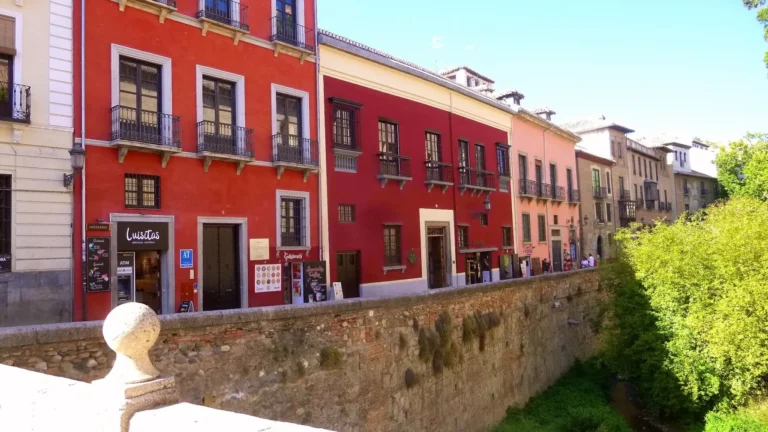
San Cristóbal de La Laguna is the opposite of a holiday resort. The city lives from its university, the old town with its colourful houses and wooden balconies is a pedestrian zone, and in the evening the people from the lecture hall sit in the same bars as you. You get to know locals quickly, because there are fewer tourists and fewer English-speaking bubbles here than in the south of the island.
At the same time, Tenerife is right on your doorstep: the Anaga mountains begin behind the city, Mount Teide is an hour away, and you can reach Santa Cruz with its port and city beach by tram. Academically, the ULL covers a wide range of subjects and has a particular reputation in astrophysics.
La Laguna is not the right choice if you:
- want beach life right outside your door. Las Palmas is better for that, see Erasmus in Las Palmas.
- don’t speak Spanish and are hoping for courses in English. The ULL requires B1 and means it.
- don’t cope well with cold and fog. La Laguna often sits in the trade wind clouds, and flats have no heating.
- want to travel a lot without flying. Every other city off the island costs a plane ticket or a ferry.
Want to do your whole degree on Tenerife rather than just an exchange semester? Then read Studying in La Laguna.
The process step by step
The ULL describes the procedure for incoming students in detail and sticks to it. It does not accept applications by email, and without a nomination from your university you won’t get into the system.
-
Application at your home university
You apply to your department or International Office for one of the places your university has agreed with the ULL. Your university sets the deadline, usually in winter for the following academic year.
-
Nomination to the ULL
Your university registers you. For 2026/27 the dates were: by 31 May 2026 for the autumn semester and the full year, by 15 October 2026 for the spring semester.
-
Your own application as an incoming student
After the nomination, the ULL sends you instructions and a link to the online application and assigns you an academic coordinator. Deadline 2026/27: 30 June 2026 for autumn and the full year, 15 November 2026 for spring. You upload your ID card or passport, your language certificate and your Learning Agreement.
-
Learning Agreement
The Online Learning Agreement (OLA) is signed first by your coordinator at home, then the ULL’s academic coordinator checks and signs it. You may only choose courses that run in your semester, and you should take at least half of them in the subject you were nominated for.
-
Wait for acceptance
The acceptance letter (carta de aceptación) arrives by email. The ULL explicitly advises against booking a flight or accommodation before then.
-
Arrival and online registration
For registration after arrival, the ULL asks for your boarding pass. It recommends arriving at least one week before lectures start.
-
Enrolment at the faculty
You enrol at your faculty’s secretariat for the courses in your OLA. If you are under 28, you pay 1.12 € for school insurance; otherwise enrolment is free. Important: a change to your OLA does not automatically change your enrolment, you have to report it to the secretariat.
-
Departure with Transcript of Records
At the end, you get your stay confirmed. Your grades go to your university as a Transcript of Records, and it recognises them according to the Learning Agreement.
Semester dates 2026/27
The ULL’s academic calendar for the Grados (bachelor’s degrees) looks like this:
| Period | First half of the year | Second half of the year |
|---|---|---|
| Lectures | 8 September to 18 December 2026 | 25 January to 13 May 2027 |
| Exams | 8 to 19 January 2027 | 17 to 27 May 2027 |
| Second exam round | 8 to 18 June and 28 June to 8 July 2027 | 8 to 18 June and 28 June to 8 July 2027 |
| Holidays | 21 December to 6 January | Holy Week 22 to 28 March |
The second half of the year starts very early, on 25 January. If you come from Germany or Austria, you are often still sitting exams at home at that point. Talk to your examiners before you commit to spring on Tenerife. The autumn half fits better, but with exams it stretches into the second half of January.
Language, course choice and exams
The ULL requires Erasmus students to have Spanish at least at B1; depending on the agreement between the universities, it can also be B2 or higher. As proof, it accepts DELE, SIELE or a certificate from your home university. If you have no certificate, you must pass a free 30-hour online course from the ULL. Without a certificate or a passed course, you cannot start your exchange. For master’s programmes taught in English, English from B1 applies.
Spanish courses on site
The ULL’s Servicio de Idiomas (language service) offers Spanish for foreigners in semester courses from A1 to C1. In September 2026, a course cost around 250 € at the regular price, or 185 € with the early booking rate. The placement test is free, and you can also take the SIELE exam there. These courses are not part of the official study programme: they don’t appear on your transcript and don’t go into your Learning Agreement. Whether your university recognises them anyway is something you need to clarify at home.
How exams work at the ULL
Expect things to feel more like school than you may be used to. Many subjects use continuous assessment (evaluación continua): assignments, short tests, practicals and presentations count towards your grade, and attendance is recorded. If you don’t take part, you sit a more extensive final exam at the end.
Each subject has several exam sittings, the convocatorias. After the first half of the year the sitting is in January, after the second in May. The second round for all subjects runs in June and July. For you, this means: if you fail in January and only stay one semester, you would have to come back in summer. Grades go from 0 to 10; from 5 you have passed (aprobado), from 7 it is notable, from 9 sobresaliente.
Housing for five to ten months
The ULL’s Erasmus office does not arrange private accommodation and says so clearly. It refers you to the noticeboards with room offers at the faculties and to the search engine Erasmus Play. The university halls of residence are geared towards students doing their whole degree here, so don’t count on them.
The market is set up for flatshares, because half the city is studying. For September 2026, Idealista gives 12.7 € per square metre for whole flats in La Laguna (up 7.4 percent in one year) and 14.0 € in Santa Cruz. The reports contain no official room price for La Laguna. As a rough estimate, you can reckon with 320 to 480 € for a room in a flatshare including utilities.
- Old town: right in the middle of things, short distances to bars and to the Campus Central. Old houses, often damp.
- Near Campus Guajara: practical for law, economics, humanities and social sciences.
- Near Campus Anchieta: for natural sciences and engineering.
- La Cuesta or Santa Cruz: on the tram line, warmer and well located for the health subjects in Ofra.
At every viewing, ask about damp and mould and whether there is a heater or a dehumidifier in the room. That sounds strange for Tenerife, but in January it decides your mood. When it comes to searching: if you start in September, look on site from the end of August; if you arrive in January, it is easier to find something, because rooms from the first half of the year become free.
What should be in a Spanish rental contract is explained in Finding a flat in Spain.
Costs, funding and budget
You don’t pay tuition fees at the ULL. The Erasmus grant for Spain in 2026/27 is 540 € per month from Germany (country group 2) and 470 € from Austria (category 2). If you travel with a child or have a disability or chronic illness, you get an extra 250 € per month; German universities often also include first-generation students and working students.
For travel costs, the Canary Islands fall into a higher distance band than mainland Spain, so ask your International Office for the amount. The bonus for travelling by train or bus is no use to you on an island in the Atlantic. If you are eligible for BAföG (German state student financial aid), you can combine Auslands-BAföG (BAföG for studying abroad) with Erasmus: the Studierendenwerk Heidelberg is responsible for Spain, and you should apply six months in advance.
| Item | Per month | Basis |
|---|---|---|
| Flatshare room including utilities | 320 to 480 € | Estimate |
| Groceries and canteen | 200 to 270 € | Estimate |
| Bus and tram | 0 to 40 € | Estimate, depending on pass |
| Mobile phone | 10 to 20 € | Estimate, prepaid |
| Going out and trips | 120 to 220 € | Estimate |
| Spanish course, spread over five months | 37 to 50 € | Servicio de Idiomas, 185 to 250 € |
| Total | around 690 to 1,080 € |
This makes La Laguna the cheaper of the two Canarian university cities. With the grant you cover your room and part of your food; you should bring 200 to 550 € a month yourself. On top of that come flights and insurance.
Student life between the old town, Anaga and Teide
The buddy programme at the ULL is organised by the student association AEGEE Tenerife: you are assigned a local student who helps you settle in, and you join the WhatsApp group for international students. Trips, lift shares and rooms are also arranged through this group.
In the evening, people meet in the old town, especially around the area everyone just calls El Cuadrilátero. You can eat cheaply in simple places and in the guachinches, the rustic farm taverns in the north of the island. What ends up on the table there is described in Canarian food. For the weekends:
- laurel forest and coastal paths in the Anaga mountains right behind the city: Hiking on Tenerife
- the highest mountain in Spain: Teide National Park
- swimming at Playa de las Teresitas near Santa Cruz and in the natural pools in the north: Beaches on Tenerife
- the rest of the island from Garachico to Masca: Tenerife sights
- a trip to La Gomera or Gran Canaria: Island hopping in the Canary Islands
In February, Santa Cruz celebrates one of the biggest carnivals in Europe. If you are here in spring, you’ll experience it, lectures or not.
Paperwork and checklist before you fly
Take your European Health Insurance Card (EHIC) with you; the ULL explicitly recommends it. It also strongly recommends additional insurance for travel and luggage, liability, accidents, serious illness and repatriation. Travel health insurance for long stays abroad plus private liability insurance covers this.
As a rule, you don’t need an NIE (foreigner identification number) for one semester. It becomes necessary if you take a job or if a landlord or bank asks for it. How to get one is explained in Applying for an NIE. If you stay for two semesters, the Padrón (registration at the town hall) can be worthwhile, because the resident discount on flights and ferries between the islands depends on it: Empadronamiento.
- ID card or passport
- B1 language certificate (DELE, SIELE, certificate from your home university) or a passed ULL online course
- Online Learning Agreement, signed at home and by the ULL
- Acceptance from the ULL by email, only then book your flight
- Keep the boarding pass from your arrival, the ULL asks for it at registration
- EHIC and additional insurance including repatriation
- Certificate of good conduct, if you take health subjects or school placements
- Grant agreement from your university, signed before departure
- Accommodation for the first week
- Rain jacket, jumper and slippers for winter at 550 metres
Frequently asked questions
What is the deadline to apply to the ULL?
For 2026/27, your university had to nominate you by 31 May (autumn, full year) or 15 October (spring). Your own online application was due by 30 June or 15 November. Your home university’s deadlines are considerably earlier.
What do I do without a Spanish certificate?
The ULL also accepts a certificate from your home university confirming B1. If you have no proof at all, you must pass the ULL’s free 30-hour online course. Without one or the other, you cannot start.
Does the university help me find a room?
No. The Erasmus office does not arrange private accommodation. It refers you to noticeboards at the faculties and to Erasmus Play. In practice, you get help from your buddy at AEGEE Tenerife and the WhatsApp group.
Do I land at Tenerife North or South?
Tenerife North Airport is right next to La Laguna. Many flights from Germany and Austria go to the airport in the south, though; from there it takes about an hour by bus via Santa Cruz.
Can I mix courses from different faculties?
At least half of your courses should come from the subject you were nominated for. For everything else, the ULL recommends asking your academic coordinator. Bear the distances in mind: Guajara, Anchieta and Ofra are not next to each other.
Is it really cold on Tenerife in winter?
In La Laguna, yes, at least it feels that way. The city is high up and often in fog, and there is no heating. On the coast in Santa Cruz it is noticeably warmer, and in the south of the island the sun usually shines. More on this in Tenerife north or south.
Sources
- ULL, Oficina de Relaciones Internacionales: Incoming Erasmus+ students (deadlines, language, process)
- ULL: Academic calendar 2026/27
- ULL: Servicio de Idiomas course offer 2026/27
- Saarland University: Erasmus grants 2026/27
- BOKU Vienna: Erasmus grant amounts 2026/27
- Idealista: Rental price report Canary Islands
As of: October 2026
Cover image: -wuppertaler · Wikimedia Commons · CC BY 4.0
Free
The moving checklist as a PDF (in German)
All steps in the right order to tick off. Plus the key tips by email over the next weeks (in German). Free, unsubscribe at any time.