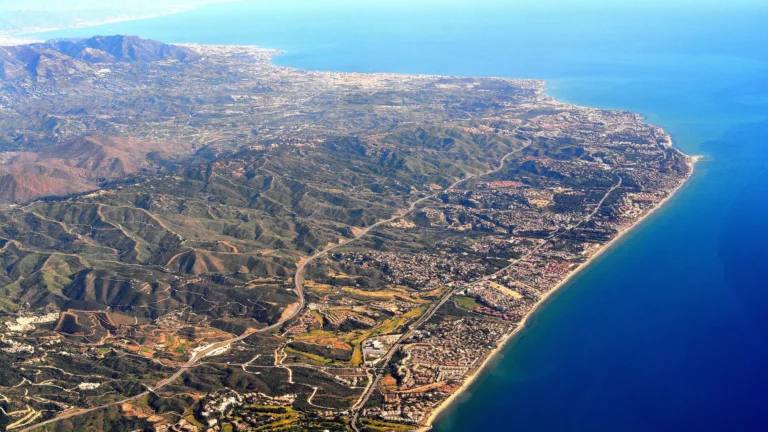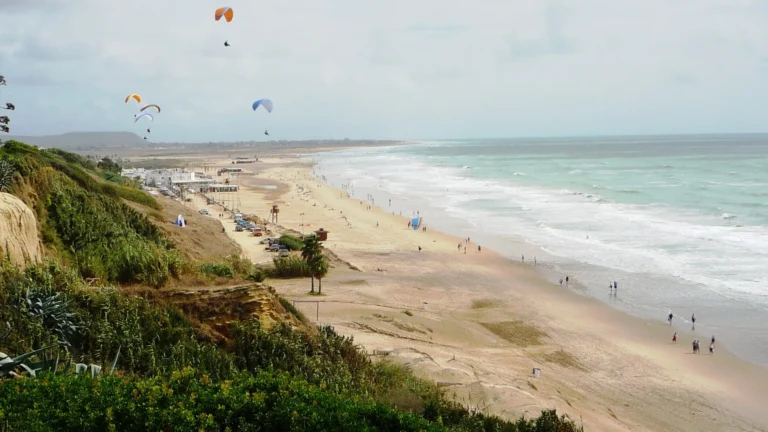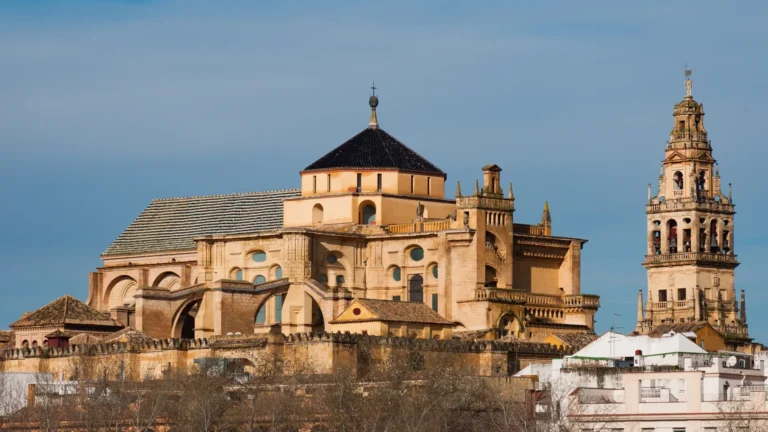
In short: La Palma suits you if you are looking for peace, nature and a manageable island life and bring your income with you. Rents are below Tenerife and Gran Canaria, but the housing market has been very tight since the 2021 volcanic eruption. If you need a large job market, a big city or quick connections to Germany, you are better off on one of the large islands.
At a glance
- Population: around 84,000 on 708 km² (INE, as of 1 January 2023)
- Rent: about 8 to 9 € per m² in Santa Cruz de La Palma and Los Llanos de Aridane (Diario de Avisos, July 2026)
- Purchase price: 2,523 €/m² in Los Llanos, 2,527 €/m² in El Paso (Idealista, September 2026)
- Climate: 20.7 °C annual average on the east coast, hardly any difference between summer and winter (AEMET)
- Who it suits: retirees, self-employed people with online clients, nature lovers
- Difficult for: job seekers without Spanish, families who want a German school
Who does La Palma suit, and who not?
In the Canary Islands, La Palma is called “la isla bonita”, the beautiful island. It is steep, green and not very touristy. There is no mass tourism like in the south of Tenerife or Gran Canaria, no big hotel towns and hardly any nightlife. That is exactly what many people who move here are looking for.
A good fit
- Retirees who want a mild climate, hiking trails and a quiet environment and bring their pension from Germany or Austria.
- Self-employed people and remote workers whose clients are online. What matters most for them is stable internet, which you should check at the specific address before signing a rental contract.
- People with a connection to farming, crafts or nature who are willing to learn Spanish and fit into small village communities.
Rather difficult
- If you are looking for a local job: The job market is small. The unemployment rate in the Canary Islands was 11.60 % in the second quarter of 2026, above the Spanish average of 9.87 % (INE, EPA).
- Families who want a German school: There is none on La Palma. The nearest German school abroad is the Deutsche Schule Teneriffa in Tabaiba.
- If you need a big city, culture or shopping: For that you take the ferry or fly to Tenerife.
- If you fly home often: Direct flights to Germany only operate at certain times. Usually you change on Tenerife or Gran Canaria.
If you are still torn between the islands, the comparison Which Canary Island suits me? and our overview Moving to the Canary Islands will help.
German-speaking doctors in La Palma: 2 verified practices and clinics →
West side or east side: where to live on La Palma?
A mountain range made up of the Cumbre Nueva and Cumbre Vieja divides the island into two halves. The trade wind brings clouds to the east side, while the west side is more often in the sun. This shapes how living there feels more than any price list.
West side: Los Llanos de Aridane, El Paso, Tazacorte
Los Llanos de Aridane is the largest municipality on the island and the shopping and services centre of the west. Here you will find supermarkets, doctors, banks, Gestorías (agencies that handle paperwork with the authorities) and a lively town centre. Many foreigners, including Germans, live in the Aridane valley. The housing market is particularly tight here, because many families who lost their homes in 2021 have stayed in the valley. According to Diario de Avisos (July 2026), the Aridane valley therefore has price peaks above the island average.
El Paso lies higher, at the foot of the Caldera de Taburiente. It is cooler, more rural and popular with people who want a garden and peace. According to Idealista, the purchase price in September 2026 was 2,527 €/m², almost level with Los Llanos.
Tazacorte with its harbour Puerto de Tazacorte is small, sunny and surrounded by banana plantations. In 2021 the lava reached parts of the municipality. Today new social housing is being built there (more on this below).
East side: Santa Cruz de La Palma, Breña Alta, Breña Baja
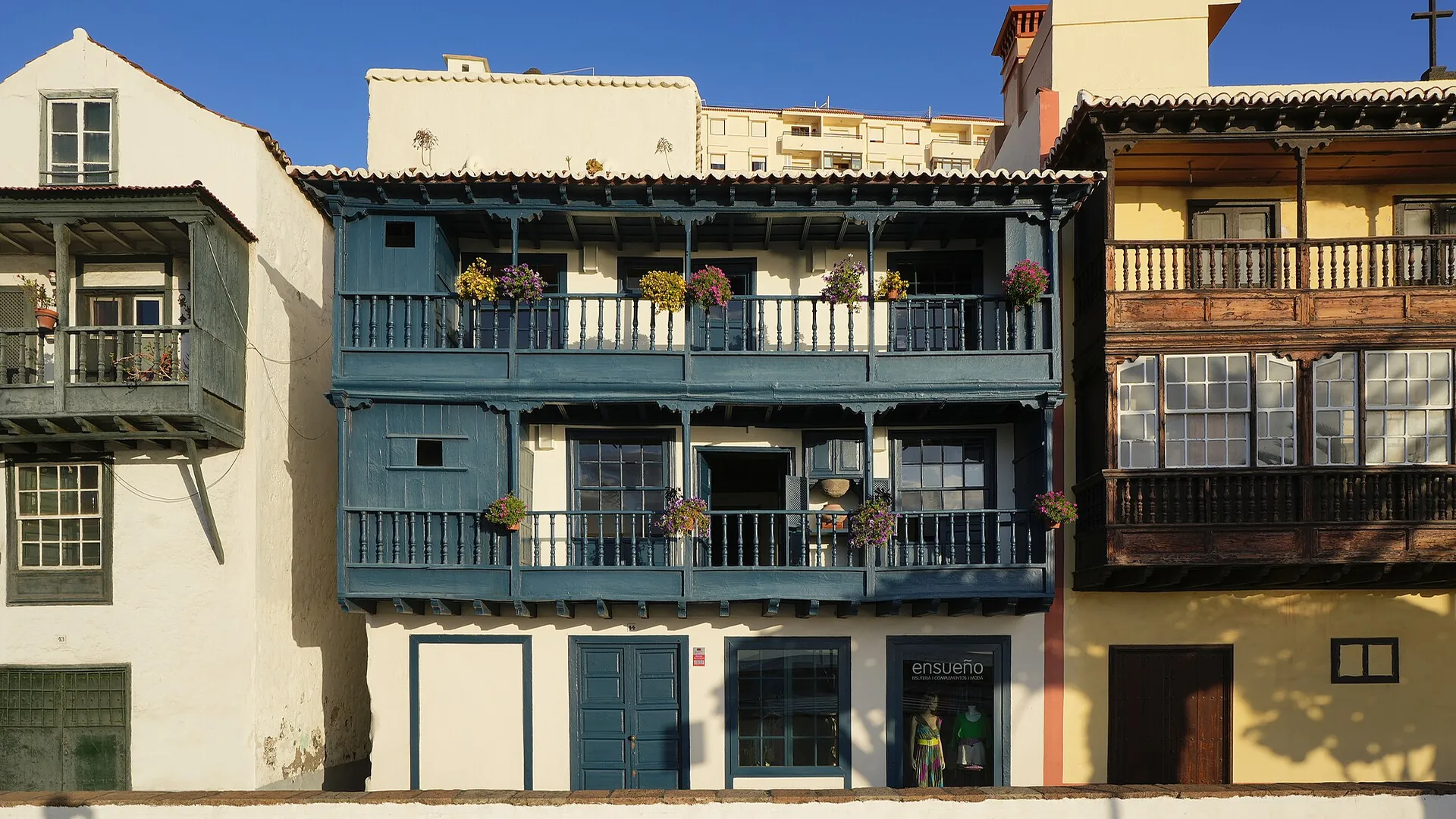
Santa Cruz de La Palma is the capital, with the island government (Cabildo), the ferry port and a beautiful old town with wooden balconies. If you want authorities, the ferry and town life nearby, this is the right place. According to Diario de Avisos, rents are similar to Los Llanos at about 8 to 9 €/m².
Breña Alta and Breña Baja lie directly to the south. From here the airport and the island hospital, the Hospital General de La Palma, are quickly reached. Breña Baja has a small seaside resort, Los Cancajos. It is greener and wetter than in the west, but quiet and well connected.
The 2021 volcanic eruption: what it means for housing today
On 19 September 2021 the volcano now called Tajogaite erupted in the Cumbre Vieja. If you want to move to La Palma, you should know the consequences, because they still shape the housing market today.
The facts
- The eruption lasted 85 days. The lava covered around 1,200 hectares and buried 74 km of roads (RTVC, September 2026).
- Around 7,000 people had to leave their homes. The Government of the Canary Islands records 2,988 destroyed buildings; almost 2,000 homes, fincas and other buildings were affected (RTVC).
- The Government of the Canary Islands puts the damage at 842 million euros.
Status five years later (September 2026)
In the coastal towns of Puerto Naos and La Bombilla, returning depends on measurements of the gases in the ground. According to the Cabildo, as of 15 September 2026, 1,182 homes in Puerto Naos and 65 in La Bombilla have been cleared for return, each subject to conditions. Around 40 families were still living in container homes in September 2026.
At the same time, new homes are being built, mainly public ones: 53 homes in Los Llanos are being made ready for occupancy, 43 are being built in El Paso and 34 in Tazacorte. 120 homes in Los Llanos have been put out to tender, and a further 100 in Tazacorte are to follow (Onda Vasca, September 2026). These homes are intended for those affected and for locals, not for newcomers.
What this means for you
Free rental flats are scarce, building land and construction costs are expensive, and there is little on offer to buy. Local media report that around a quarter of the homes on the island are empty without coming onto the market. In June 2026, residents in Los Llanos demonstrated against the housing shortage under the slogan “La vivienda nos cuesta la vida” (housing is costing us our lives) (eldiario.es).
For you this means: allow more time for your search for a home, expect competition from locals and be respectful. Many people on the island lost everything.
Cost of living on La Palma
La Palma is cheaper than Tenerife and Gran Canaria when it comes to rent. The province of Santa Cruz de Tenerife, to which La Palma belongs, was at 15.3 €/m² rent in September 2026 (Idealista). Idealista does not publish a separate rent figure for La Palma itself, so the table is based on a report by Diario de Avisos.
| Item | Monthly | Source |
|---|---|---|
| Rent 70 m² (Los Llanos, Santa Cruz) | approx. 560 to 630 € | 8 to 9 €/m², Diario de Avisos, July 2026, own extrapolation |
| Electricity | 60 to 100 € | Estimated range, varies widely |
| Groceries (household) | around 470 € | Spanish average according to INE 2025, island prices sometimes higher |
| Mobile and internet | 30 to 50 € | Estimated range |
| Car (insurance, fuel, maintenance) | 150 to 250 € | Estimated range |
The estimated ranges are not official figures but guide values for your planning. You can make a more precise calculation for your household with our cost calculator for Spain.
Canary Islands specifics that affect your budget
- IGIC instead of VAT: In the Canary Islands the Canarian tax IGIC applies, with a general rate of 7 %, instead of the Spanish VAT, IVA.
- Parcels from Germany: The Canary Islands are not part of the EU VAT area. Shipments need customs clearance, IGIC is charged and often handling fees too. Some online shops do not deliver to the islands at all.
- Resident discount: If you are registered in the Canary Islands and are a national of an EU country, you get a 75 % discount on flights between the Canary Islands and the rest of Spain and on inter-island connections. Proof is the Padrón certificate (OCU).
Working and being self-employed on La Palma
To be honest: finding a local job is hard, especially without good Spanish. The most important sectors are agriculture (mainly bananas), the public sector, retail, construction and a small tourism industry. German-speaking jobs exist almost only in holiday rentals, hiking tours and small guesthouses, and often only seasonally.
What realistically works
- Working remotely for employers or clients in Germany or Austria. Read Moving to Spain as a digital nomad.
- Self-employed as an Autónomo (self-employed person in Spain) offering online services. In the Canary Islands there are special features with IGIC and the small business scheme REPEP, which we explain in Self-employed in the Canary Islands: IGIC, REPEP, ZEC.
- Crafts and services such as property management, repairs or gardening for other newcomers, if you bring your trade with you.
Plan at least six months of savings before you rely on local income.
Retiring to La Palma
For retirees, La Palma is one of the quietest options in the Canary Islands. The climate is mild all year round, and the distances to the doctor and supermarket in Los Llanos or Santa Cruz are short.
- Health insurance: With a statutory pension from Germany or Austria, you get the S1 form via your health insurance fund. With it you register with the Spanish social security institution INSS and receive care through the Servicio Canario de la Salud.
- Medical care: The Hospital General de La Palma in Breña Alta covers basic care. For some specialist treatments you are referred to Tenerife.
- Steep paths: Many houses are on slopes, and bus connections are sparse. Think about later: will you manage without a car too?
You will find more on pensions, taxes and insurance in our guide Retiring to Spain.
Moving to La Palma with children
Children on La Palma grow up close to nature and safely. School life, however, takes place in Spanish. Public schools accept children with a Padrón (registration at the town hall), and the education authority of the Canary Islands is responsible. Younger children usually learn the language quickly, older children often need one to two years of support.
There is no German school abroad on La Palma. The Deutsche Schule Teneriffa in Tabaiba (kindergarten to Abitur, the German university entrance qualification) can only be reached by ferry or plane and is therefore not an option for everyday life. If you need a German school, you should rather consider Tenerife. Everything about nursery, school and paediatricians is in Moving with your family.
Health and health insurance
The public health system of the Canary Islands is called the Servicio Canario de la Salud (SCS). You get in if you work or are self-employed in Spain and pay contributions, or with the S1 form as a retiree. You then register at your Centro de Salud (health centre) and get a family doctor.
If you do not work and have no S1, you need private health insurance. The Convenio especial, a kind of voluntary insurance with the SCS, is only open after one year of residence in Spain and with a Padrón in a Canarian municipality. You will find details in Health insurance in Spain.
Climate through the year
La Palma has a very balanced climate. At the weather station at the airport (east coast, 33 m), the average temperature is 18.1 °C in January and 23.9 °C in August (AEMET, average 1981 to 2010). It rains mainly from October to February, most in December with around 80 mm. In summer there is almost no rain.
- East side: more clouds and humidity due to the trade wind, but very green.
- West side: more hours of sunshine, drier and warmer in summer.
- Higher areas: In El Paso or in the mountain villages it can get cool at night in winter. Houses rarely have heating, so plan for fan heaters or air conditioning with a heat pump.
You can read more about the weather on all the islands in Canary Islands weather.
Getting around: car, bus, ferry and flights
Realistically, you need a car on La Palma. The island is steep, the roads winding, and buses run rarely outside the main routes. From Santa Cruz to Los Llanos you drive through the tunnel under the Cumbre Nueva. Some roads over the cooled lava flows are open again, others are still under construction.
- Car: If you bring your car from Germany, you have to declare it at customs, because the Canary Islands are a special tax territory. When you move, it is exempt from IGIC under certain conditions. How re-registration works is explained in Re-registering your car and driving licence.
- Flights: The airport is on the east coast between Breña Baja and Mazo. There are daily inter-island flights to Tenerife and Gran Canaria, direct flights to Germany only at certain times.
- Ferry: Ferries run from Santa Cruz de La Palma to Tenerife and the neighbouring islands. See Island hopping in the Canary Islands.
Authorities and first steps on site
The order of the administrative steps on La Palma is the same as everywhere else in Spain. On the small island, appointments are often easier to get than in big cities, but there are fewer offices.
-
Get your NIE
The NIE is your foreigner’s identification number for your rental contract, bank and taxes. On La Palma the Policía Nacional is responsible, for example in Santa Cruz de La Palma. You will find the process and documents in Applying for the NIE.
-
Find a home
Search on portals, but also via notices, local Facebook groups and Gestorías. Tips against typical traps are in Finding a flat in Spain.
-
Padrón at the town hall
Register in your municipality, that is in Los Llanos, El Paso, Santa Cruz or wherever you live. The Padrón is a prerequisite for school, the doctor and the resident discount. See Padrón: registering at the town hall.
-
Open a bank account
With your NIE and address you open a Spanish account. More in Opening a bank account in Spain.
-
Sort out health insurance
Through work, self-employment, S1 or privately, then register at the Centro de Salud.
An overall overview with all the steps from planning to arrival is given in Moving to Spain: step by step.
Help with moving to La Palma
deinSpanien advises you in English or German and online for the whole of Andalusia and the Canary Islands, including La Palma. Together with you, we handle appointments, forms and powers of attorney, for example for the NIE, Padrón or bank account. We live in Spain ourselves and have gone through all the steps ourselves. You can see what we offer under Advice and packages.
Experiences and typical mistakes when moving to La Palma
Some mistakes come up again and again when people move to small islands.
- Only seen on holiday: Two weeks of sun in the west say little about everyday life in winter on the east side. Rent somewhere in your preferred area for one to three months first.
- Underestimating the island: La Palma is small. Some people feel hemmed in after a year.
- Without Spanish: Outside the foreign community hardly anyone speaks German or English. Authorities, doctors and neighbours speak Spanish.
- Internet not checked: In remote locations fibre optic is not a given. Ask the provider before signing a contract.
- Ignoring the volcano’s aftermath: If you buy in the former exclusion zone, check restrictions, gas measurements and utility connections carefully.
Alternatives: La Gomera and El Hierro
If it is precisely the peace of La Palma that appeals to you, it is worth taking a look at the other two small western islands.
- La Gomera is even smaller, with deep ravines, the Garajonay laurel forest and a short ferry connection to Tenerife. Valle Gran Rey has been popular with Germans for decades. More in our La Gomera tips.
- El Hierro is the smallest and most remote Canary Island. It only suits you if you very consciously want to live in seclusion. More in our article about El Hierro.
If you need more infrastructure, jobs and German schools, you should compare Tenerife and Gran Canaria. To get to know La Palma, our article Hiking on La Palma is a good start.
Frequently asked questions
Is it safe to live on La Palma after the volcanic eruption?
The eruption ended in December 2021. The authorities continue to monitor the island. There are still restrictions in parts of Puerto Naos and La Bombilla, where gases in the ground are being measured. In the rest of the island, life goes on as normal.
How much does a rental flat on La Palma cost?
In Santa Cruz de La Palma and Los Llanos de Aridane, rents are about 8 to 9 € per m² according to Diario de Avisos (July 2026). For 70 m² that is around 560 to 630 € a month, sometimes more in the Aridane valley. Supply is scarce.
West side or east side: which is better?
The west side with Los Llanos, El Paso and Tazacorte has more sun. The east side with Santa Cruz and the Breñas is greener, but has the airport, hospital, ferry port and authorities nearby.
Can I live on La Palma without Spanish?
For a short time yes, in the long run hardly. Authorities, doctors and tradespeople speak Spanish.
Is there a German school on La Palma?
No. The nearest German school abroad is the Deutsche Schule Teneriffa in Tabaiba. Children on La Palma usually attend Spanish public or private schools.
Is La Palma worth it for retirees?
Yes, if you are looking for peace and nature and are happy with a small island. With the S1 form you are covered by the Canarian health system. Keep the steep paths in mind and plan how you will manage later without a car.
How do I get from La Palma to Germany?
Usually with a change on Tenerife or Gran Canaria. Direct flights only operate at certain times. With the resident discount you fly 75 % cheaper within Spain.
Sources
- RTVC: Five years after the Tajogaite eruption (19 September 2026)
- Onda Vasca: Reconstruction and new homes on La Palma (September 2026)
- Diario de Avisos: Rents in the Canary Islands island by island (July 2026)
- eldiario.es: Housing crisis on La Palma (June 2026)
- Idealista: Purchase prices in the province of Santa Cruz de Tenerife (September 2026)
- AEMET: Climate data La Palma Aeropuerto
- INE: Labour Force Survey EPA, 2nd quarter 2026
- OCU: 75 % resident discount
- Deutsche Schule Teneriffa
As of: October 2026
Free
The moving checklist as a PDF (in German)
All steps in the right order to tick off. Plus the key tips by email over the next weeks (in German). Free, unsubscribe at any time.