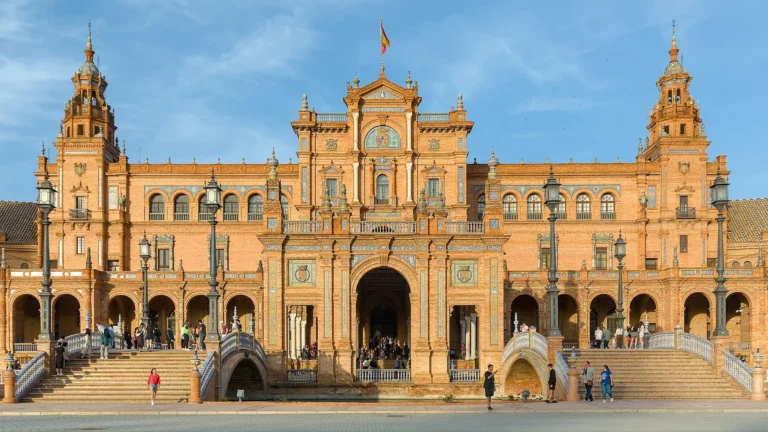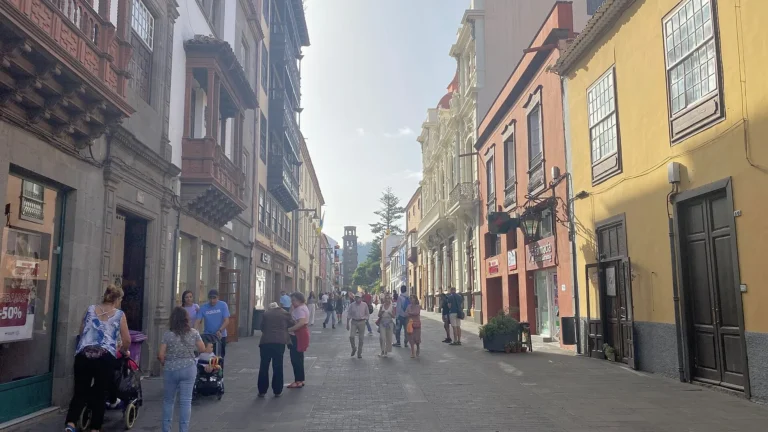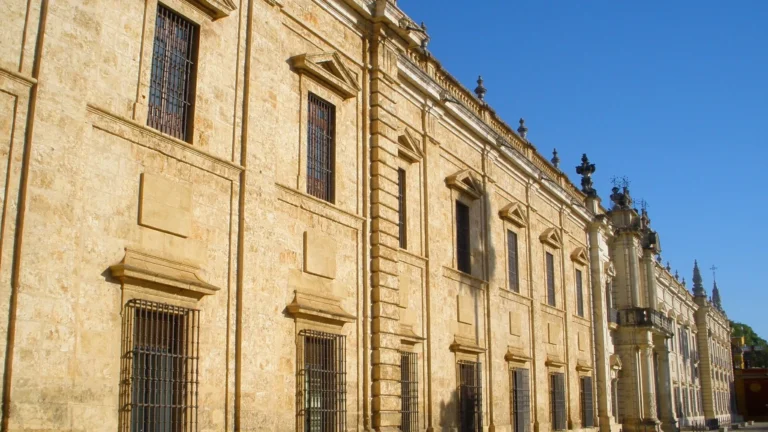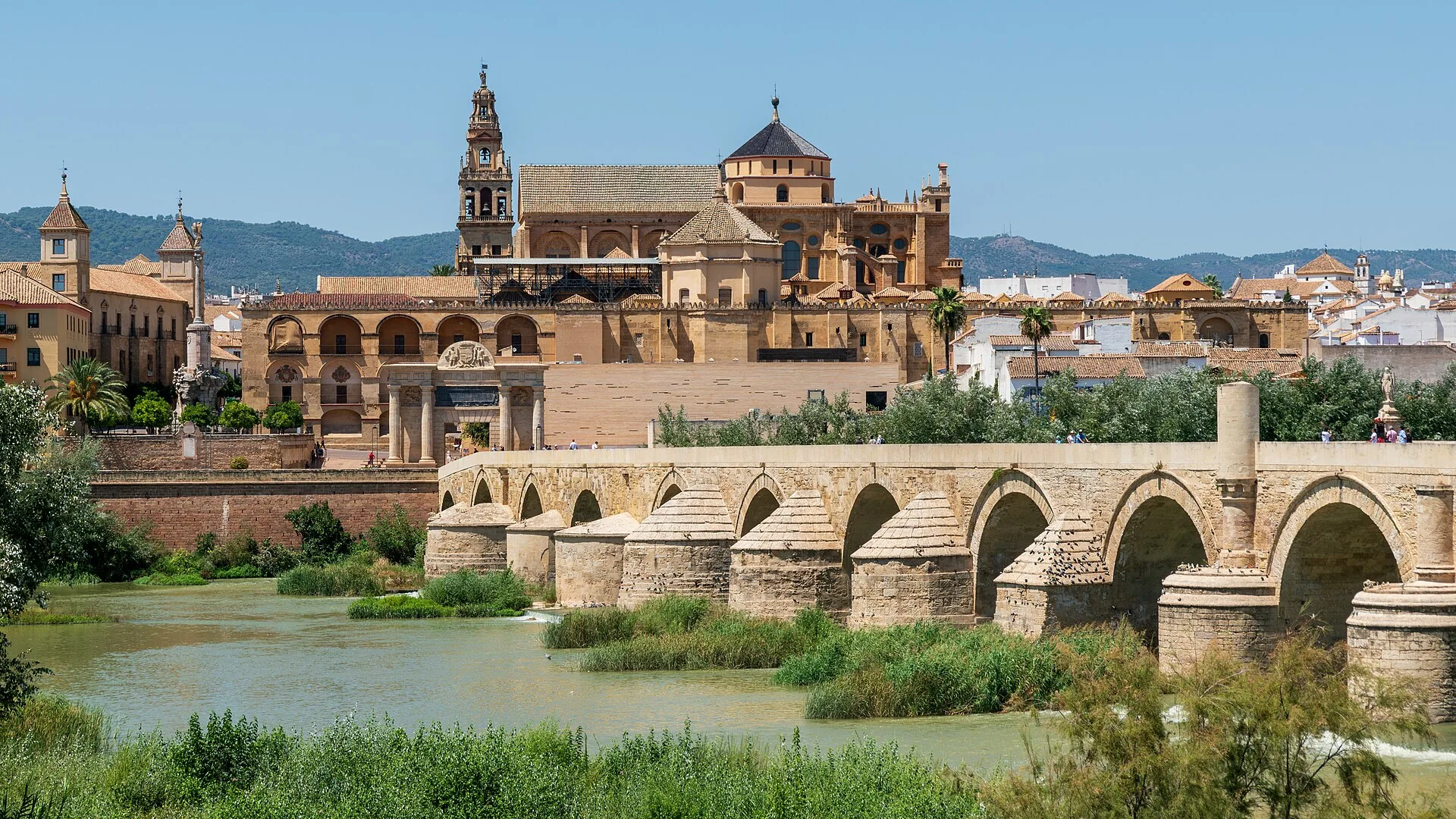
In short: Córdoba is one of the most affordable university cities in Andalusia and the top address for veterinary medicine and agricultural sciences. With Abitur or Matura you apply via UNEDasiss and the Distrito Único Andaluz, and the first year of study costs 757.20 euros (as of October 2026). In return, expect teaching in Spanish, very hot summers and a campus outside the city.
At a glance
- University: Universidad de Córdoba (UCO), public, founded in 1972
- Locations: city centre, Campus de la Salud, Campus Rabanales, plus Belmez
- Strengths: veterinary medicine, agricultural and food sciences
- Costs: 12.62 euros per ECTS for a Grado, from the second year a 99 percent discount on passed credits
- Rent: 9.6 euros per square metre (Idealista, September 2026)
- What you need: Acreditación from UNEDasiss, the additional PCE exams for popular subjects, solid Spanish
The Universidad de Córdoba: campuses and location in the city
The Universidad de Córdoba (UCO) is the city’s only public university. It has existed since 1972 and is spread over three locations in Córdoba and one in the province. For your daily life this is the single most important piece of information, because depending on your subject you will spend your days in the middle of the old town or on a campus outside the city.
| Location | Where | Subjects |
|---|---|---|
| Campus Jurídico-Social and old town | Centre | Law, economics, labour sciences, humanities |
| Campus de la Salud | West of the city | Medicine, nursing and other health subjects |
| Campus Rabanales | east, outside the city | Veterinary medicine, agriculture, natural sciences, engineering |
| Belmez | around 60 kilometres away | Escuela Politécnica (engineering subjects) |
The humanities faculty (Filosofía y Letras) is on Plaza del Cardenal Salazar in the old Jewish quarter, a few minutes from the Mezquita. The rectorate is on Avenida Medina Azahara. Rabanales is a campus of its own on the grounds of a former workers’ university: lots of space, laboratories, a veterinary hospital, but nothing around it.
What the UCO is known for
The university’s profile lies in everything to do with agriculture, food and animals. It coordinates the international campus of excellence for agriculture and food, and veterinary medicine in Rabanales has the longest tradition in southern Spain. Alongside this, it offers the full range of a medium-sized university: medicine, nursing, law, business administration, teacher training, languages, history, computer science and engineering.
Language of instruction
Teaching and exams are almost entirely in Spanish. The UCO keeps a list of subjects taught in English, and primary teacher training has a bilingual track. Still, you should not plan on a whole degree in English. In Andalusia you also have to prove a foreign language at B1 level before finishing your Grado. This applies to all students, and with German as your native language and English from school it is rarely a problem.
Admission with Abitur or Matura and what studying costs
The UCO does not allocate its places itself. All public universities in Andalusia share one procedure, the Distrito Único Andaluz (DUA). You submit a single online application there and rank the degrees you want, and the order is binding.
-
Apply for the Acreditación at UNEDasiss
UNEDasiss is the office of the Spanish distance university UNED that converts your Abitur or Matura into a Spanish entrance grade. With a qualification from the EU you do not need recognition by the ministry. In 2026 the application window ran from 4 February to 1 December.
-
Decide whether you need PCE
The entrance grade goes up to 10 points. The admission grade (nota de admisión) goes up to 14, and you can only get the extra 4 points through subject exams, the PCE. Without them you stay at a maximum of 10 out of 14.
-
Apply via the DUA portal in June
In 2026 the ordinary phase ran from 11 to 22 June, and the first allocation came on 3 July. Germans and Austrians apply in the general quota, together with Spanish school leavers.
-
Accept your place and enrol
After each allocation you only have a few days to enrol or reserve your place. If you miss the deadline, you lose the place.
How high are the hurdles?
The nota de corte is not a fixed value but the grade of the last person who got a place the previous year. In Córdoba the health subjects are well above 10 points: medicine, nursing, physiotherapy and veterinary medicine cannot be reached without PCE. Subjects like law, business administration or teacher training are clearly below that. The Junta de Andalucía publishes the official values for each degree on the DUA portal, so look at last year’s list there before you decide on PCE. The whole logic, including dates, is explained in the guide Studying in Spain.
Costs per ECTS and discounts
The Junta sets the prices uniformly for all public universities (as of October 2026):
- Grado, first enrolment: 12.62 euros per ECTS, i.e. 757.20 euros for a full year of 60 ECTS
- Second enrolment in the same subject: 25.25 euros per ECTS. So failing costs double.
- Máster: 13.68 euros per ECTS, professionally qualifying Másters 12.62 euros
- Administration: 59.10 euros for opening your file, 5.70 euros for the student card
From the second year, the Andalusian Bonificación applies: 99 percent of the costs for credits you passed at the first attempt in the previous year are waived. There is no income limit. If you pass everything, from the second year you pay little more than the administrative fees. You can pay tuition fees in one go or in up to eight instalments.
Enrolment on site: what to bring and how good your Spanish needs to be
Enrolment (matrícula) is largely online, and the secretariat of your faculty checks the documents afterwards. Have these things ready:
- ID card or passport
- Acreditación from UNEDasiss and your final school certificate
- Allocation notice from the DUA portal
- IBAN for direct debit if you pay in instalments
- Declaration for the 99 percent discount from the second year
Which documents are required as originals or certified copies is stated in the faculty’s enrolment notes. Read them before you travel, because the deadlines are short.
We have not found a formal language requirement for admission in any official rule for Andalusia. Do not rely on that: lectures, course materials and exams are in Spanish, and in Córdoba you will also hear the Andalusian accent. With B2 you will keep up in the first semester, below that it gets tough. The university’s language centre, UCOidiomas, offers Spanish courses and is an exam centre for DELE and SIELE.
Living for several years: neighbourhoods, rents, halls of residence
Córdoba is relaxed when it comes to rents. For September 2026, Idealista lists an asking price of 9.6 euros per square metre for entire flats. That works out at around 670 euros for 70 square metres. For comparison: Seville is at 13.4 euros, Málaga at 16.5 euros. Prices are rising, however, by 5.2 percent compared with the previous year.
Which neighbourhoods suit which campus
- Ciudad Jardín: the classic student neighbourhood west of the centre. Lots of shared flats, bars, short distances to the Campus de la Salud and the city centre.
- Centro: around Plaza de las Tendillas. Practical for law, economics and humanities, a little more expensive.
- Near the station: a good idea if you study in Rabanales, because the train to the campus leaves from there.
- Judería and the area around the Mezquita: beautiful, but touristy, noisy and full of holiday flats. Rarely the best choice for living there for years.
Shared flat, your own flat or hall of residence
Most students start in a shared flat and look for a flat with friends after the first year. If you stay for several years, make sure you have a normal residential tenancy contract and not a fixed-term seasonal contract: the difference in tenant protection is big. Details are under Finding a flat in Spain.
The UCO has its own housing service (Servicio de Alojamiento) and a Colegio Mayor, a hall of residence with meals and community life. The university itself quotes around 650 to 720 euros a month for the hall including meals (figure for 2025/26). Belmez has its own small accommodation for first-year students. In your first year, the hall can make getting started easier, but it is not cheaper than a shared flat.
Monthly budget, part-time work and transport
The UCO estimates students’ living costs at about 600 to 700 euros a month, including housing, food, materials and transport (university figure for 2025/26). That is tight but doable. The following breakdown is our own estimate for life in a shared flat, not official statistics:
| Item | Range per month (estimate) |
|---|---|
| Room in a shared flat including bills | 250 to 380 euros |
| Groceries | 180 to 250 euros |
| Mobile phone and share of internet | 15 to 30 euros |
| Transport | 0 to 35 euros |
| Leisure, tapas, sport | 80 to 150 euros |
| Tuition fees spread over twelve months (first year) | around 65 euros |
| Total | around 600 to 900 euros |
Idealista gives no separate figure for rooms in shared flats in Córdoba. For context: the Spanish average in the first quarter of 2026 was 430 euros, and Jaén, the cheapest provincial capital, was at 245 euros. In our experience, Córdoba is closer to Jaén. You will find more comparison figures under Cost of living in Spain.
Working alongside your studies
As an EU citizen you may work in Spain without a permit. However, the job market in Córdoba is small, wages are low, and timetables in a Grado are tightly structured. Realistic options are hospitality and tourism, tutoring in German or English, and remote work for clients back home. For any job with a contract you need an NIE and a social security number. More on this under Working in Spain.
Bus, train and bike
The city centre is flat and compact, and a lot can be done on foot or by bike, as the city has a network of cycle lanes. City buses are run by Aucorsa. A regional train runs to Rabanales from the main station, plus a direct bus line from Plaza de Colón during the semester. There are monthly and semester passes for the train, and discounts for young people on buses and trains. Current prices are available from Aucorsa and Renfe.
Life in Córdoba and the honest downside
Córdoba is a medium-sized city on the Guadalquivir, manageable and very Spanish. The old town with the Mezquita is a World Heritage Site, in May the courtyards open for the patio festival, and then comes the Feria. What there is to see is listed under Córdoba sights, and the festivals under Festivals in Andalusia. English is of little help in everyday life, so your Spanish will improve quickly here.
The location is better than the map suggests. Córdoba is on the high-speed line between Madrid and the south, and you can reach Seville and Málaga in under an hour each. The city has no airport with scheduled flights to Germany or Austria, so you fly via Seville, Málaga or Madrid.
The downsides are part of the deal. Córdoba has the hottest summers in Spain, the city comes to a standstill in July and August, and even the June exams are exhausting. There is no sea. If you study in Rabanales, you commute every day and are tied to timetables. And the nightlife is smaller than in Granada or Seville. If you are looking for a big city or a beach, this is not the place for you.
Paperwork for a degree lasting several years
For a full degree, it is worth getting the formalities done right in the first semester. You will need them for your rental contract, job and other contracts.
- NIE: the foreigner identification number for contracts, the bank and work. How to get it is explained under Applying for an NIE.
- Padrón: registration at the town hall. It is the basis for many discounts and applications: Empadronamiento.
- Bank account: a Spanish account makes rent, instalments and a phone contract easier: Opening a bank account in Spain.
- Health insurance: the European Health Insurance Card (EHIC) only covers necessary treatment in the public system. For several years, you should check with your insurer how you stay covered. More under Health insurance in Spain.
Only coming for one or two semesters? Then read Erasmus in Córdoba.
Frequently asked questions
Can I study veterinary medicine in Córdoba with the Abitur?
Yes, but not without PCE. Veterinary medicine is one of the subjects with a nota de corte well above 10 points. So you need the Acreditación from UNEDasiss plus good grades in two suitable subject exams.
How much does a year of study at the Universidad de Córdoba cost?
In the first year, 757.20 euros for 60 ECTS plus administrative fees. From the second year, 99 percent of the costs are waived for the credits you passed at the first attempt in the previous year (as of October 2026).
Are there degrees taught in English?
Individual subjects and a bilingual track in teacher training, but no broad English offer. Plan your degree in Spanish.
Where do students live in Córdoba?
Mainly in Ciudad Jardín and in the centre. Those who study in Rabanales like to live near the station, because the train to the campus leaves from there.
Sources
- Universidad de Córdoba: International
- Universidad de Córdoba: Getting to the Rabanales campus
- Universidad de Córdoba: Servicio de Alojamiento
- Junta de Andalucía: Distrito Único Andaluz portal
- Junta de Andalucía: Guide to the 99 percent discount
- Idealista: Andalusia rental price report
As of: October 2026
Cover image: Jose María Ligero Loarte · Wikimedia Commons · CC BY-SA 4.0
Free
The moving checklist as a PDF (in German)
All steps in the right order to tick off. Plus the key tips by email over the next weeks (in German). Free, unsubscribe at any time.