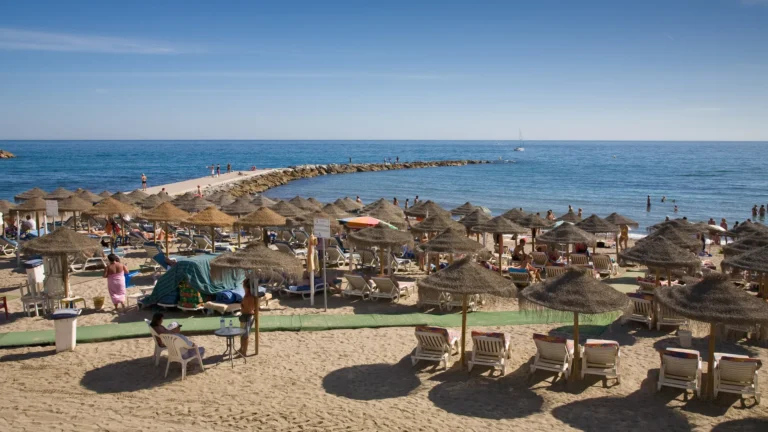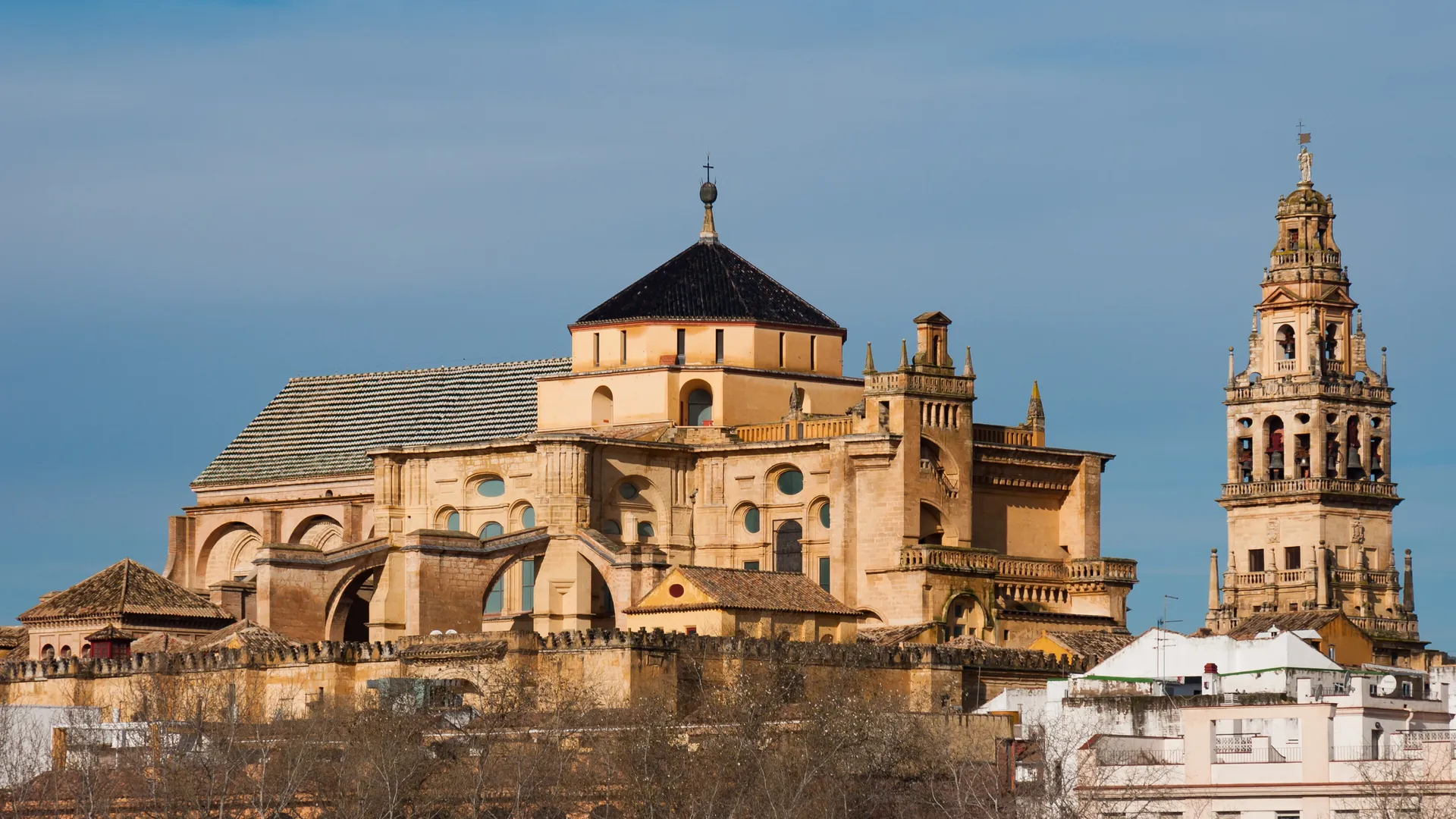
In short: Córdoba is a mid-sized university city with World Heritage sites, low rents and fast AVE high-speed train links to Madrid, Seville and Málaga. It suits you if you want to live cheaply and quietly and can put up with the summer heat.
At a glance
- Population: 323,262 in the city (INE, 1.1.2025)
- Rent: 9.6 € per m² (Idealista, September 2026)
- Purchase price: 1,850 € per m² (Idealista, September 2026)
- Climate: 18.2 °C annual average, July averages a daily high of 36.9 °C (AEMET, normal values 1981 to 2010)
- Airport: its own airport with only a few connections; for flights to Germany use Seville or Málaga
- Who it suits: remote workers, retirees, students, families on a smaller budget
- Difficult for: people sensitive to heat, job seekers without Spanish, beach lovers
Who is Córdoba right for?
- Good: remote workers pay far less rent than in Seville or Málaga.
- Good: if you travel a lot, the AVE gets you to Madrid, Seville and Málaga quickly.
- Good: retirees find a manageable city centre that is easy to get around on foot.
- Good: students have the Universidad de Córdoba and a campus of Universidad Loyola.
- Less so: if you cope badly with heat, because Córdoba is one of the hottest cities in Spain.
- Less so: if you are looking for a well-paid local job, as the labour market is small.
- Less so: if you expect an international environment, you will hear English almost only from tourists.
German-speaking doctors in Córdoba: 5 verified practices and clinics →
Where to live?
| Neighbourhood / town | Rent €/m² | Suits |
|---|---|---|
| Centro / Judería | 9.9 | singles, couples, life without a car |
| Ciudad Jardín | 9.1 | students, short distances to the centre |
| Vista Alegre / Poniente | 9.4 | families, proximity to Hospital Reina Sofía |
| Santa Rosa | 9.8 | families, quiet living in the north |
| El Brillante | 8.9 | families with a car, houses with garden and pool |
Figures from the Idealista rent report for September 2026, each for the district the neighbourhood belongs to (e.g. Zoco, Poniente, Vistalegre); in El Brillante the supply of rentals is small.
What does life cost?
| Item | Per month |
|---|---|
| Rent for a 2-room flat (approx. 70 m²) | approx. 670 € |
| Utilities (electricity, water, internet) | 150 to 200 € |
| Groceries (1 person) | 230 to 280 € |
| Transport | 30 to 50 € |
| Total (1 person) | approx. 1,080 to 1,200 € |
Rent calculated from 9.6 €/m² × 70 m² (Idealista, September 2026), the rest is an estimate; in summer electricity use rises considerably because of the air conditioning.
Working
Córdoba lives from public administration, retail, tourism around the Mezquita and Medina Azahara, and from agriculture and olive oil. The city is also known for its jewellery and silver industry. Local jobs are scarce and poorly paid, and without fluent Spanish you have hardly any chance. Córdoba is ideal for remote workers and self-employed people who combine a German income with low living costs. More on this: Working in Spain, Autónomo.
Everyday life: climate, health, schools, transport
- Climate: in July the average daily high is 36.9 °C, in August 36.5 °C, and in January night temperatures drop to an average of 3.6 °C; 605 mm of rain falls per year (AEMET, Córdoba Aeropuerto station, 1981 to 2010). Winters are cooler and damper than many people expect.
- Health: the large public hospital is the Hospital Universitario Reina Sofía, a university hospital with all specialities. Private options include Quirónsalud Córdoba and Hospital San Juan de Dios. Link Health insurance.
- Schools: there is no German school; the Colegio Británico de Córdoba is an English-language private school, otherwise there are bilingual Spanish schools. Link with your family.
- Transport: the AVE takes about 1 hour 45 minutes to Madrid, around 45 minutes to Seville and about 1 hour to Málaga (Renfe, fastest connections). In the city, buses and a bike are enough; for the Sierra and day trips a car is handy.
First steps on the ground
-
Apply for your NIE
Book your appointment at the foreigners’ office of the Policía Nacional in Córdoba online, and early. Guide
-
Find a flat
At viewings, check for air conditioning, a top-floor location and heating for the winter. Guide
-
Register at the town hall
You do the Padrón at the Ayuntamiento de Córdoba; book an appointment in advance. Guide
-
Open a bank account
With your NIE you open an account with a Spanish bank or an online bank. Guide
-
Health card
With your Padrón and proof of insurance you apply for the card at the Centro de Salud in your neighbourhood. Guide
Typical mistakes
- Renting an old-town flat without air conditioning because it looks dreamy with its patio in spring.
- Underestimating the winters: many older flats have no heating and hardly any insulation.
- Wanting to live in El Brillante without a car, even though the routes are uphill and long.
- Scheduling your move for May, when patios, the Feria and tourists fill the city.
Compare: Seville, Granada, Jaén. For studying: Studying in Córdoba.
Frequently asked questions
Is Córdoba cheaper than Seville?
Yes, considerably: rent is 9.6 €/m² compared with 13.4 €/m² in Seville (Idealista, September 2026). Buying is also cheaper at 1,850 €/m².
How do I get to Germany without a direct flight?
Take the AVE to Málaga or Seville and fly from there. Alternatively, take the train to Madrid and fly from Barajas.
How hot is the summer?
Average daily highs in July and August are around 37 °C (AEMET). Days above 40 °C happen every summer.
Sources
- Idealista: rental prices Córdoba
- Idealista: purchase prices Córdoba
- INE: population by municipality, province of Córdoba
- AEMET: climate values Córdoba Aeropuerto
- Renfe
As of: October 2026
Free
The moving checklist as a PDF (in German)
All steps in the right order to tick off. Plus the key tips by email over the next weeks (in German). Free, unsubscribe at any time.