In short: Canarian cuisine is simple and hearty: wrinkled potatoes with mojo, stews, goat’s cheese, grilled fish. It differs markedly from mainland Spain, with influences from Latin America and from the islands’ original inhabitants. You eat best away from the promenades, in villages, harbour towns and, on Tenerife, in the guachinches.
At a glance
- Must try: papas arrugadas con mojo, gofio, goat’s cheese, grilled fish
- Meal times: lunch from about 1 pm, dinner from about 8 pm, earlier in resorts
- Vegetarian: potatoes, cheese, vegetable stews; with stews, ask about meat
- Speciality: guachinches in the north of Tenerife
The classics: what’s on almost every menu?
You’ll find these dishes on all seven islands. They are often ordered as small portions to share, much like tapas.
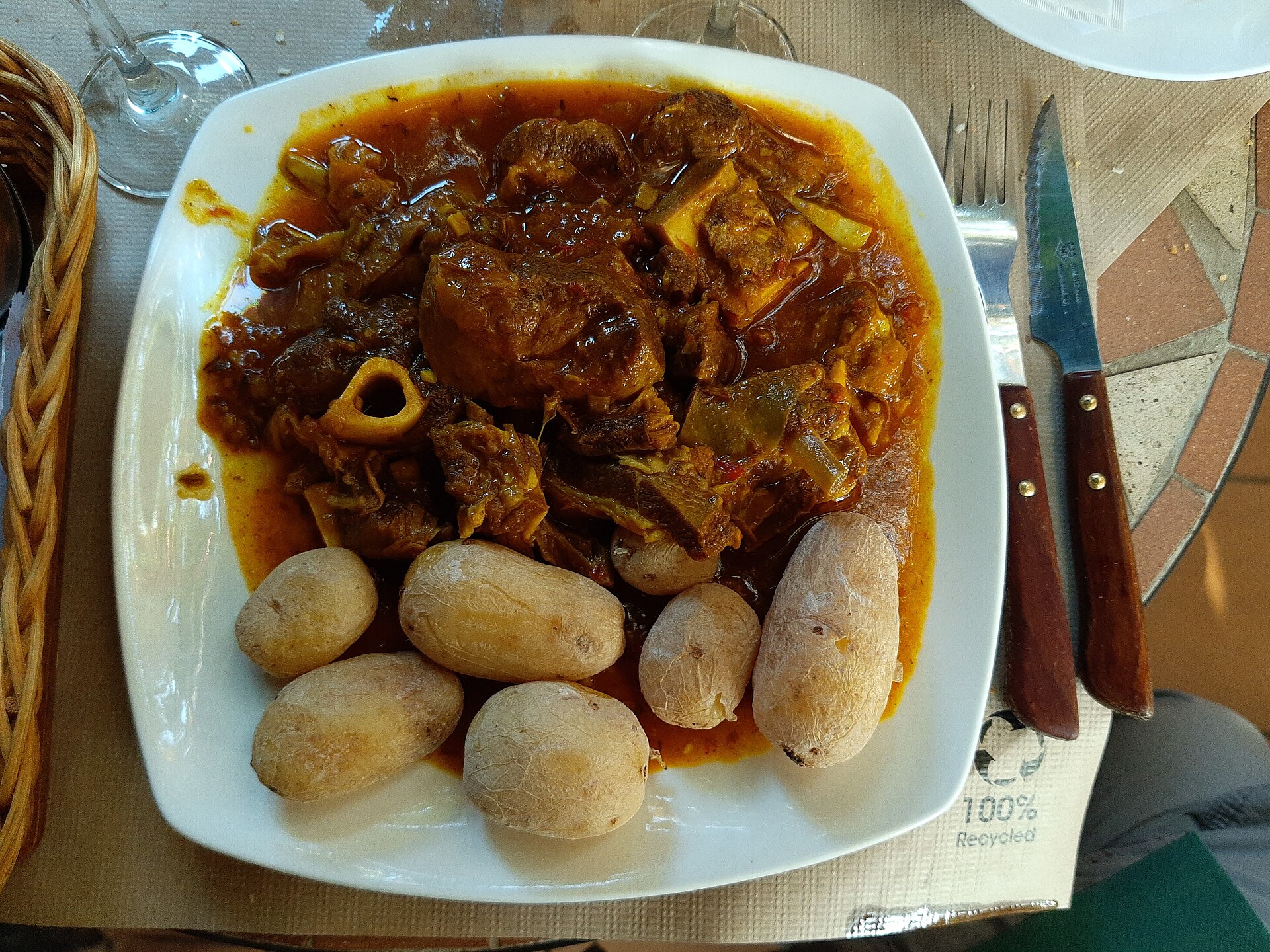
- Papas arrugadas con mojo: small potatoes boiled in heavily salted water until the skin wrinkles and a salt crust remains. You eat them with the skin on. They come with mojo rojo (a red sauce of peppers, garlic and cumin, spicier as mojo picón) and mojo verde (green, with coriander or parsley).
- Gofio: flour made from toasted grain, usually maize or wheat, which the original inhabitants already ate. It is served as escaldón (stirred into fish stock), in stews, in milk for breakfast or as a dessert.
- Ropa vieja: chickpeas with shredded meat, potatoes and peppers.
- Puchero canario: a hearty stew with vegetables, chickpeas and several kinds of meat.
- Conejo en salmorejo: rabbit in a marinade of garlic, paprika, vinegar and herbs.
Cheese: the underrated star
A lot of goat’s cheese is made in the Canary Islands: fresh (tierno), semi-cured (semicurado) or cured (curado). The rind is often rubbed with paprika or gofio.
- Queso Majorero: goat’s cheese from Fuerteventura with a protected designation of origin.
- Queso Palmero: goat’s cheese from La Palma, often lightly smoked.
- Queso de Flor de Guía: a soft cheese from the north of Gran Canaria, curdled with thistle flowers instead of rennet.
- Queso asado: grilled cheese, served with mojo or palm honey.
- Almogrote: a spicy paste from La Gomera made of cured cheese, peppers, garlic and oil, spread on bread.
Fish and seafood
In the harbour towns, fish is usually served simply, grilled or pan-fried, with papas and mojo. The staff will often show you the catch of the day, and the price then depends on the weight. Ask what the piece costs before you order.
- Vieja: parrotfish with fine, white flesh, the islands’ most typical fish.
- Cherne and sama: large, firm fish, served as a fillet or whole.
- Sancocho canario: salted fish with potatoes, sweet potato, mojo and a roll of kneaded gofio.
- Lapas: grilled limpets with green mojo.
Sweets, coffee and wine
The desserts are sweet and rich, and one portion is usually enough for two. When it comes to coffee, Tenerife has its own speciality.
- Bienmesabe: a cream of almonds, egg and sugar, often served with ice cream.
- Quesillo: Canarian flan made with eggs and condensed milk.
- Barraquito: layered coffee with condensed milk, liqueur, milk foam, cinnamon and lemon zest. Without alcohol, you order a leche y leche.
- Wine: on Lanzarote, the vines in La Geria grow in hollows of volcanic ash, and Malvasía is the best-known wine. Tenerife, La Palma and Gran Canaria also have their own wine regions.
Guachinches: home cooking at the winemaker’s
Guachinches are simple eateries in the north of Tenerife where winemakers serve their own wine along with a few homemade dishes. Many are in garages or on the terraces of private houses and only open as long as the wine from the last harvest lasts. The menu is short and often only read out to you, and payment is frequently in cash. Most are in the wine villages between La Laguna and La Orotava. That is one of the reasons not to skip the north when you’re deciding Tenerife north or south.
Where to eat well and how to order
The rule of thumb is the same as everywhere in Spain: the further from the promenade, the better the value for money.
- Order several dishes for the middle of the table, as a full or half portion (ración or media ración).
- At lunchtime, many restaurants offer a set menu of the day (menú del día) with several courses and a drink.
- Tipping is voluntary. It is common to round up or leave some small change.
For a comparison with the mainland: Andalusian food. Which island suits your holiday is shown in Which Canary Island is right for me? For longer stays: Wintering in the Canary Islands.
Frequently asked questions
Is mojo spicy?
Mojo verde is mild and fresh. Mojo rojo is spicy, and as mojo picón it ranges from slightly to distinctly hot, depending on the cook.
Do you eat the skin of papas arrugadas?
Yes. The salt crust on the skin is part of the dish.
Can you eat vegetarian in the Canary Islands?
Yes, with papas arrugadas, grilled cheese, salads and vegetable dishes. Stews often contain meat or meat stock, so ask.
When do the locals eat?
Lunch from about 1 pm, dinner from about 8 pm. In the resorts, many kitchens are open all day.
Sources
- Turismo de Tenerife: official tourism website
- Visit La Palma: official tourism website
- CACT Lanzarote: visitor centres, including the Casa Museo del Campesino
As of: October 2026
As of October 2026. Opening hours, prices and entry rules change. Check them on the official websites before your visit.
Cover image: Gerda Arendt · Wikimedia Commons · CC0
Free
The moving checklist as a PDF (in German)
All steps in the right order to tick off. Plus the key tips by email over the next weeks (in German). Free, unsubscribe at any time.