In short: On Gran Canaria, the side of the island decides your beach day. In the south the sun almost always shines and the water is calm, while the north has Las Canteras, one of the best city beaches in Spain, but more frequent clouds. If you like solitude, hike to Güigüí.
At a glance
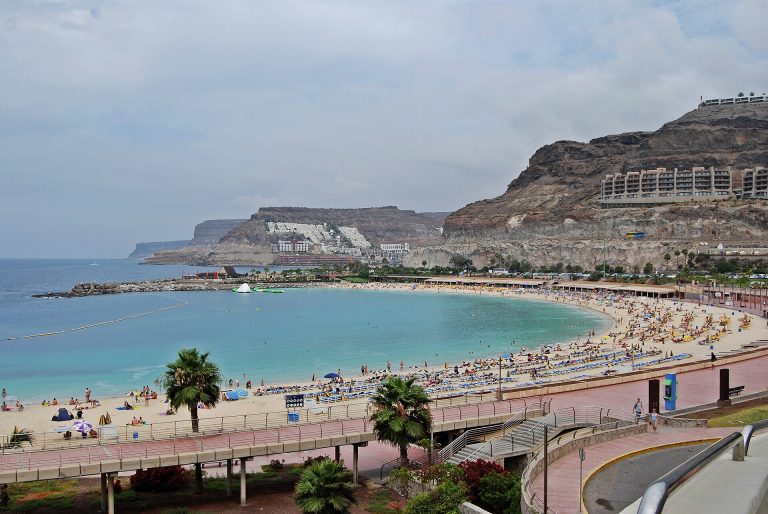
- For families: Amadores, Anfi del Mar, Las Canteras (northern part)
- For long walks: Maspalomas to Playa del Inglés
- For city and beach: Las Canteras in Las Palmas
- For adventure: Güigüí, only on foot or by boat
- Entry: all beaches are freely accessible
- Best time: all year round, mornings are usually less windy
Which beaches in the south are the best?
The south coast lies in the wind shadow of the mountains. This is where most hotels are, and where the weather is most reliable.
- Maspalomas: a long beach in front of the dunes, from the lighthouse (Faro) all the way to Playa del Inglés. Behind you lies the sandy landscape, everything about it is in the article on the Maspalomas dunes.
- Playa del Inglés: wide, lively, with plenty of facilities.
- Amadores: an artificial, semicircular bay with light sand and calm, turquoise water.
- Anfi del Mar: light sand, protected by a breakwater, gentle entry into the water.
- Puerto de Mogán: a small beach next to the harbour, easy to combine with a stroll through the town.
What does the north offer with Las Canteras?
The north is greener and rougher. You can swim mainly where reefs or bays slow down the waves.
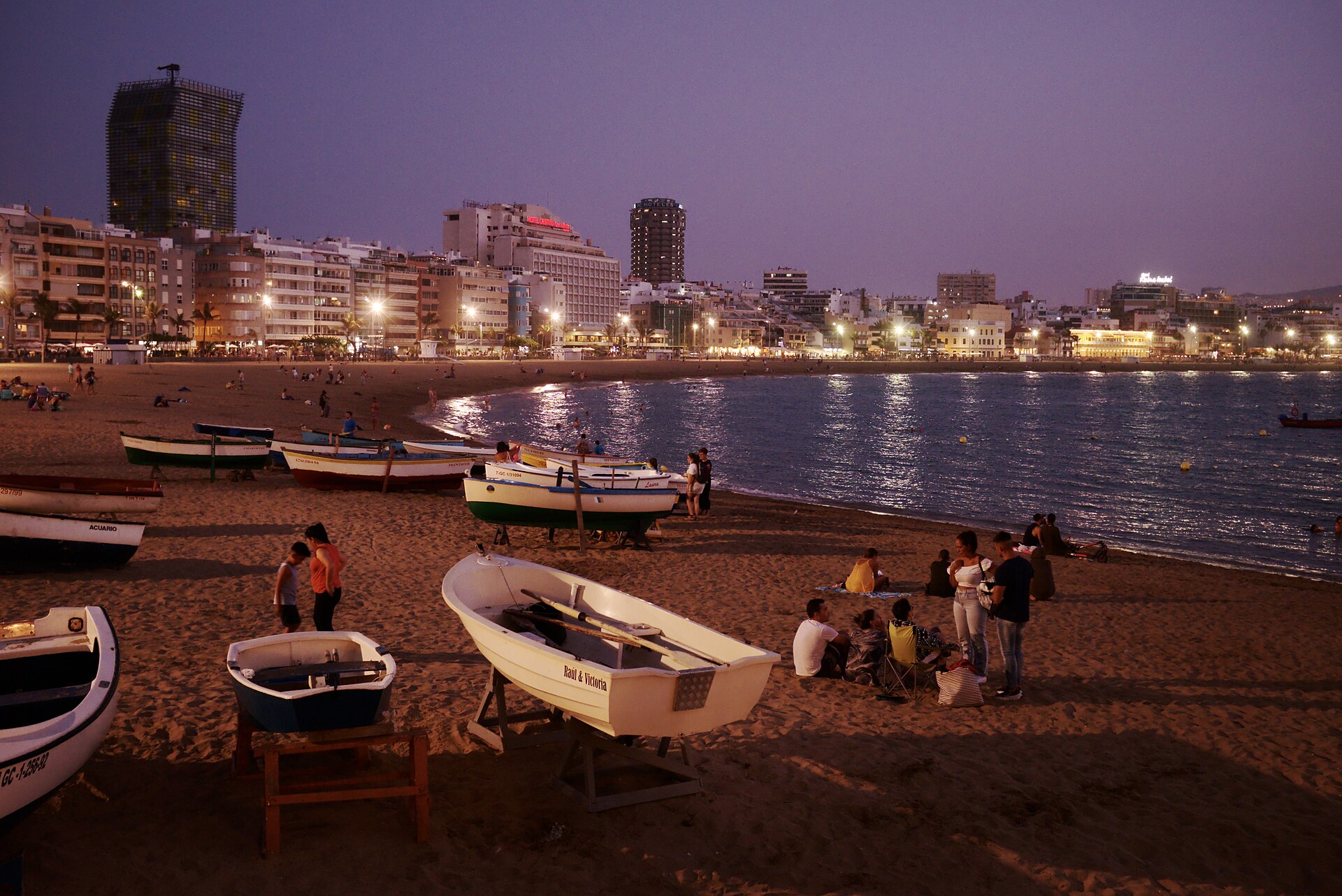
- Las Canteras (Las Palmas): around 3 km of city beach with a promenade. The offshore reef, La Barra, keeps the waves out. At low tide the water behind it is almost a swimming pool and good for snorkelling. At the southern end, La Cícer, people surf.
- Sardina del Norte: a small bay in the northwest, popular with divers and at sunset.
- Las Salinas (Agaete): not a beach, but natural pools in the lava rock.
In summer a layer of cloud often hangs over Las Palmas, locals call it Panza de burra (donkey’s belly). It is still warm, and the sun usually breaks through in the afternoon.
Where is Gran Canaria still wild and remote?
The west of the island is hardly built up. If you want to go there, you have to walk or drive a dirt track.
- Güigüí: two bays beneath high cliffs, reachable only on a mountain hike of several hours or by boat. No shade, no water, no kiosk.
- Playa de Veneguera: a remote pebble bay in the southwest, reachable via a long dirt track.
When is the best time for swimming?
You can swim all year round. At the airport on the east coast, the weather service AEMET records an average daily maximum of 20.8 °C in January and 27.5 °C in August, and from May to August there is practically no rain (normal values 1981 to 2010). The Atlantic is cooler than the Mediterranean in summer, but the water temperature changes only a little over the year. Monthly values are in Canary Islands weather.
The wind picks up in the afternoon, so mornings are the most pleasant time on the beach.
Getting there, parking and local tips
The GC-1 motorway connects Las Palmas, the airport and the entire south coast. Buses run frequently between the resorts and into the capital, you only need a car for the remote bays.
- Parking: Spaces are scarce in Puerto de Mogán, Amadores and at Las Canteras. Use a car park or take the bus.
- Flags: Red means no swimming. There are strong currents on the west coast and in the north.
- Combine: Las Canteras with the old town of Vegueta, Mogán with Amadores, Agaete with Sardina. The sights inland are in Gran Canaria sights.
With small children, Canary Islands with kids helps you choose where to stay. And if you want to spend the winter on the beach, you will find the planning in Wintering in the Canary Islands.
Frequently asked questions
Which beach is best for families?
Amadores and Anfi del Mar. Both are sheltered, slope gently and have everything you need within walking distance.
Can you swim all year round?
Yes. In winter the water is cool, but the air in the south is mild and sunny.
Is Las Canteras really a swimming beach?
Yes. Behind the reef the water is calm and clear. It is a city beach with a promenade, cafés and showers, not a natural beach.
How do I get to Güigüí?
On foot via a mountain path or by boat from the southwest coast. The boats do not run in every sea condition.
Sources
- AEMET: climate values for Gran Canaria Airport
- Fred. Olsen Express: ferry routes from Gran Canaria
- Binter: flights between the islands
As of: October 2026
As of October 2026. Opening hours, prices and entry rules change. Check them on the official websites before your visit.
Cover image: Nicolas Vigier · Wikimedia Commons · CC0
Free
The moving checklist as a PDF (in German)
All steps in the right order to tick off. Plus the key tips by email over the next weeks (in German). Free, unsubscribe at any time.