In short: The Costa Tropical is the coast of the province of Granada: smaller, quieter and more Spanish than the neighbouring Costa del Sol. The beaches are made of dark sand and pebbles, the water is clear, and mangoes and avocados grow behind the coves. From Granada you get there quickly on the motorway.
At a glance
- Best time: June and September, swimming from May to October
- Duration: day trip from Granada or several days on site
- Admission: all beaches are free to access
- Getting there: by car on the A-44 and A-7 or by bus from Granada
- Bring: water shoes, snorkel, beach umbrella
La Herradura: the bay for divers and snorkellers
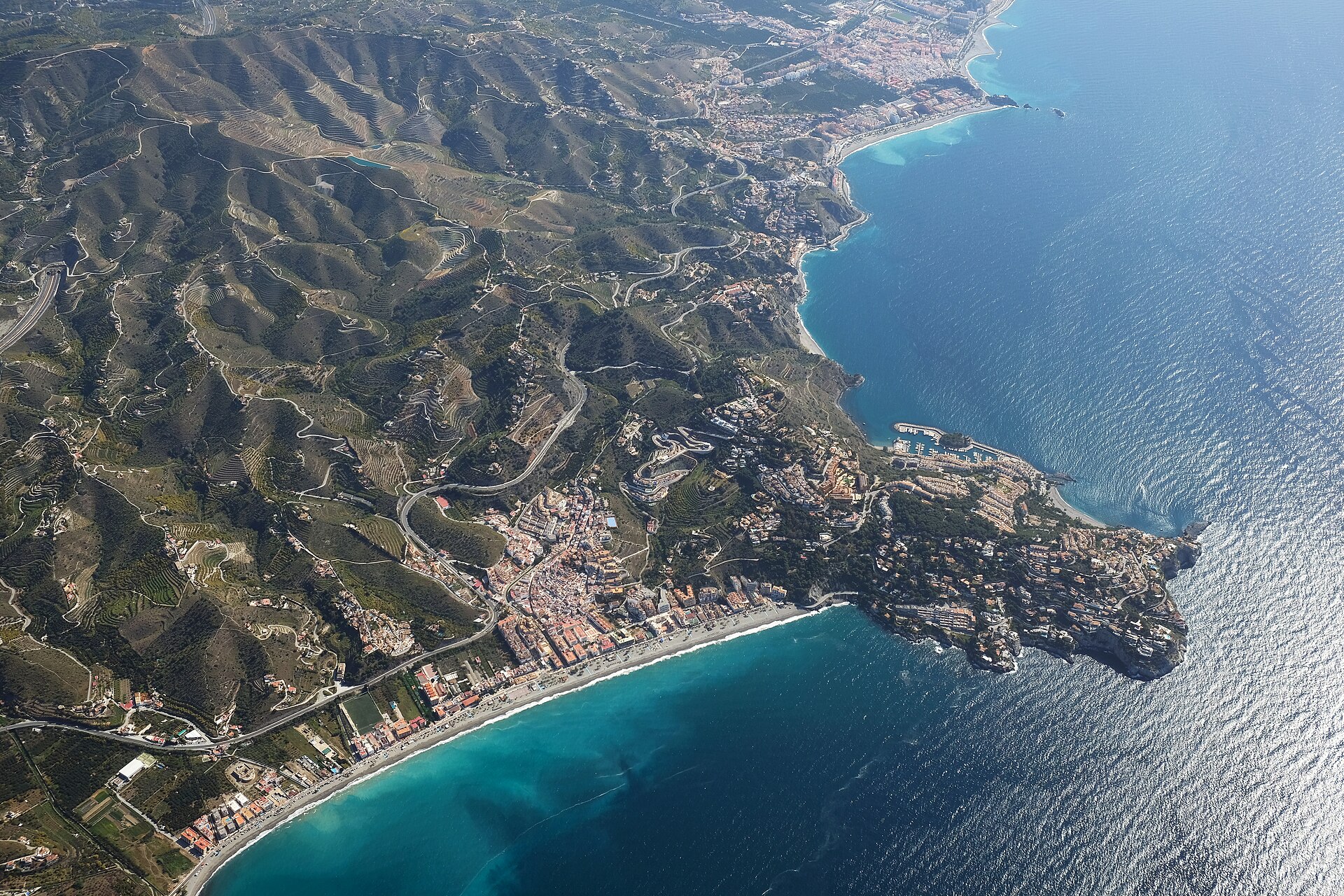
La Herradura lies at the far west end on a horseshoe shaped bay, hence the name (herradura means horseshoe). The beach is long, made of coarse pebbles and drops off quickly. At both ends there are rocks where the snorkelling is good. Most of the coast’s diving schools are based here too.
West of it, already in the Maro-Cerro Gordo protected area, lies Playa de Cantarriján, a cove with two beach restaurants where nude bathing is also common. In high summer, access by private car is usually closed. Then you park up on the main road and take the minibus. What it looks like further west is covered in Costa del Sol beaches.
Almuñécar: town beaches with a castle
Almuñécar is the largest resort on the coast. The Peñón del Santo rock divides the beaches into two halves, and above them sits the old town with San Miguel castle.
- Playa de San Cristóbal: the main beach west of the rock, with a promenade and lots of restaurants.
- Playa Puerta del Mar: east of the rock, right below the old town.
- Playa de Velilla: long and wide, with holiday flats behind it, popular with Spanish families.
Almuñécar makes a good base without a car: beach, old town and bus station are all within walking distance.
Salobreña: a beach below the white village
You can spot Salobreña from the motorway: a white town on a rock with a Moorish castle on top, fields and the sea in front of it. Down below, a rocky outcrop, El Peñón, separates Playa de la Guardia from Playa de la Charca. Both are spacious and rarely overcrowded, even in August.
Combine the beach day with a walk up through the lanes to the castle, ideally in the early evening when it cools down.
Further east: Where does it get quiet?
Beyond the port of Motril, the coast becomes rougher and emptier. The villages are small and there are hardly any hotels.
- Playa Granada (Motril): a long, open beach, popular with surfers when it is windy.
- Calahonda: a fishing village with deep, very clear water right by the shore.
- La Rijana: a small cove between Calahonda and Castell de Ferro below an old watchtower, one of the most beautiful on the coast.
- Castell de Ferro: a quiet village with a long beach and few foreign visitors.
How do you get there and where do you park?
From Granada, the A-44 motorway leads down to the sea and meets the A-7 coastal motorway near Motril. Neither has tolls. Without a car, buses run from Granada to Almuñécar, Salobreña and Motril. Timetables and fares are on the ALSA website.
In Almuñécar and Salobreña, the easiest option in summer is to park in the large car parks on the edge of town and walk the last stretch. At the small coves there are only a few parking spaces: arrive early.
What can you combine the Costa Tropical with?
This coast is where people from Granada go to the beach. You can plan it as a day trip, see Day trips from Granada, or combine it with the mountain villages of the Alpujarras, which lie halfway. To the west it is only a few kilometres to Nerja and Frigiliana.
Try the fruit that gives the coast its name while you are there: mango, avocado and chirimoya (custard apple) grow here outdoors. If you are thinking about spending the winter on the coast or staying for good, the comparison in Where in Spain? will help.
Frequently asked questions
Are the beaches of the Costa Tropical sandy?
Mostly not. Most are made of dark, coarse sand or pebbles. In return, the water is very clear.
Which beach is the most beautiful?
For snorkellers La Herradura, for a quiet cove La Rijana, for a day with a stroll through town the beaches of Salobreña.
Can I get to the Costa Tropical without a car?
Yes, by bus from Granada to Almuñécar, Salobreña or Motril. For the small coves in between you need a car.
Is the Costa Tropical suitable for children?
Yes, but watch the entry into the water: on many beaches it gets deep quickly. Velilla in Almuñécar and the beaches of Salobreña are shallower.
Sources
- ALSA: timetables and tickets for intercity buses
- Cueva de Nerja: official website
- AEMET: climate values Málaga Airport (1981 to 2010)
As of: October 2026
As of October 2026. Opening hours, prices and entry rules change. Check them on the official websites before your visit.
Cover image: kallerna · Wikimedia Commons · CC BY-SA 4.0
Free
The moving checklist as a PDF (in German)
All steps in the right order to tick off. Plus the key tips by email over the next weeks (in German). Free, unsubscribe at any time.