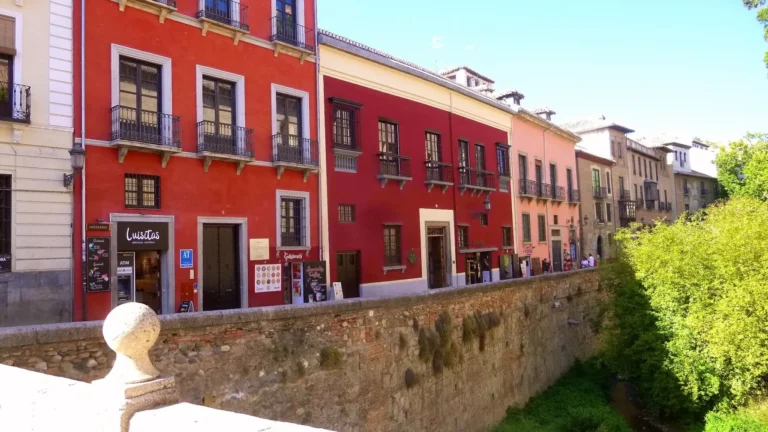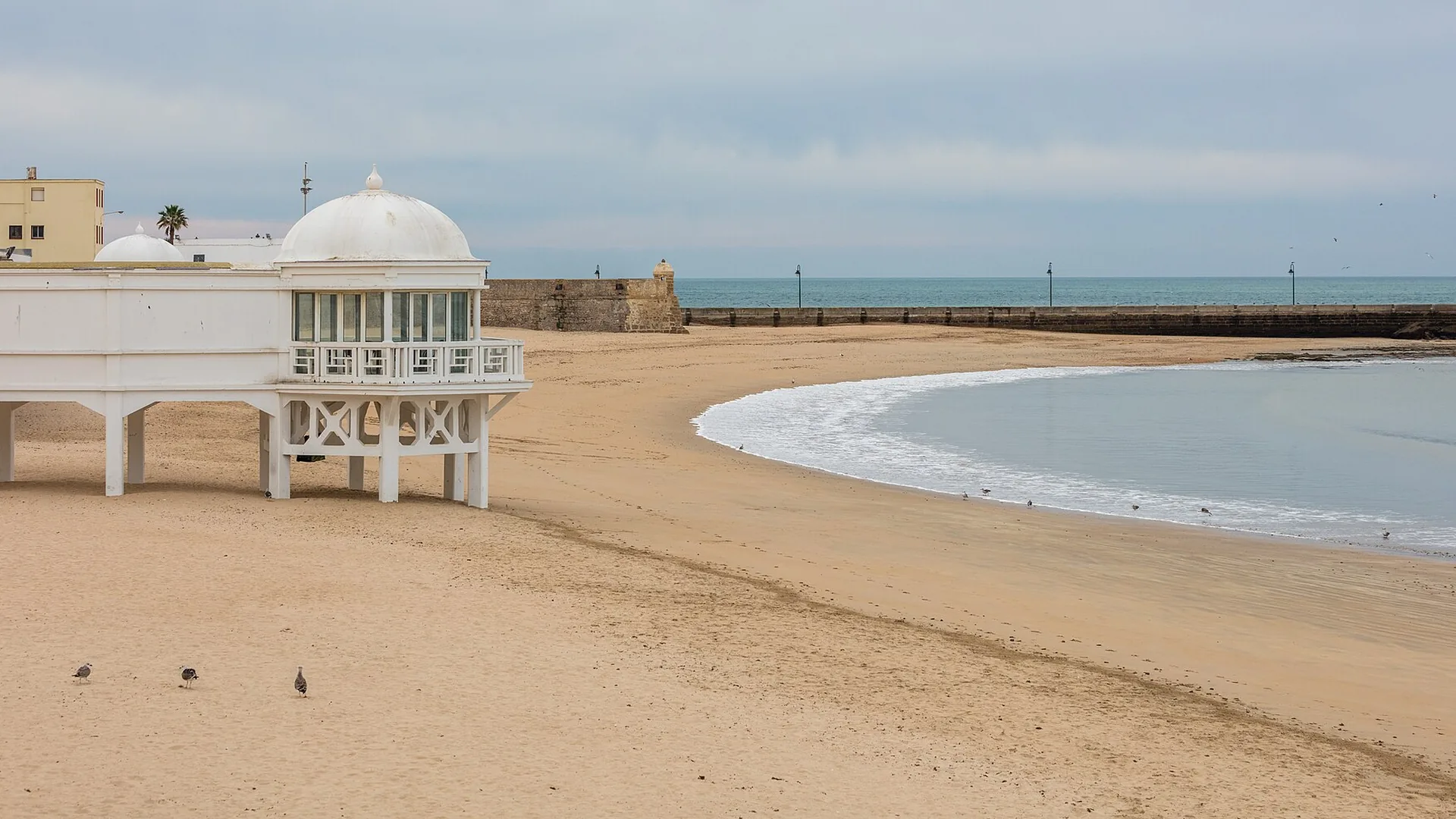
In short: Erasmus in Cádiz means the Atlantic, a city beach and carnival, but only if your department is actually based in Cádiz. The Universidad de Cádiz has four campuses in four cities, and “Cádiz” on the list of places can mean Puerto Real, Jerez or Algeciras. The university expects Spanish at B1, and registration as an incoming student closes on 31 May and 31 October.
At a glance
- Host university: Universidad de Cádiz (UCA), Oficina de Internacionalización, Plaza Falla 8, Cádiz
- UCA deadlines: nomination by 25 May and 25 October, registration by 31 May and 31 October
- Semesters: late September to mid February, mid February to late June, each including exams
- Language: Spanish at least B1, B2 for medicine
- Funding: 540 € per month from Germany, 470 € from Austria (2026/27)
- Rent: Cádiz 12.4 €, Jerez 10.6 € per square metre for whole flats (Idealista, September 2026)
Why Cádiz for Erasmus, and who it’s not for
Cádiz isn’t a classic Erasmus stronghold like Granada or Seville, and you’ll feel that in a good way. The old town is small, you keep running into the same people, and the beach is ten minutes from the lecture hall. The climate is the mildest of Andalusia’s university cities: in winter you rarely need more than a jacket, and in summer the Atlantic keeps it bearable. If you surf, kite or sail, the coast down to Tarifa is one of the best spots in Europe.
Academically, the UCA is the first choice for marine sciences, nautical studies and naval engineering. Many exchange students also come for Spanish, teacher training, economics and medicine.
Cádiz isn’t ideal if you expect a big nightlife and a huge international scene, if you barely speak Spanish or if wind gets on your nerves: the Levante sometimes blows for days. And you should know what you’re getting into if your place isn’t in Cádiz itself.
The process: from application to transcript
The road to Cádiz starts at your own university. The UCA only accepts students who have been nominated by a partner university.
-
Application at your home university
You apply to the International Office or the Erasmus coordinator for your subject. Check the agreement right now to see which UCA faculty your department cooperates with; that determines the campus.
-
Nomination
Your university registers you with the UCA. The university gives 25 May as the deadline for an autumn start and 25 October for a February start.
-
Registration as an incoming student
Then you fill in the UCA online form yourself, by 31 May or 31 October. You upload a copy of your ID. Your ID number becomes your login for your student card, the Campus virtual and the Wi-Fi.
-
Learning Agreement
With your letter of admission you receive the contact of your academic coordinator at the UCA. You send them your Learning Agreement and proof of language skills. Only with their signature are you finally accepted.
-
Arrival
Your point of contact is the Welcome Center of the Oficina de Internacionalización. According to the UCA, it sends out practical information at the end of June and the end of November.
-
Enrolment on site
You register, enrol in your courses at the secretariat of your campus and have changes to the Learning Agreement signed in the first few weeks.
-
Departure with Transcript of Records
Have your certificate of attendance issued before you leave. The UCA sends out transcripts in batches in March, July and September.
The UCA publishes these deadlines as recurring dates without a year. Have them confirmed for your exchange year by your International Office or directly by the Oficina de Internacionalización (internacionalizacion@uca.es).
Semester dates
According to the UCA, the autumn semester runs roughly from late September to mid February and the spring semester from mid February to late June, both including exams. You’ll find the exact calendar of your faculty on its website. For spring this means: you start while exams are often still running at home. Discuss this early with your examinations office.
Language, course choice and exams
The UCA requires Spanish at least at B1 for teaching, B2 for medicine. You send the proof with your Learning Agreement. There’s a list of subjects taught in English, but it doesn’t replace a full timetable.
Learning Spanish at the CSLM
The university’s language centre is called Centro Superior de Lenguas Modernas (CSLM) and is located on Calle Ancha in the old town of Cádiz. It offers Spanish courses for foreigners at all levels. Dates and fees are on the CSLM website. When you register, ask which courses are available for exchange students and whether your home university recognises the ECTS. The EU also provides online language courses for Erasmus students; you get access through your home university.
Choosing courses
You’ll find the course catalogue in the UCA portal for courses. Check three things for each course: semester, language and campus. If you only stay one semester, you can only take subjects from that semester; year-long courses are ruled out. And mixing courses at two campuses sounds good on paper, but means train rides between lectures.
How Spanish exams work
Grades go from 0 to 10, and you pass from 5. For each subject there’s one regular exam sitting and one resit per academic year, the convocatorias. On top of that there’s almost always continuous assessment with assignments, presentations, lab work and attendance. Teaching is more school-like than at German and Austrian universities. If you only show up for the exam, you’re giving away points.
Housing for 5 to 10 months
Most exchange students live in a shared flat. Where depends on the campus. According to Idealista, asking prices for whole flats in September 2026 were 12.4 € per square metre in Cádiz, 12.2 € in El Puerto de Santa María and 10.6 € in Jerez. There’s no separate figure for rooms in shared flats in the province; the Spanish average in the first quarter of 2026 was 430 €.
Which neighbourhood for which campus
- Campus Cádiz: the old town (La Viña, El Mentidero, El Pópulo) for short distances and old-building charm. Or the new town along the Avenida, closer to the long La Victoria beach.
- Campus Puerto Real: Many still live in Cádiz and take the train, which stops at the campus. Cheaper and closer are Río San Pedro, Puerto Real and San Fernando, but there’s less going on in the evenings.
- Campus Jerez: in Jerez itself, a lively city with lower rents.
- Campus Algeciras: in Algeciras. For trips, Tarifa and Gibraltar are on your doorstep, Cádiz isn’t.
When to search and what to watch out for
For autumn it’s best to start searching from July. Cádiz has one advantage for semester guests: many flats are only let from September to June anyway, because the owners rent them to holidaymakers in summer. That suits you perfectly. If you stay for the spring semester until the end of June, check the end date in the contract. In February everything is booked up and expensive during carnival, so arrive before it or book your first nights early.
The UCA has its own housing office, the Oficina de Alojamiento. Then there are the usual room portals. Four rules help against scams:
- No transfer before a viewing, in person or by video call.
- Stay away if the landlord is supposedly abroad and wants to send the key by courier.
- Pay the deposit only against a receipt and with a written contract.
- Be careful with prices that are well below all the others.
What’s usual in rental contracts is explained in Finding a flat in Spain. In old buildings in the old town it’s worth asking about damp: heating is rare, and the sea air is clammy in winter.
Costs, funding and budget
As an Erasmus student you don’t pay tuition fees at the UCA. Funding for Spain in 2026/27 is 540 € per month from Germany and 470 € from Austria. Students with fewer opportunities get an extra 250 € per month, and travelling by train or bus earns extra funded travel days. Your university sets the exact funding period. You can apply for Auslands-BAföG (German student financial aid for studying abroad) in parallel, for Spain at the Studierendenwerk Heidelberg, ideally six months in advance.
There are no official living cost figures for students in Cádiz. Our own estimate:
| Item | Range per month (estimate) |
|---|---|
| Room in a shared flat incl. utilities, Cádiz | 320 to 450 € |
| Room in a shared flat incl. utilities, Jerez or Puerto Real | 260 to 380 € |
| Food and household | 180 to 250 € |
| Mobile phone and transport | 25 to 70 € |
| Going out, sports, surfing | 80 to 180 € |
| Trips and travel | 50 to 150 € |
| Total | around 650 to 1,100 € |
If you commute, you save with the card of the Bahía de Cádiz transport consortium: it’s valid on buses, ferries, local trains and the tram and gives around 30 percent off, with the Tarjeta Joven another 20 percent. The funding rates in detail are in Erasmus in Spain.
Student life: beach, carnival, trips
On its international page, the UCA lists the Erasmus Student Network Cádiz as a point of contact. Groups like this usually organise welcome evenings, trips and language tandems. You’ll find the current programme through the Welcome Center or the group’s social media channels.
Everyday life in Cádiz is simple: lectures, beach, tapas. Typical dishes are fried fish served in a paper cone and tortillitas de camarones, wafer-thin shrimp fritters. More in Andalusian food. The carnival in February is the most important festival of the year, with singing groups in every alley: see Festivals in Andalusia.
For days off you have plenty of choice close by:
- the sights of the city itself: Cádiz sights
- beaches from Conil via Bolonia to Tarifa: Costa de la Luz
- sherry, horses and flamenco in Jerez de la Frontera
- mountain villages like Arcos and Grazalema: White villages
- by train to Seville
Paperwork and checklist before you fly
For one or two semesters you can keep the effort small. Take your European Health Insurance Card (EHIC) with you; it covers necessary treatment in the public health system. Whether the UCA or your home university also requires accident and liability insurance is stated in your admission documents. If you do a hospital placement in medicine or nursing, you must present the UCA with a criminal record certificate for the protection of minors.
You usually don’t need an NIE (foreigner identification number) for one semester. It becomes necessary if you work in Spain, for example at a surf school or bar, or if landlords or banks ask for it. How it works is explained in Applying for an NIE.
- ID card or passport, valid until after the end of the semester
- EHIC and proof of insurance
- UCA letter of admission stating faculty and campus
- Learning Agreement with all signatures and B1 language certificate
- Grant Agreement with your home university
- Accommodation for the first nights, especially if you arrive in February
- Card without foreign transaction fees
- Windbreaker, swimwear and a warm jumper for damp winter evenings
Thinking about doing your whole degree on the Atlantic? Then read Studying in Cádiz.
Frequently asked questions
How do I find out which campus I’ll end up at?
Through the faculty your department has the Erasmus agreement with. Ask your International Office or the UCA academic coordinator. The faculty is stated in your letter of admission, and that determines the campus.
What level of Spanish does the UCA require?
At least B1 for regular teaching, B2 for medicine. You send the proof together with your Learning Agreement.
By when do I have to register at the UCA?
The UCA gives 31 May for an autumn start and 31 October for a February start. Your university’s nomination must arrive by the 25th of the respective month.
Can I live in Cádiz and study in Puerto Real?
Yes, many people do. The local train between Cádiz and Jerez stops at the Puerto Real campus, and there are buses too. Expect to commute every day.
When is the best time for Erasmus in Cádiz?
The autumn semester brings swimming weather into October and carnival in February at the end. The spring semester starts with carnival and ends with beach weather in June.
Do I need a Spanish bank account?
Usually not for one semester. A card without foreign transaction fees is enough, and you pay the rent by SEPA transfer from your account at home.
Sources
- Universidad de Cádiz: information for incoming students
- Universidad de Cádiz: General Information for partner universities
- Universidad de Cádiz, Facultad de Filosofía y Letras: notes for nominated students
- Universidad de Cádiz: Centro Superior de Lenguas Modernas
- Saarland University: Erasmus funding rates 2026/27
- Idealista: rental price report Andalusia
As of: October 2026
Cover image: Diego Delso · Wikimedia Commons · CC BY-SA 4.0
Free
The moving checklist as a PDF (in German)
All steps in the right order to tick off. Plus the key tips by email over the next weeks (in German). Free, unsubscribe at any time.