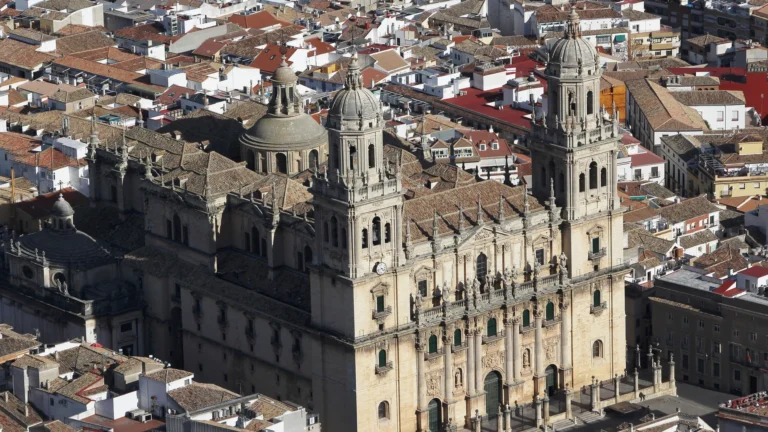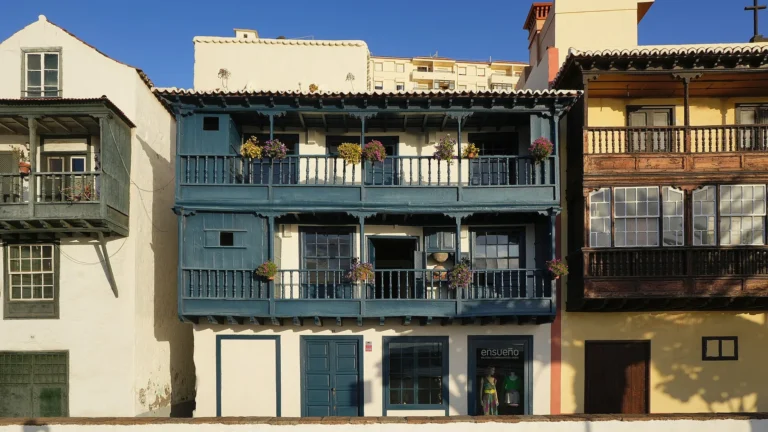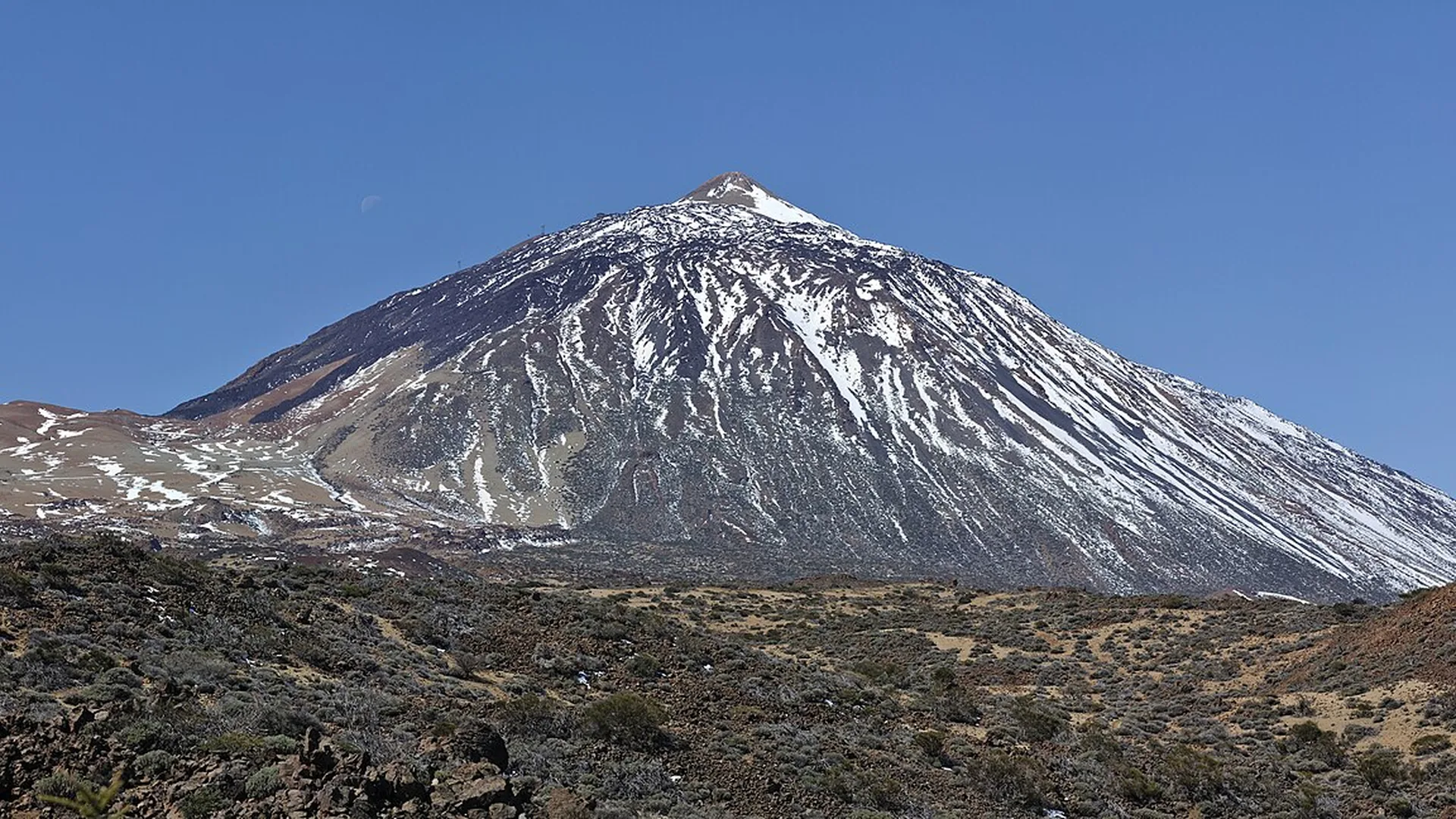
In short: The Canary Islands are Spain, but with their own rules: instead of 21 % VAT you pay IGIC, usually 7 %, parcels from Germany go through customs, and as a resident you fly and sail within Spain with a 75 % discount. Tenerife and Gran Canaria offer big cities, jobs and hospitals, Lanzarote and Fuerteventura sun and wind, La Palma, La Gomera and El Hierro peace and nature. Rents average 15.2 euros per square metre (Idealista, September 2026), which is above the Andalusian level.
At a glance
- Population: 2,228,862 on seven inhabited main islands plus La Graciosa (ISTAC, end of 2024)
- Rent: Canary Islands average 15.2 euros/m², up 4.3 % on the previous year (Idealista, September 2026)
- Everyday tax: IGIC, standard rate 7 %, basic foodstuffs 0 %
- Resident discount: 75 % on flights and ferries between the islands and to the mainland
- Climate: annual average around 21 degrees on the coasts (AEMET)
- Time zone: one hour behind Germany and Austria
On the map
Canary Islands
Find German-speaking doctors: every region in Andalusia and the Canary Islands →
What is different in the Canary Islands compared with the mainland?
Legally, in the Canary Islands you live in Spain and in the EU. The same rules as in Málaga or Granada apply to the NIE, the Padrón, income tax and social security. A few differences shape everyday life a lot, though, and you should know them before you move.
IGIC instead of VAT: a special tax territory
The Canary Islands are not part of the EU VAT area. Instead of the Spanish IVA, the Agencia Tributaria Canaria levies IGIC (Impuesto General Indirecto Canario). The standard rate is 7 %, while on the mainland you pay 21 %. Basic foodstuffs, water, books and medicines are taxed at 0 %, some areas have a reduced rate of 3 %, and vehicles, alcohol, jewellery and tobacco have higher rates. In everyday life you notice this in many prices, for example on electronics.
For the self-employed this means: you deal with two tax offices, the national Agencia Tributaria for income tax and the Canarian one for IGIC. Since 1 July 2026, small businesses with a turnover of up to 50,000 euros can opt out of IGIC through the REPEP. The special ZEC zone with 4 % corporate tax only applies to newly founded companies, not to Autónomos (self-employed people). All the details are in Self-employed in the Canary Islands: IGIC, REPEP, ZEC.
Parcels and customs
Because the Canary Islands lie outside the EU VAT area, a parcel from Germany or Austria counts as an import for tax purposes. It needs a customs declaration (DUA), depending on the goods IGIC and the Canarian import tax AIEM are charged, and many parcel services charge a clearance fee. That costs time and money.
- Some online shops do not deliver to the Canary Islands at all, or only for a surcharge.
- Parcels sometimes sit at customs for several days until the declaration is done.
- Larger purchases are often cheaper and faster to buy directly on the island.
- Household goods and cars have their own rules, so check them before shipping.
If you want to bring a car from Germany, you have to declare it as an import at customs in the Canary Islands. When you move, it is exempt from IGIC under certain conditions (among others, at least six months of ownership), otherwise IGIC is due. More on re-registration and driving licences in Cars and driving licences in Spain.
Resident discount: 75 % on flights and ferries
If you are registered in the Canary Islands, you get a 75 % discount on flights and ferries between the islands and to the Spanish mainland. It is based on a national decree from 2018 that set the rate at 75 % indefinitely. As an EU citizen you need the Padrón in a Canarian municipality and your ID card or passport. When booking, your details are usually checked automatically; otherwise you show a registration certificate for travel from the town hall at the airport. Flights to Germany or Austria are not discounted. There are also resident discounts for national parks, museums and buses.
Island life
On an island you plan differently. There is no railway, so if you want to leave, you fly or take the ferry. Spare parts, furniture and specialist doctors are often only available on Tenerife or Gran Canaria for the small islands. The clock is one hour behind Germany and Austria, so if you work from home with German clients, your day starts earlier. And water is scarce: Gran Canaria airport gets only 151 mm of rain a year, Santa Cruz de Tenerife 226 mm. A lot of drinking water comes from desalination plants.
The seven islands in brief
Each island is a world of its own with its own island government (Cabildo), its own bus network and its own price level. The rents come from the Idealista reports of September 2026. For some islands Idealista does not list any municipalities.
Tenerife
The largest and most populous island with 955,063 inhabitants. The north around Santa Cruz, La Laguna and Puerto de la Cruz is green, Spanish in character and cloudier, the south around Adeje and Arona sunny and touristy. Rents: Santa Cruz 14.0, La Laguna 12.7, La Orotava 11.4, Adeje 19.0 euros/m². Two airports, a university, large hospitals. In detail in Moving to Tenerife.
Gran Canaria
Close behind with 863,943 inhabitants, with Las Palmas as the largest city in the Canary Islands. The north and east are everyday life and city, the south around Maspalomas and Mogán sun and holidays. Rents: Las Palmas 14.6, Telde 11.6, Arucas 9.9, Mogán 21.3 euros/m². German school, university, many direct flights. In detail in Moving to Gran Canaria.
Lanzarote
The volcanic island in the east has 163,467 inhabitants and is shaped by black lava, white houses and a lot of wind. In 2024 it grew the most of all the islands in percentage terms. The Idealista report has no municipal rent figures; purchase prices are 2,506 euros/m² in Arrecife and 4,260 euros/m² in Tías. Quiet and well kept, but with few jobs outside tourism. More in Moving to Lanzarote.
Fuerteventura
Long beaches, wind, water sports and lots of open space: Fuerteventura has 127,043 inhabitants and is the island for surfers, kiters and everyone who needs room. Rents: La Oliva with Corralejo 18.8 euros/m², the capital Puerto del Rosario 12.3 euros/m². Medical care for specialist cases is often on Gran Canaria. More in Moving to Fuerteventura.
La Palma
The green island in the west with 85,104 inhabitants: steep mountains, forests, clear nights for stargazers. The 2021 volcanic eruption destroyed around 2,988 buildings in the west of the island, and the effects on the housing market can still be felt today. There are no Idealista rent figures. Ideal for nature lovers with a location-independent income. More in Moving to La Palma.
La Gomera
With 22,436 inhabitants it is small, quiet and green, with the Garajonay cloud forest and deep ravines. Valle Gran Rey has long attracted people dropping out of the rat race. The ferry to Tenerife takes about 50 minutes. If you live here, you organise a lot via Tenerife. Impressions in La Gomera tips.
El Hierro
The smallest and westernmost island has 11,806 inhabitants. Unspoilt, quiet, popular with divers. To live here you need a liking for seclusion and patience, because specialist doctors, authorities with special tasks and a choice of shops are often only found on Tenerife. More in El Hierro.
| Island | Population | Sample rent | Suits |
|---|---|---|---|
| Tenerife | 955,063 | Santa Cruz 14.0 euros/m² | Families, working people, retirees |
| Gran Canaria | 863,943 | Las Palmas 14.6 euros/m² | City people, families, retirees |
| Lanzarote | 163,467 | no Idealista figures | People seeking peace, creatives |
| Fuerteventura | 127,043 | Puerto del Rosario 12.3 euros/m² | Water sports fans, remote workers |
| La Palma | 85,104 | no Idealista figures | Nature lovers |
| La Gomera | 22,436 | no Idealista figures | Dropouts, hikers |
| El Hierro | 11,806 | no Idealista figures | Divers, recluses |
Population: ISTAC, as of end of 2024. If you are torn between the two large islands, read the comparison Tenerife or Gran Canaria.
What does life in the Canary Islands cost?
Rent is the biggest item and keeps rising: the Canarian average in September 2026 was 15.2 euros/m², four percent above the previous year. In tourist municipalities such as Adeje, Mogán or San Bartolomé de Tirajana it is 19 to 21 euros, in places without tourism such as Arucas, La Orotava or Puerto del Rosario around 10 to 12 euros. For comparison: Granada is at 10.8, Málaga at 16.5 euros/m².
According to the INE, households in the Canary Islands spent an average of 12,652 euros per person in 2025, slightly more than in Andalusia with 12,197 euros. Things with low IGIC and petrol are cheaper than on the mainland: according to the CNMC, unleaded petrol cost 1.441 euros per litre in the Canary Islands in June 2026, compared with 1.488 euros on the peninsula. Imported goods, parcels and everything that first has to arrive by ship on small islands are often more expensive. For frequent travellers with residence, buses on Tenerife and Gran Canaria are free in 2026. You will find a detailed cost calculator in Cost of living in Spain.
Work, retirement and family in the Canary Islands
The Canary Islands live from tourism. The unemployment rate in the 2nd quarter of 2026 was 11.6 %, and the average gross annual salary in 2024 was 25,120 euros, below the Spanish average of 29,540 euros (INE). People with Spanish and other languages have good chances in hotels, tourism, real estate and services for residents. Life is most relaxed if you bring your income with you: remote employees, self-employed people with clients in Germany or Austria, and retirees. More in Working in Spain.
As a retiree
With a German or Austrian pension you are insured in the public health system via the S1 form. If you live here for more than 183 days a year, you become tax resident in Spain. A plus of the Canary Islands: since 2023 there has been a 99.9 % relief on inheritance tax for heirs from the family up to siblings, nephews and uncles. More in Retiring to Spain.
With children
Public schools teach in Spanish, and enrolment for Infantil and Primaria takes place every spring (for 2026/27 from 6 to 17 April 2026); there is also a procedure for admissions during the school year. There are German schools on Gran Canaria (Deutsche Schule Las Palmas, from kindergarten to Abitur, the German university entrance qualification) and on Tenerife (Deutsche Schule Teneriffa). On the small islands usually only the Spanish school remains. More in Moving with your family.
Health and health insurance
Public healthcare is organised by the Servicio Canario de la Salud (SCS). There are university hospitals on Tenerife and Gran Canaria; the smaller islands have their own hospitals but send complicated cases to the large islands. You get access through employment or self-employment, as a retiree via S1, or after one year of residence in Spain and with a Padrón in the Canary Islands via the Convenio especial, a voluntary insurance within the public system. Until then, people who are not working need private health insurance. More in Health insurance in Spain.
Climate: eternal spring with differences
On the coasts the annual averages are around 21 degrees. In Santa Cruz de Tenerife the average daytime highs reach 21.0 degrees in January and 29.0 degrees in August, at Gran Canaria airport 20.8 and 27.5 degrees (AEMET, 1981 to 2010). Location on the island matters: the north sides of Tenerife, Gran Canaria and La Palma are wetter and cloudier, the south sides sunny and dry, and in the mountains it gets cold in winter. Lanzarote and Fuerteventura are flatter, drier and windier. Details in Canary Islands weather.
Getting around between the islands
The islands are connected by ferry and inter-island flights. According to Fred. Olsen, the crossing from Tenerife to La Gomera takes 50 minutes, to Gran Canaria 80 minutes, and from Lanzarote to Fuerteventura 25 to 35 minutes. To La Palma or El Hierro you travel longer. The ferry from Gran Canaria to Huelva on the mainland takes more than 30 hours depending on the departure. With the resident discount, inter-island flights and ferries become much cheaper. Inspiration for trips in Island hopping.
The first steps after arrival
The administrative steps are the same as on the mainland. The order matters, because one step is the prerequisite for the next.
-
Apply for the NIE
You need the tax and identification number for your rental contract, bank account and work: Applying for the NIE.
-
Padrón at the town hall
Registering in your municipality opens the door to school, the health card, bus passes and the resident discount: Applying for the Padrón.
-
Bank account and contracts
With an account, rent, electricity and internet run more smoothly: Opening a bank account.
-
Health insurance
Through work, self-employment, S1 or privately, then the health card from the SCS.
The complete process is shown in Moving to Spain step by step.
Decision guide: which island suits you?
Choosing the island is the most important decision, more important than the flat. Answer these questions honestly:
- Do you need a local job? Then Tenerife and Gran Canaria are the main options.
- Do you have school-age children? Proximity to a city, a German school and hospitals speak for the two large islands.
- Do you regularly need specialist doctors? Then plan for short distances to a university hospital.
- Are you mainly looking for sun? The south sides of the large islands, Lanzarote and Fuerteventura.
- Do you want peace and nature and bring your own income? La Palma, La Gomera or El Hierro.
- Do you fly home often? Then direct flights count, and those are mainly found on the large islands, Lanzarote and Fuerteventura.
Ideally, spend a few weeks outside high season on your two favourites before deciding. A playful overview of the islands’ characters is given in Which Canary Island suits me?, and the comparison with Andalusia in Where in Spain?.
Typical mistakes when moving to the Canary Islands
- Choosing the island based on a holiday: Two weeks in a hotel say little about work, rents and trips to the doctor in everyday life.
- Underestimating the rental market: Long-term rentals are scarce, and in the south many flats are only let for the winter. Without a proper rental contract you often cannot get the Padrón.
- Counting on mainland rules: IGIC, customs and import rules only apply here. If you bring furniture or a car, check the costs beforehand.
- Arriving without an income: With 11.6 % unemployment and low salaries, the job hunt is tough.
- Romanticising the small island: On El Hierro or La Gomera, many things are a flight or a ferry away.
Help with moving to the Canary Islands
deinSpanien advises you in English or German and online, for all the Canary Islands and the whole of Andalusia. We book appointments, fill in forms and handle steps for you with a power of attorney. We are on site in Spain ourselves and know every step first hand, from the NIE and the Padrón to registering as an Autónomo.
You can find the services on offer under Advice and packages.
Frequently asked questions
Which Canary Island is best to move to?
For most people Tenerife or Gran Canaria, because that is where the jobs, schools, universities and large hospitals are. If you are looking for peace and bring your own income, you are often happier on Lanzarote, La Palma or La Gomera.
Is life in the Canary Islands cheaper than in Germany?
Partly. IGIC, usually 7 %, and petrol are cheaper, but rents are high, on average 15.2 euros/m² (Idealista, September 2026). Salaries are well below German levels.
What is IGIC?
The Canarian sales tax, which applies instead of Spanish VAT. The standard rate is 7 %, basic foodstuffs are taxed at 0 %.
Why does a parcel from Germany to the Canary Islands cost extra?
Because the Canary Islands are not part of the EU VAT area. Every parcel needs a customs declaration, IGIC and, depending on the goods, AIEM are charged, and there is often a fee from the parcel service on top.
Who gets the resident discount?
Anyone registered with a Padrón in a Canarian municipality. The discount is 75 % on flights and ferries between the islands and to the Spanish mainland.
Do I need Spanish in the Canary Islands?
In everyday life, yes. In tourist areas you get far with German and English, but authorities, doctors in the public system and landlords speak Spanish.
Can I move to a small island with children?
Yes, the children then attend the Spanish school. German schools abroad only exist on Gran Canaria and Tenerife, and for specialist doctors you often drive or fly to a large island.
Sources
- Idealista: Canary Islands rent report, September 2026
- BOE: Real Decreto 949/2018, 75 % resident discount
- Agencia Tributaria: Zona Especial Canaria
- AEMET: Climate data Santa Cruz de Tenerife
- INE: Encuesta de Presupuestos Familiares 2025
- Fred. Olsen Express: Routes and crossing times
As of: October 2026
Rather do it yourself?
Playbook: Self-employed in the Canary Islands
IGIC instead of IVA, REPEP up to 50.000 €, Modelo 400 at the ATC, Modelo 420 and 425, invoices without VAT and what is different from the mainland. 18 pages, PDF in German.
Free
The moving checklist as a PDF (in German)
All steps in the right order to tick off. Plus the key tips by email over the next weeks (in German). Free, unsubscribe at any time.