In short: Córdoba is the Erasmus city for anyone who really wants to learn Spanish and spend little. The Universidad de Córdoba doesn’t require a language certificate, offers a free Spanish course at the start of the semester and itself reckons with 600 to 700 € of living costs per month. If you’re looking for a beach, a big city or a huge international scene, you’re better off in Málaga or Granada.
At a glance
- Host university: Universidad de Córdoba (UCO), Oficina de Relaciones Internacionales in the Rectorate
- Registration as an incoming student: 2025/26 from 1 April to 30 June (autumn and full year), 1 October to 30 November (spring)
- Semesters 2025/26: 15 September to 13 February and 16 February to 11 July, each including exams
- Language: teaching mostly in Spanish, no certificate required
- Funding: 540 € per month from Germany, 470 € from Austria (2026/27)
- Rent: 9.6 € per square metre for whole flats (Idealista, September 2026)
Why Córdoba for Erasmus, and who it’s not for
Córdoba is rarely at the top of anyone’s wish list, and that’s exactly the advantage. The city is manageable, cheap and hardly geared to international students. At the supermarket, in your shared flat and at the university you speak Spanish, because there’s no other way. After one semester you’ll clearly notice the difference.
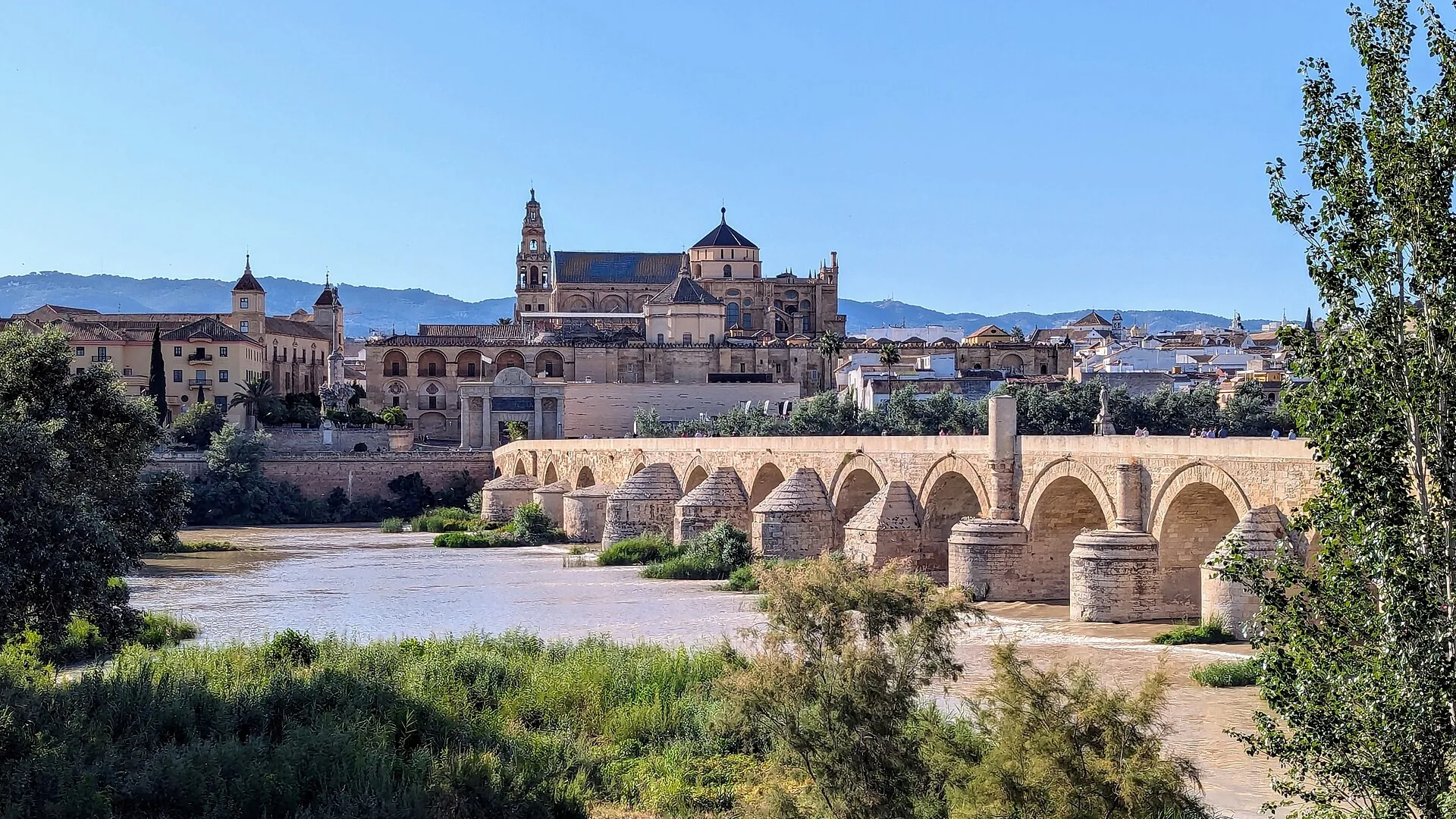
Then there’s the location. The old town with the Mezquita is a World Heritage Site, and the high-speed train gets you to Seville or Málaga in under an hour. Academically, Córdoba is especially worthwhile for veterinary medicine, agricultural and food sciences, and also for teacher training, languages, law and economics.
Córdoba isn’t a good fit if you arrive without Spanish and need courses in English, if you want to be by the sea or if you can’t stand the summer semester running into July at over 40 degrees. Getting there always involves a change, because there are no scheduled flights to Córdoba.
The process: from application to transcript
Erasmus always runs through your home university. The UCO only accepts students nominated by a partner university. This is how it works:
-
Application at your home university
You apply for a place in Córdoba at your International Office or with the Erasmus coordinator of your department. Each university sets its own internal deadlines, often as early as the winter before the exchange year.
-
Nomination
Your university registers you with the UCO. For 2025/26 the UCO asked for nominations for autumn by 31 May.
-
Registration at the UCO as an incoming student
Then you register online yourself with the Oficina de Relaciones Internacionales. In 2025/26 this was possible from 1 April to 30 June for the first semester and the full year, and from 1 October to 30 November for the second semester. According to the UCO, admission comes no later than six weeks after your documents arrive.
-
Learning Agreement
With the coordinators on both sides you agree which courses you’ll take and what will be recognised at home. 30 ECTS per semester is the norm. Note down the language of instruction for each course.
-
Arrival and language course
At the start of the semester there are welcome meetings at the faculties and the UCOidiomas Spanish course. Plan your arrival so you can take part in both.
-
Enrolment on site
You report to the international office and the secretariat of your faculty, enrol in your courses and have changes to the Learning Agreement signed. The Faculty of Humanities sets the first two weeks of the semester for this.
-
Departure with Transcript of Records
Have your certificate of attendance signed before you leave. The UCO issues the transcript with your grades no later than five weeks after the end of the exam period.
Semester dates
The 2025/26 academic year at the UCO ran like this: autumn semester from 15 September to 13 February, with exams from 12 January to 13 February. Spring semester from 16 February to 11 July, with exams from 8 June to 11 July. So the Spanish spring semester starts in the middle of the exam period at many German and Austrian universities. Find out early whether you can bring exams at home forward.
Language, course choice and exams
The UCO requires neither a language certificate nor a placement test from Erasmus students. That sounds convenient, but it doesn’t change the fact that most courses and exams are in Spanish. A list of subjects in English is on the university website, and it’s short. With B1 you’ll get by; with less, every set of lecture notes becomes a translation job.
The UCOidiomas Spanish course
UCOidiomas is the university’s language centre and an exam centre for DELE and SIELE. For exchange students there’s a free two-week intensive course at the start of each semester: in September and October for autumn, in January and February for spring (information for 2025/26). The UCO recommends it to everyone up to level B2. You can have ECTS for it recognised through the Learning Agreement if your home university agrees.
Choosing courses
You mainly choose from what your host faculty offers. Some faculties limit how many courses you may take elsewhere: the humanities, for example, allow semester students up to two courses from other faculties and no year-long courses. Pay attention to the location. If your department is in Rabanales, you take the train or bus out of the city every day, and a course in the centre on the same morning won’t fit into your timetable.
How Spanish exams work
Grades are on a scale from 0 to 10, and you pass from 5. You have two attempts per course and year, the so-called convocatorias: the regular sitting at the end of the semester and a resit. You’re registered automatically. Many lecturers also assess continuously, with homework, presentations, practicals and attendance. Teaching is more school-like than at home, with fixed groups and compulsory sessions.
Housing for 5 to 10 months
Almost all exchange students live in a shared flat. Córdoba makes it easier for you than the coastal cities: the asking price for whole flats in September 2026 was 9.6 € per square metre, in Málaga 16.5 €. There’s no separate Idealista figure for rooms in shared flats in Córdoba. The Spanish average in the first quarter of 2026 was 430 €, and experience shows Córdoba is well below that.
When and how to search
Search from July for the autumn semester and from December for spring. Many people arrive a few days early, stay in a hostel and view rooms on site. That’s very doable in Córdoba, because the market isn’t as overrun. You get help from three sides:
- the UCO Servicio de Alojamiento (alojamiento@uco.es),
- the faculties’ buddy programmes, through which UCO students help you find a room, often with a free spot in their own shared flat,
- the usual portals such as Idealista for rooms.
According to the UCO, the university residence costs around 650 to 720 € per month including meals (2025/26). For one semester a shared flat is usually the better and cheaper solution.
Which neighbourhoods
Ciudad Jardín is the classic student neighbourhood, with short distances to the centre and the Campus de la Salud. In the Centro around Plaza de las Tendillas you live close to law, economics and the humanities. If you study in Rabanales, look for a place within walking distance of the main station. The alleys around the Mezquita are pretty, but full of holiday flats and impractical for everyday life.
Scam traps
- Don’t transfer anything before you’ve seen the room, in person or by video call with the person who lives there.
- Be suspicious of landlords who are supposedly abroad and want to send the key by courier.
- Don’t pay a deposit in cash without a receipt, and sign a contract that states the rent, deposit and duration.
- A price far below the usual is a warning sign.
What’s usual in Spanish rental contracts is explained in the article Finding a flat in Spain. Before you accept, ask about air conditioning and heating: in January Andalusian flats are cold, from May they’re hot.
Costs, funding and budget
You don’t pay tuition fees at the UCO; that’s part of the Erasmus agreement. Funding for Spain in 2026/27 is 540 € per month from Germany and 470 € from Austria. Students with fewer opportunities, for example with a child, a disability or a chronic illness, receive an extra 250 € per month. If you travel by train or bus, you get extra funded travel days. Each university decides for itself how many months are actually funded. Auslands-BAföG (German student financial aid for studying abroad) can be combined with Erasmus; for Spain you apply at the Studierendenwerk Heidelberg, ideally six months in advance.
The UCO estimates living costs at about 600 to 700 € per month. Our own estimate for an Erasmus semester with trips is a bit higher:
| Item | Range per month (estimate) |
|---|---|
| Room in a shared flat incl. utilities | 250 to 380 € |
| Food and household | 180 to 250 € |
| Mobile phone, transport in the city | 20 to 60 € |
| Going out and tapas | 80 to 150 € |
| Trips and travel | 50 to 150 € |
| Total | around 600 to 1,000 € |
One-off costs on top are the flight, the deposit (one month’s rent is usual) and the university’s mandatory insurance. You’ll find the funding rates in detail and the general process in Erasmus in Spain.
Student life: tapas, patios, trips
Life happens outdoors, on squares and in taverns. Typical of Córdoba are salmorejo, a thick cold tomato soup, and flamenquín, together with wine from Montilla-Moriles: more in Andalusian food. In spring one festival follows the next, with Semana Santa, the Patio festival and the Feria in May. The dates are in Festivals in Andalusia.
You’ll make connections through the faculties’ buddy programmes and the welcome meetings at the start of the semester. Whether there’s currently an active Erasmus group at the UCO with trips and regular meetups, the international office of your faculty can tell you. Don’t rely on that alone; your Spanish flatmates are the better way into the city.
At weekends you can get around quickly. By high-speed train to Seville or Málaga, by bus to Granada. For the city itself, have a look at Córdoba sights, and if you still have time at the end of the semester, add an Andalusia road trip.
Paperwork and checklist before you fly
For one or two semesters you need little. The insurance matters: the UCO requires travel and accident insurance before you arrive. It offers its own policy for around 19 €, and equivalent insurance is accepted. You also need the European Health Insurance Card (EHIC) for treatment in the public system.
You usually don’t need an NIE (foreigner identification number) for one semester. It becomes necessary if you work in Spain or if landlords or banks insist on it. In that case Applying for an NIE will help. A Spanish account isn’t a must for one semester either; a card without foreign transaction fees is enough.
- ID card or passport, valid beyond the end of the semester
- EHIC and proof of travel and accident insurance
- UCO letter of admission and signed Learning Agreement
- Grant Agreement with your home university signed
- Passport photos and digital copies of all documents
- Accommodation booked for the first nights
- Credit or debit card without foreign transaction fees
- Warm clothes for flats without heating in winter, light ones for the rest
You don’t just want to stay for one semester, but do your whole degree in the city? Then read Studying in Córdoba.
Frequently asked questions
Do I need a Spanish certificate for Erasmus in Córdoba?
No. The UCO doesn’t require a certificate or a placement test from Erasmus students. Because most courses are in Spanish, you should still bring at least B1 and use the free intensive course at the start of the semester.
When do I have to register at the UCO?
For 2025/26, online registration ran from 1 April to 30 June for autumn and the full year, and from 1 October to 30 November for spring. The Oficina de Relaciones Internacionales confirms the current deadlines.
Which semester is better in Córdoba?
In terms of climate, the autumn semester: September is still hot, after that it gets pleasant. Spring, on the other hand, has the big festivals in May, but the exams in June and July fall in the heat.
How much does a room in a shared flat cost?
There’s no official average for Córdoba. We estimate 250 to 380 € including utilities. In terms of rent, Córdoba is one of the cheapest university cities in Andalusia.
How many exam attempts do I have?
Two per course and year, and registration is automatic. You pass with 5 out of 10 points.
Sources
- Universidad de Córdoba: information for international students
- Universidad de Córdoba: Erasmus Fact Sheet 2025/26 (copy at a partner university)
- UCOidiomas: Spanish for foreigners
- Universidad de Córdoba: Servicio de Alojamiento
- Saarland University: Erasmus funding rates 2026/27
- Idealista: rental price report Andalusia
As of: October 2026
Cover image: Rodelar · Wikimedia Commons · CC BY-SA 4.0
Free
The moving checklist as a PDF (in German)
All steps in the right order to tick off. Plus the key tips by email over the next weeks (in German). Free, unsubscribe at any time.