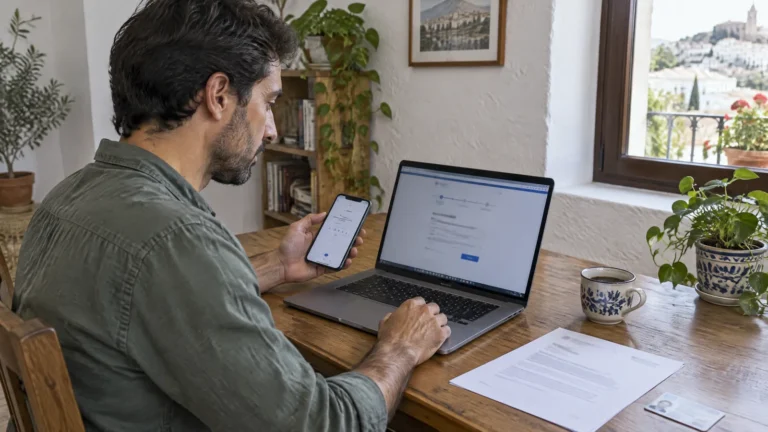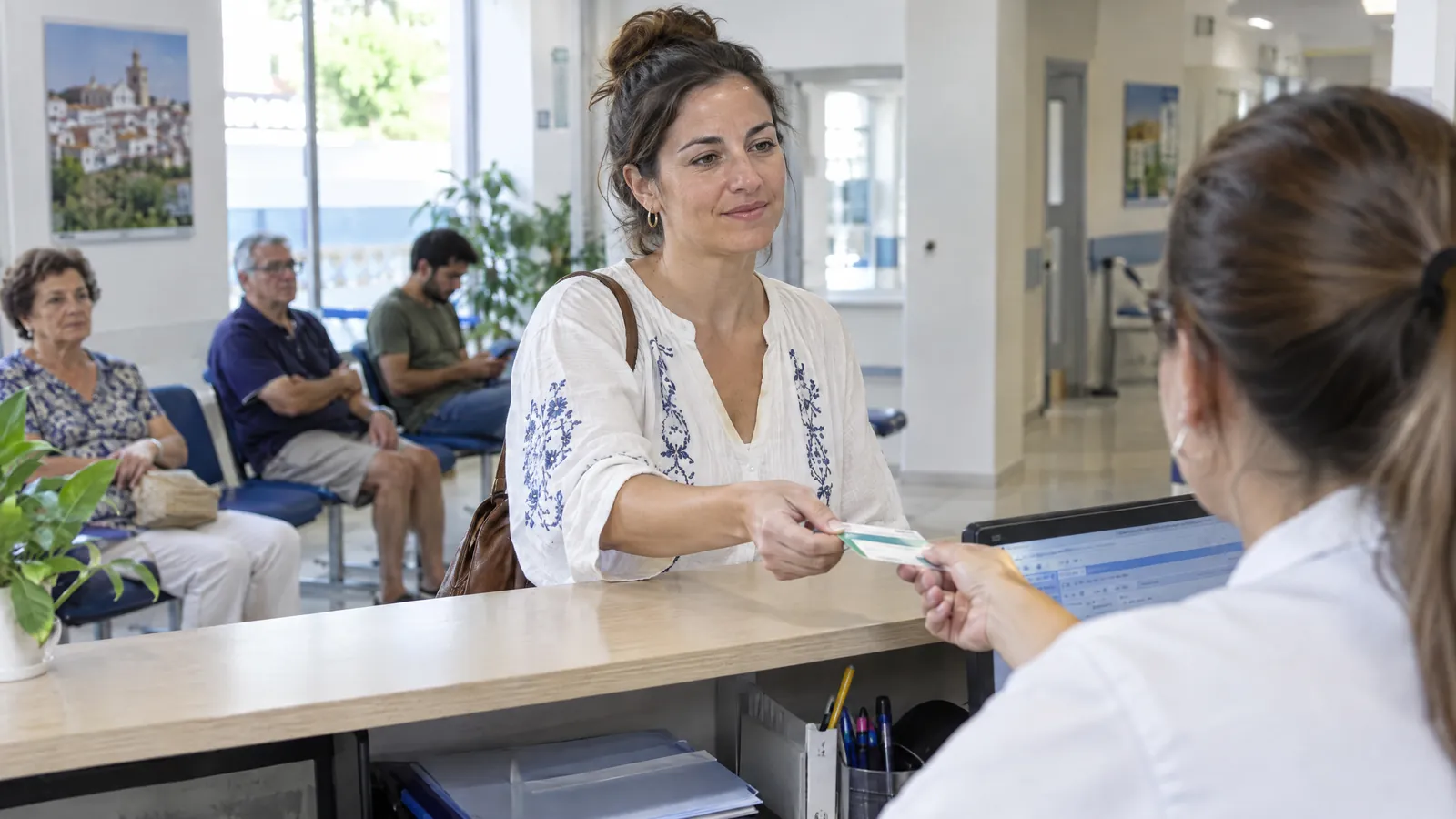
In short: In Spain, your circumstances decide how you are insured: if you work, you are in the public system through Social Security, pensioners get in with the S1 form, and everyone else needs private insurance at first. Social Security recognises your entitlement, and you then get your health card from the health service of your region.
At a glance
- Public system: Sistema Nacional de Salud, in Andalusia the SAS, in the Canary Islands the SCS
- Access: through employment or self-employment, as a pensioner with an S1 or as a family member
- Convenio especial: 60 € a month under 65, 157 € from 65, only after one year of residence (as of October 2026)
- What you need: ID and NIE, Padrón, proof of entitlement from the INSS
- Medicines: co-payment based on income, new rules since May 2026
How does the Spanish health system work?
The public system is funded by taxes and contributions and is run by the regions. In Andalusia the service is called Servicio Andaluz de Salud (SAS), in the Canary Islands Servicio Canario de la Salud (SCS). There are no health insurance funds (Krankenkassen) like in Germany or Austria.
Access works in two stages. First, the INSS (Instituto Nacional de la Seguridad Social, the Social Security institute) recognises your entitlement. With this proof, you then apply for the health card (tarjeta sanitaria) at your regional service. Your first point of contact for everything is then the health centre (Centro de Salud) with your GP.
Find German-speaking doctors: every region in Andalusia and the Canary Islands →
Which route into the public system suits you?
Find your situation below. It determines which papers you need.
Employed
Your employer registers you with Social Security (alta). This is what creates your entitlement. All you need beforehand is your Social Security number. You apply for it online on the Import@ss portal, even without electronic identification: with form TA.1, a selfie and a copy of your ID. Citizens of EU countries can initially get the number with their passport and, according to the form, submit their NIE within 3 months of arrival. More under Working in Spain.
Self-employed
As an Autónomo, you register yourself in the scheme for the self-employed. With this registration you are in the public system. How it works is explained under Registering as an Autónomo.
Pensioners with form S1
If you receive a pension from Germany or Austria, you stay insured there and are treated in Spain like a Spanish insured person. Your health insurance fund issues the S1 form. Ideally apply for it before the move and present it to the INSS in Spain without delay. Family members can be included, provided they do not work or are not insured themselves in their home country. More on this under Moving to Spain as a retiree.
Family members
Partners and children of an insured person can be added as co-insured dependants (beneficiarios) through the INSS. The INSS checks the exact requirements case by case. What else families need to keep in mind is explained under Moving with your family.
Students with a European Health Insurance Card
For a semester abroad or a fixed-term course of study, you use the European Health Insurance Card from your insurer. During a temporary stay it covers medically necessary treatment that cannot wait until you return, and only with public providers. Planned treatment, private doctors and repatriation are not covered. If you live in Spain permanently, you are not insured with the card from your old country. More under Studying in Spain.
No work and no S1: Convenio especial
If you do not work and do not receive a pension, you have no automatic entitlement. However, the state offers voluntary insurance, the Convenio especial de prestación de asistencia sanitaria. It costs 60 € a month for people under 65 and 157 € a month from 65 (as of October 2026).
The requirements: at least one year of continuous actual residence, Empadronamiento in a Spanish municipality and no other access to public health cover. You apply at the health service of your region. In the Canary Islands you can do this electronically or in person, the authority decides within 30 days, and the application itself is free. Citizens of EU countries submit a certificate there stating that they have no entitlement from their home country.
It covers basic care with GP, specialist, hospital and emergency transport. You pay the full cost of pharmacy medicines, prostheses and aids as well as non-urgent patient transport yourself. In the first year after the move, the Convenio is not yet open to you. Until then you need private insurance.
How do you get the health card?
You apply for the card at your regional health service. The requirement everywhere is that your entitlement is established and that you are registered locally. So you should sort out the Padrón first.
Andalusia
You make the first application at the Centro de Salud or online through the ClicSalud+ portal. The SAS requires:
- your ID and the document with your NIE
- IDs of co-insured persons over 14, for younger children the family book
- the proof of your entitlement from the INSS
- the Empadronamiento in Andalusia
You are entered in the user database, and the card is sent by post to the address stored there. Until then, the virtual card in the Salud Andalucía app helps. If you have questions, you can reach the Salud Responde service around the clock on 955 54 50 60.
Canary Islands
In the Canary Islands, the Servicio Canario de la Salud is responsible. Documents and the appointment process differ from Andalusia. Ask at the Centro de Salud where you live or check the Canary Islands government website before you go.
GP, appointments and emergencies
Your GP (médico de familia) is based at the Centro de Salud. In Andalusia, the free choice of health centre and doctor is a citizen’s right, and you change it through ClicSalud+. That is also where you book appointments. You get to a specialist through a referral from your GP, and in an emergency you go to A&E (urgencias).
Expect waiting times for specialists, and expect dental treatment for adults to be paid largely privately.
When do you need private health insurance?
You need private insurance if you neither work nor have an S1, so above all in the first year before the Convenio especial. In Spain it should offer cover equivalent to the public system.
Many people with public cover also take out an inexpensive private policy to get specialist appointments faster. You can budget for what that costs per month under Cost of living.
What do you pay towards medicines?
For prescription medicines you pay a share at the pharmacy that depends on your annual income. Since 14 May 2026, the Real Decreto-ley 11/2026 has applied, with finer brackets. Older guides with only three brackets are out of date.
| Annual income | Working people | Pensioners |
|---|---|---|
| under 18,000 € | 40 % | 10 %, at most 8.23 € a month |
| 18,000 to 34,999 € | 45 % | 10 %, at most 13.37 € a month |
| 35,000 to 59,999 € | 45 % | 10 %, at most 13.37 € a month |
| 60,000 to 99,999 € | 50 % | 10 %, at most 18.52 € a month |
| from 100,000 € | 60 % | 60 %, at most 61.75 € a month |
The shares also apply to co-insured persons. Since the reform, there are also monthly caps for working people with low and middle incomes. The exact amounts are in the text of the decree. For medicines for chronic and serious illnesses, a reduced share of 10 % applies, according to the table of the Madrid region at most 4.98 € per pack. Exempt are, among others, recipients of non-contributory pensions and unemployed people without benefit entitlement. How pensioners with an S1 are classified is something to clarify with the INSS.
Frequently asked questions
Is my European Health Insurance Card enough if I move to Spain?
No. It only applies to temporary stays and only to treatment that cannot wait. Once you live in Spain, you need one of the routes into the public system or private insurance.
What does the Convenio especial cost?
60 € a month under 65 and 157 € a month from 65 (as of October 2026). You can only apply after one year of actual residence, and medicines are not included.
Am I already insured with my Social Security number?
No. The number is just your identifier. The entitlement only arises when an activity is registered by your employer or by you as a self-employed person.
Where do I apply for the S1?
At your health insurance fund in Germany or Austria, ideally before the move. In Spain you present it to the INSS.
Can I choose my GP?
In Andalusia, yes. The choice of health centre and doctor is a citizen’s right there and is handled through ClicSalud+.
What does the health card cost?
The Andalusian health service does not list a fee for the first application. The card is sent by post.
Sources
- Ministerio de Sanidad: Convenio especial de prestación de asistencia sanitaria
- Servicio Andaluz de Salud: Tarjeta sanitaria
- Gobierno de Canarias: Convenio especial (Trámite 3699)
- Boletín Oficial del Estado: Real Decreto-ley 11/2026
- Gleichbehandlungsstelle EU-Arbeitnehmer (German equal treatment office for EU workers): Information on form S1
- Your Europe: European Health Insurance Card during temporary stays
As of: October 2026
Rather do it yourself?
Playbook: Health insurance and health card
How to get into the Spanish public health system: the right route for your situation, the transition period, the health card in Andalusia and the Canary Islands, your GP and ClicSalud+. 21 pages, PDF in German.
Free
The moving checklist as a PDF (in German)
All steps in the right order to tick off. Plus the key tips by email over the next weeks (in German). Free, unsubscribe at any time.