In short: Fuerteventura is the beach island of the Canaries: miles of light sand, little development, lots of wind. For swimming, the east coast and the lagoons of El Cotillo are best, while the west coast is wild and, because of the currents, usually just for looking at. Without a rental car you will only see a fraction of it.
At a glance
- North: Corralejo dunes, El Cotillo lagoons, Isla de Lobos
- South: Sotavento, Esquinzo, Morro Jable on the Jandía peninsula
- Wild: Cofete, only via a dirt track
- Entry: beaches are free, for the Isla de Lobos you need a permit
- Getting around: rental car, the whole island lies between north and south
- Best time: all year round, autumn and winter are often less windy
Which beaches in the north are worth it?
The north around Corralejo is livelier and popular with surfers. The beaches are close together, so you can easily cover them in two days.
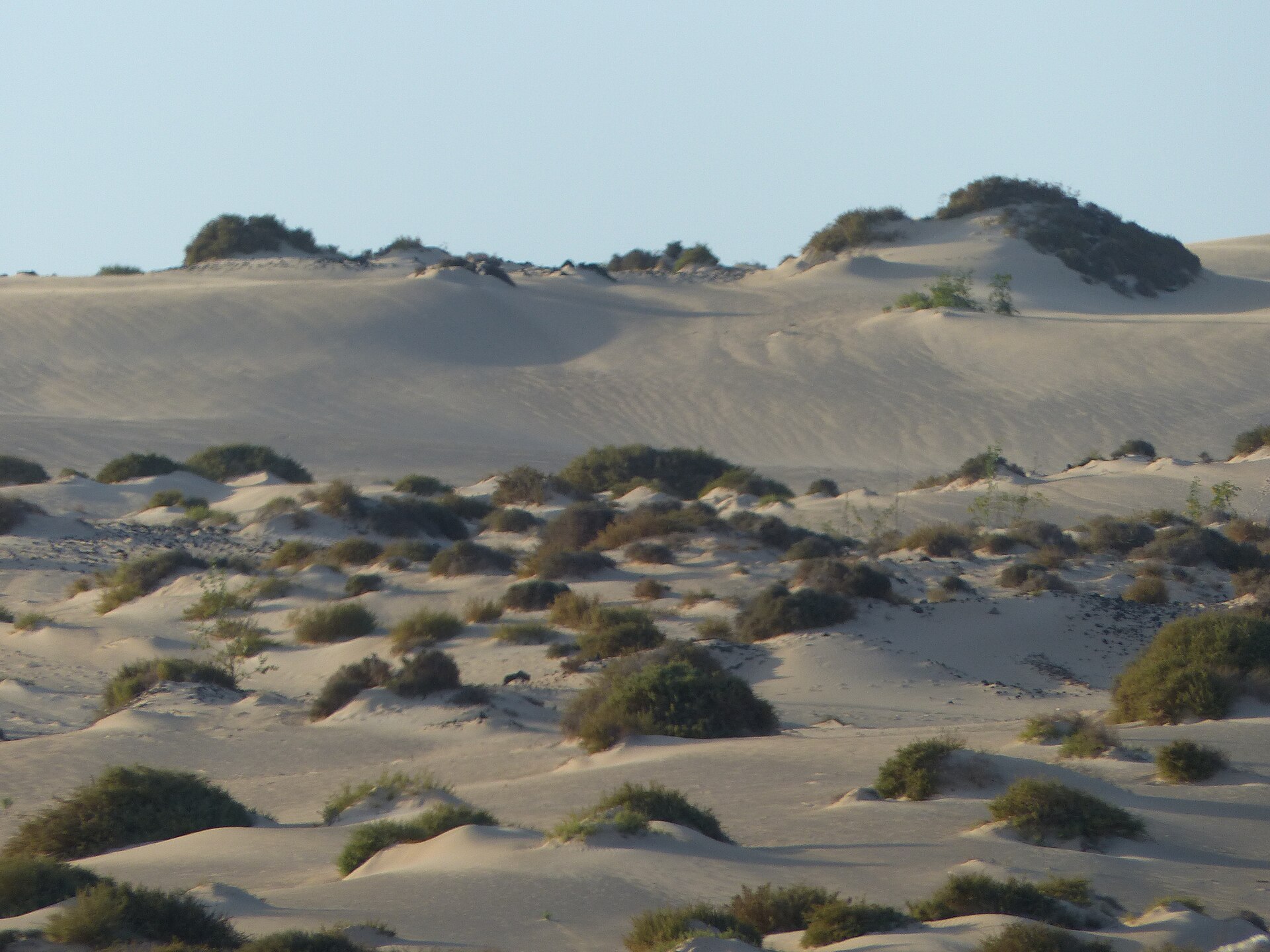
- Corralejo dunes: a nature park with shifting dunes that reach all the way to the sea. The coastal road runs right through them, you park at the side and walk across the sand to the water. The beaches here are called Grandes Playas.
- El Cotillo, lagoons: In the north of the village, lava reefs shelter shallow pools with light sand, for example at Playa de la Concha. Ideal for children. South of the village, by contrast, a long surf beach with powerful waves begins.
- Isla de Lobos: a small, uninhabited island off Corralejo, a short boat ride away. Clear water, good for snorkelling.
What makes the beaches of Jandía in the south special?
The Jandía peninsula has the longest beaches on the island. Here the light sand stretches for many kilometres almost without interruption.
- Playa de Sotavento: At high tide a shallow lagoon fills up behind a sandbank, at low tide it drains. The beach is a well-known spot for windsurfers and kitesurfers.
- Esquinzo and Butihondo: wide, quiet, with hotels above the coast.
- Morro Jable: a long beach with a promenade and lighthouse.
- Costa Calma: the most sheltered stretch, hence the name (“calm coast”).
Can you swim at Cofete?
Better not. Cofete lies on the far side of the Jandía mountains and is one of the most impressive beaches in Spain: many kilometres of sand, a mountain wall behind it, hardly a house in sight. The surf and the currents are dangerous, though, and there are no lifeguards. Come to walk and look.
The road from Morro Jable is a long, dusty gravel track over a pass. Drive slowly and check beforehand whether your rental agreement allows dirt tracks, many exclude them. There are almost no facilities on site, so take water and food with you.
What is there on the west coast?
The west is open to the Atlantic. You come here for the atmosphere, not for a beach day.
- Ajuy: a small fishing village with a black beach. A short path leads over pale limestone rocks to large sea caves.
- La Pared: a surf beach with surf schools, especially beautiful at sunset.
When is the best time and how strong is the wind?
Wind belongs to Fuerteventura just like sand. In summer the trade winds blow hardest, in autumn and winter it is often calmer. Rain is rare. Monthly values for the archipelago are in Canary Islands weather.
Local tips and combinations
The distances are greater than you might think. Plan the north and the south as separate days or switch accommodation.
- Sun: There is almost no natural shade. The wind cools you down, but you can still burn quickly.
- Currents: On the west coast, only go into the water up to your knees, and never alone.
- Children: El Cotillo and Costa Calma are the easiest destinations, more in Canary Islands with kids.
- Lanzarote: According to Fred. Olsen, the ferry from Corralejo takes 25 to 35 minutes (as of October 2026). What to see over there is in Lanzarote sights, more routes in Island hopping.
Many people stay for several months because of the climate. What you need to organise for that is in Wintering in the Canary Islands.
Frequently asked questions
Fuerteventura or Lanzarote?
Fuerteventura for beaches and water sports, Lanzarote for landscape and culture. They are so close to each other that a day trip is possible.
When is it least windy?
Autumn and winter are often calmer than summer. Windless days are the exception in any season, though.
Which beach is best for children?
The lagoons of El Cotillo. The water is shallow, calm and clear.
Do I need a permit for the Isla de Lobos?
Yes. It is issued via lobospass.com. Without a permit you are not allowed to go ashore.
Sources
- Lobos Pass: permit for the Isla de Lobos
- Fred. Olsen Express: ferry routes and crossing times
- Binter: flights between the islands
As of: October 2026
As of October 2026. Opening hours, prices and entry rules change. Check them on the official websites before your visit.
Cover image: Benjamín Núñez González · Wikimedia Commons · CC BY-SA 4.0
Free
The moving checklist as a PDF (in German)
All steps in the right order to tick off. Plus the key tips by email over the next weeks (in German). Free, unsubscribe at any time.