In short: On the coasts of the Canary Islands, daytime highs are around 21 °C in winter and 27 to 29 °C in summer. More important than the month is the location: southern coasts are sunny and dry, northern coasts greener and more often cloudy. In the mountains it is considerably colder all year round.
At a glance
- Winter on the coast: around 21 °C by day, around 15 °C at night
- Summer on the coast: 27 to 29 °C by day, hardly any rain
- Rain: almost only from October to March, 226 mm a year in Santa Cruz de Tenerife
- Data basis: AEMET, normal period 1981 to 2010
Why is it sunnier in the south than in the north?
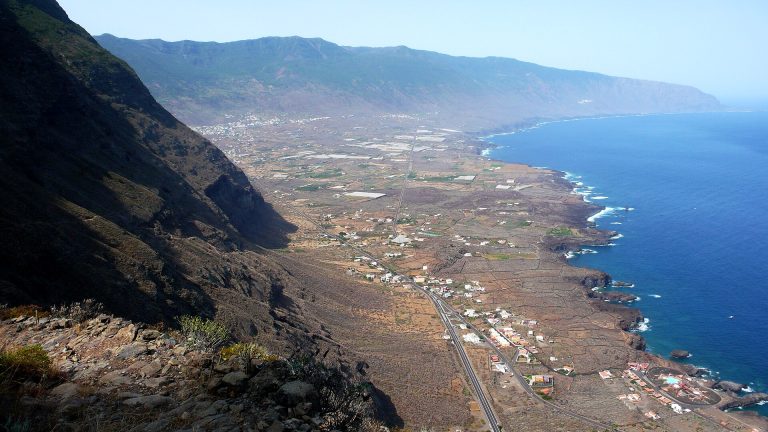
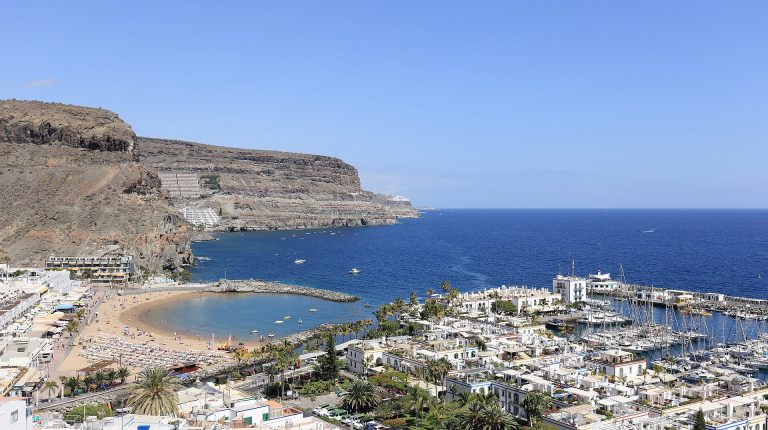
The trade wind blows from the northeast for most of the year. It pushes moist air against the northern slopes of the high islands, where a cloud layer forms that locals call Panza de burra (donkey’s belly). The southern sides lie in the wind shadow of the mountains and stay dry.
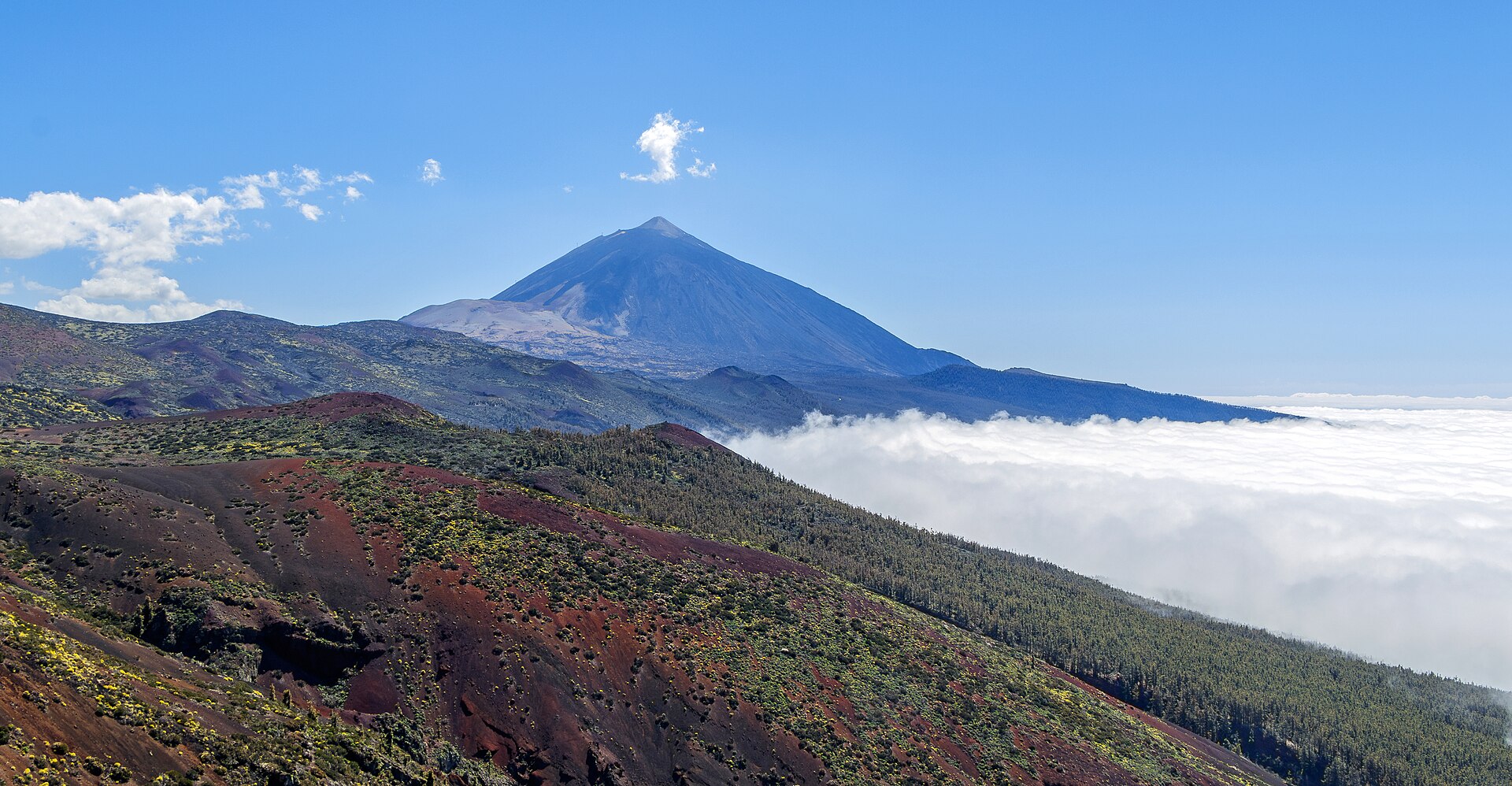
On the high islands it can therefore be overcast in the north while the sun shines in the south. Above the clouds, for example on Teide, the sky is often clear. But it is considerably colder up there, and in winter there can be snow. How this affects your choice of accommodation is explained in the comparison Tenerife north or south.
Climate table: temperatures month by month
The figures come from the Spanish weather service AEMET and are averages for the normal period 1981 to 2010. They were measured at the Santa Cruz de Tenerife station and at Gran Canaria Airport on the east coast. Shown are the average daily maximum and daily minimum.
| Month | Santa Cruz de Tenerife (day / night in °C) | Gran Canaria Airport (day / night in °C) | Rainy days Santa Cruz |
|---|---|---|---|
| January | 21.0 / 15.4 | 20.8 / 15.0 | 4.2 |
| February | 21.2 / 15.3 | 21.2 / 15.0 | 3.8 |
| March | 22.1 / 15.9 | 22.3 / 15.7 | 3.8 |
| April | 22.7 / 16.5 | 22.6 / 16.2 | 2.4 |
| May | 24.1 / 17.8 | 23.6 / 17.3 | 0.9 |
| June | 26.2 / 19.5 | 25.3 / 19.2 | 0.2 |
| July | 28.7 / 21.2 | 26.9 / 20.8 | 0.0 |
| August | 29.0 / 21.9 | 27.5 / 21.6 | 0.3 |
| September | 28.1 / 21.7 | 27.2 / 21.4 | 0.9 |
| October | 26.3 / 20.3 | 26.2 / 20.1 | 3.1 |
| November | 24.1 / 18.4 | 24.2 / 18.1 | 4.7 |
| December | 22.1 / 16.6 | 22.2 / 16.2 | 5.4 |
Rainy days are days with at least 1 mm of precipitation. Santa Cruz gets 226 mm a year, Gran Canaria Airport 151 mm. Santa Cruz has 2,913 hours of sunshine a year, 337 in July and 168 in December.
The four seasons on the coast
On the coast, there are only around 8 degrees between the coldest and the warmest month.
- December to February: around 21 to 22 °C by day, about 15 °C at night. This is the rainy season, with four to five rainy days a month. You’ll need a jacket in the evening.
- March to May: 22 to 24 °C, the rain eases off and the islands are at their greenest.
- June to August: 25 to 29 °C, practically no rain. The trade wind blows strongly, which makes the heat bearable and draws surfers to Fuerteventura.
- September to November: still 26 to 28 °C into October. From October, the first rain returns.
The Atlantic is cooler than the Mediterranean in high summer and at its warmest in late summer and autumn.
Differences from island to island
The higher the mountains, the more moisture an island draws from the trade wind.
- Lanzarote and Fuerteventura: flat, dry, windy. Hardly any difference between north and south.
- Tenerife and Gran Canaria: a strong contrast between the green north and the dry south, plus high mountains.
- La Palma, La Gomera, El Hierro: the greenest, often with clouds and cloud forest in the north and at mid altitudes.
Which island suits which holiday is shown in the comparison Which Canary Island is right for me?
Calima: when the wind comes from the Sahara
When the wind turns to the east, it brings dry, warm air and fine dust from the Sahara. The air becomes hazy, visibility poor and temperatures rise. It is usually over after a few days. If you have respiratory problems, it’s best to postpone hikes.
Frequently asked questions
Can you swim in the Canary Islands in winter?
Yes. The Atlantic is fresh in winter, and the air reaches around 21 °C during the day. It is most pleasant on the southern coasts.
When is it warmest in the Canary Islands?
In August and September. In Santa Cruz de Tenerife, the average daily maximum in August is 29.0 °C.
When does it rain the most?
From November to February, in Santa Cruz with an average of 5.4 rainy days in December.
What is the best time to travel?
For swimming June to October, for hiking October to May. For the whole winter: Wintering in the Canary Islands.
Sources
- AEMET: climate values Santa Cruz de Tenerife, 1981 to 2010
- AEMET: climate values Gran Canaria Airport, 1981 to 2010
- Tenerife ON: information on Teide National Park
As of: October 2026
As of October 2026. Opening hours, prices and entry rules change. Check them on the official websites before your visit.
Cover image: H. Zell · Wikimedia Commons · CC BY-SA 3.0
Free
The moving checklist as a PDF (in German)
All steps in the right order to tick off. Plus the key tips by email over the next weeks (in German). Free, unsubscribe at any time.