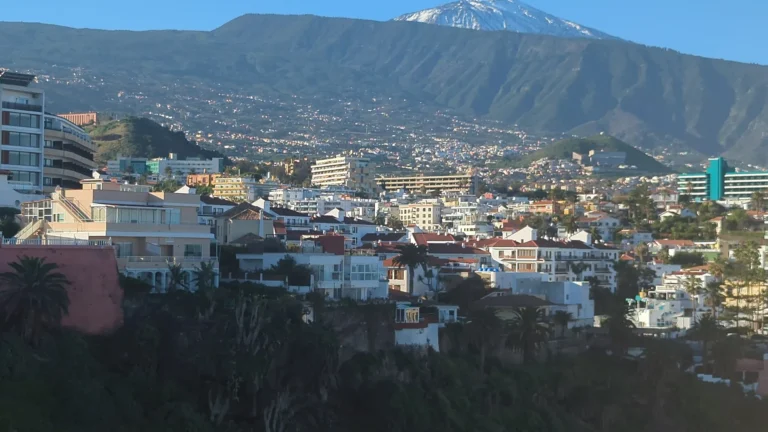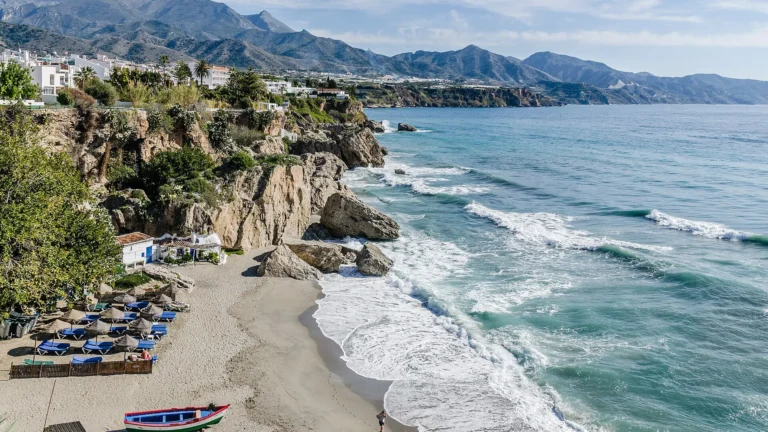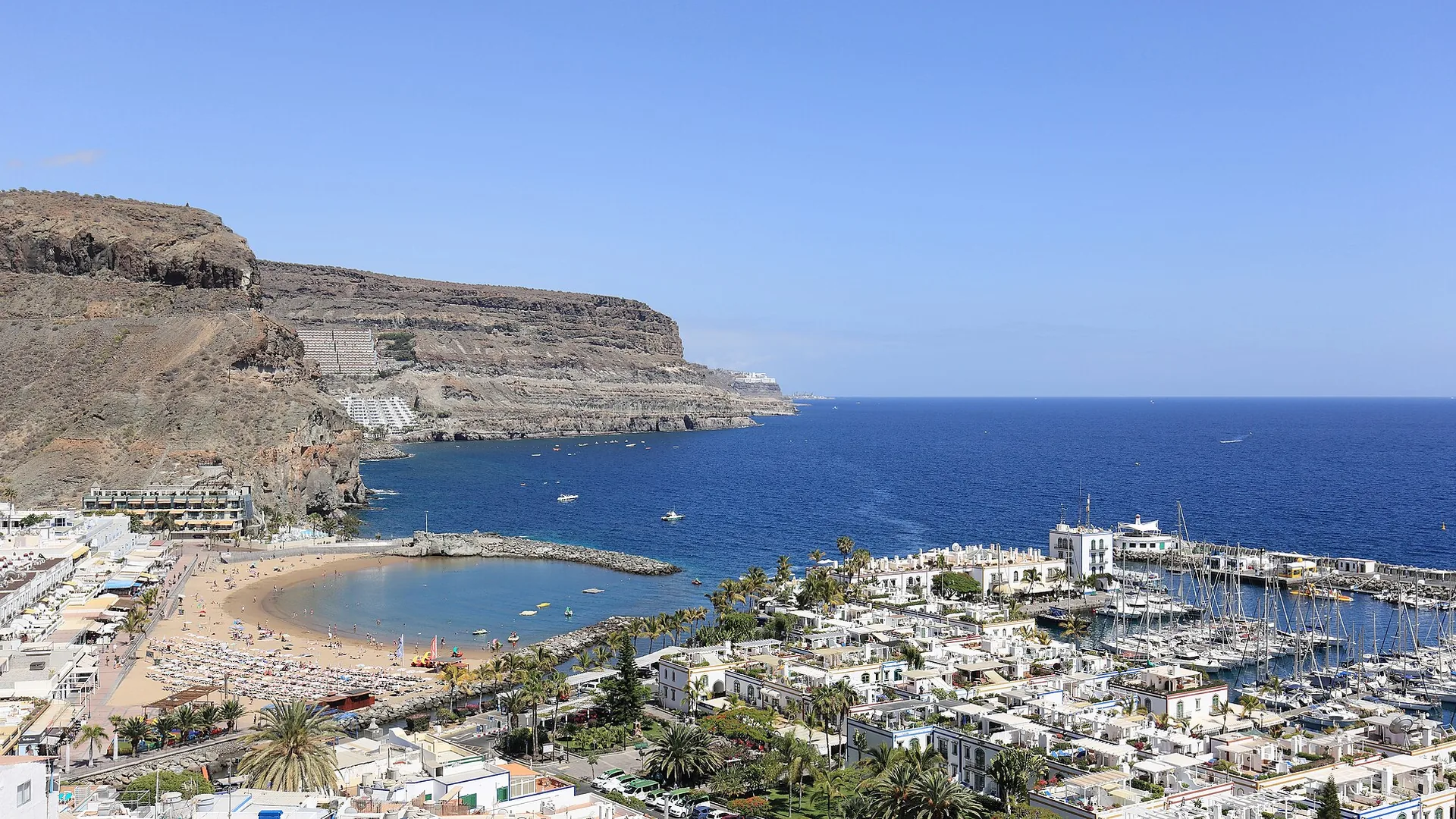
In short: Gran Canaria is the Canary island for anyone who wants to combine a mild climate with real city life: Las Palmas is a big city with more than 381,000 residents, while the south is sunnier, more touristy and noticeably more expensive. The biggest cost item is rent, which ranges from roughly 10 to 21 euros per square metre depending on the municipality (Idealista, September 2026). Local jobs are scarce and pay less than in Germany or Austria, so if you bring your own income, things are much easier.
At a glance
- Population: 863,943 on the island, of whom more than 381,000 live in Las Palmas de Gran Canaria (ISTAC end of 2024, city end of 2025)
- Rent: from 9.9 euros/m² in Arucas to 21.3 euros/m² in Mogán (Idealista, September 2026)
- Climate: annual average 21.1 degrees, around 21 degrees during the day in January and around 27.5 degrees in August (AEMET, airport)
- Everyday tax: IGIC instead of VAT, standard rate 7 % instead of 21 % on the mainland
- Job market: unemployment rate in the Canary Islands 11.6 % in Q2 2026
- First steps: NIE, Padrón, bank account, health insurance
Who is Gran Canaria right for, and who not?
Gran Canaria is often described as a miniature continent: green valleys and a lively capital in the north, mountains reaching almost 2,000 metres in the centre, dunes, beaches and hotel zones in the south. So you are choosing between a Spanish city and the sunny holiday south.
The island suits you well if you:
- work location-independently, receive a pension or bring your own income,
- are looking for a mild climate all year round without summer heat like in Seville or Granada,
- want to combine city and sea, for example with a flat in Las Palmas and the Las Canteras city beach on your doorstep,
- have children and need a big city with a German school and large hospitals nearby.
It suits you less well if you expect a well-paid job locally without speaking Spanish, if you want to drive to Germany regularly (depending on the departure, the ferry to the mainland takes more than 30 hours to Huelva), or if island life with fixed routes and dependence on flights feels restrictive in the long run. If you are still torn between the two big islands, you will find a direct comparison under Tenerife or Gran Canaria.
German-speaking doctors in Gran Canaria: 11 verified practices and clinics →
The best areas to live
The island is round, but life mainly happens on the east coast between Las Palmas and the south. You will find all rental prices in the table below the profiles.
Las Palmas de Gran Canaria
The capital is the centre for public authorities, the university, hospitals and jobs. Popular areas are the neighbourhoods around Las Canteras beach and Guanarteme, the old town of Vegueta and Triana, and quieter residential areas such as Ciudad Jardín. In summer a layer of cloud often hangs over the city in the north-east, and the trade winds bring wind and fresh air.
Telde
Telde is the second largest city on the island and lies between Las Palmas and the airport. It has beach neighbourhoods such as Melenara, La Garita and Playa del Hombre, plus plenty of everyday life with little tourism. A good choice for commuters to Las Palmas, but rents are rising fast here.
Arucas
Arucas is in the green north, about 20 minutes from Las Palmas, with banana plantations, a striking church and small-town life. It is the cheapest place in Idealista’s list for the province. On the other hand, it is cloudier and cooler than on the east coast, and without a car you are limited.
Agüimes and Santa Lucía de Tirajana
These municipalities in the south-east are well located between the airport, business parks and the south. Agüimes has a pretty old town centre and the coastal district of Arinaga, while Santa Lucía with Vecindario is a large, rather functional place to live. It is much sunnier here than in Las Palmas.
Maspalomas and Playa del Inglés
The south belongs to the municipality of San Bartolomé de Tirajana and has been a destination for German holidaymakers and winter residents for decades. You will find almost guaranteed sunshine, the Maspalomas dunes, lots of infrastructure and German-language services. The price: rents at the top level, and many flats are geared towards holiday guests. In summer it is busy, and outside the season some complexes are very quiet.
Puerto Rico and Mogán
In the south-west you will find Arguineguín, Puerto Rico, Amadores and Puerto de Mogán. The climate here is the sunniest, and the setting between cliffs and bays is spectacular. Mogán is the most expensive municipality on the list. For permanent residents this means few affordable long-term rentals and long journeys to public offices and hospitals in Las Palmas.
| Municipality | Euros per m² | 70 m² (calculated) | Trend vs. previous year |
|---|---|---|---|
| Arucas | 9.9 | around 690 euros | minus 3.6 % |
| Santa Lucía de Tirajana | 11.1 | around 780 euros | plus 4.4 % |
| Telde | 11.6 | around 810 euros | plus 8.7 % |
| Agüimes | 12.9 | around 900 euros | plus 11.8 % |
| Las Palmas de Gran Canaria | 14.6 | around 1,020 euros | plus 4.6 % |
| San Bartolomé de Tirajana | 21.1 | around 1,480 euros | plus 0.8 % |
| Mogán | 21.3 | around 1,490 euros | minus 3.0 % |
The 70 m² column is our own calculation based on the price per square metre. To get to know the island: Gran Canaria sights and Beaches on Gran Canaria.
Renting a flat on Gran Canaria: what to keep in mind
For most people, finding a flat is the hardest part: long-term rentals are scarce, and landlords want to see guarantees. Plan time and money for temporary accommodation.
- Search on Idealista and Fotocasa, but also ask locally: many flats are let through notices, word of mouth and small agents.
- Always view in person or have someone view for you. Never transfer money for a flat you have not seen.
- Expect a deposit and extra guarantees: by law, a deposit of one month’s rent is mandatory for residential lets, and two months for seasonal contracts. In the Canary Islands, the landlord must lodge the deposit with the Instituto Canario de la Vivienda.
- Have your documents ready: NIE, passport, proof of income such as a pension statement, employment contract or bank statements.
- Pay attention to the type of contract: a residential tenancy under the LAU tenancy law protects you much better than a seasonal contract (alquiler de temporada).
One factor behind the tight market is holiday rentals. In November 2025 the Canary Islands parliament passed a law on the tourist use of housing: in principle, 90 % of homes should be used for permanent living, and new holiday rentals are only possible to a limited extent. How to read listings, spot traps and check a contract is explained in detail under Finding a flat in Spain.
What does life on Gran Canaria cost?
Rent is backed by data, while the other items depend heavily on your lifestyle. The values below without a source are our own estimated ranges and are marked as such. According to INE, households in the Canary Islands spent an average of around 1,054 euros per person per month in 2025 (for owners including imputed rent).
| Item per month | Single person | Couple | Basis |
|---|---|---|---|
| Rent (Las Palmas, 50 to 80 m²) | 730 to 1,020 euros | 1,020 to 1,170 euros | Idealista, 14.6 euros/m², September 2026 |
| Electricity, water, butane gas | 60 to 100 euros | 80 to 140 euros | Estimate |
| Internet and mobile | 15 to 40 euros | 25 to 60 euros | Estimate based on tariff comparison 2026 |
| Groceries and toiletries | 250 to 400 euros | 450 to 700 euros | Estimate |
| Transport (bus or car) | 0 to 250 euros | 100 to 350 euros | Estimate |
| Leisure, eating out | 100 to 300 euros | 200 to 500 euros | Estimate |
Things are cheaper in the Canary Islands than on the mainland mainly where indirect tax is low: instead of 21 % VAT, usually 7 % IGIC (Impuesto General Indirecto Canario) applies, and basic foodstuffs are taxed at 0 %. Petrol is also a little cheaper: in June 2026, according to the CNMC, regular petrol cost an average of 1.441 euros per litre in the Canary Islands compared with 1.488 euros on the peninsula. Parcels from Germany, on the other hand, get more expensive. More on this in the Canary Islands overview under Moving to the Canary Islands.
Work and self-employment: a realistic view
The island’s job market lives on tourism, the port and the public sector. The unemployment rate in the Canary Islands was 11.6 % in Q2 2026, and much higher among young people. The average gross annual salary in 2024 was 25,120 euros in the Canary Islands and 29,540 euros in Spain as a whole (INE). In hospitality, where many newcomers find their first job, salaries are the lowest.
Working as an employee
With German, English and good Spanish you have chances in hotels, with tour operators, in customer service, real estate and in practices that look after holidaymakers and residents. Without Spanish, you are mostly left with seasonal jobs in the south. You will find an overview of the options under Working in Spain.
Working remotely or self-employed
Gran Canaria works best for people who bring their income with them: remote employees, freelancers with clients in Germany or Austria, online entrepreneurs. If you live and work here, you become liable to tax in Spain and register as an Autónomo (self-employed person). In the Canary Islands there is also IGIC: the standard rate is 7 %, and since 1 July 2026 small businesses with a turnover of up to 50,000 euros can be exempted via the REPEP. Everything about it under Self-employed in the Canary Islands.
Moving to Gran Canaria as a retiree
For retirees, the island is one of the classics. The climate is mild in winter and without extreme heat in summer, and in the south you will find doctors, pharmacies and service providers who speak German. If you plan to stay for good, also think about doctor’s appointments and hospitals when choosing where to live: the large hospitals are in Las Palmas.
With a German or Austrian state pension you are covered by public health insurance in Spain via the S1 form: you apply for it at your health insurance fund, ideally before the move, and present it in Spain at the INSS. For tax purposes: if you live here for more than 183 days a year, you become liable to tax in Spain. One advantage of the Canary Islands is inheritance tax: since 2023 there has been a 99.9 % relief for heirs from the close and extended family. More under Retiring to Spain and Spending the winter in the Canary Islands.
Moving to Gran Canaria with children: schools and nurseries
In Spain children start school at 6, but most already attend the free Educación Infantil from the age of 3. Public schools teach in Spanish.
Public school
Registration for Infantil and Primaria in the Canary Islands takes place every spring: for the 2026/27 school year, applications could be submitted from 6 to 17 April 2026, followed by enrolment in June. If you arrive during the year, you use the extraordinary procedure for admissions during the school year. In practice, the requirement is the Padrón in the municipality.
German School Las Palmas
The Deutsche Schule Las Palmas de Gran Canaria (Colegio Oficial Alemán) is located in Almatriche on the edge of the city and runs from kindergarten to the Abitur (German school-leaving qualification). According to the school, primary school costs 4,704 euros a year in the 2026/27 school year and years 5 to 8 cost 5,580 euros, plus a one-off admission fee of 1,000 euros, a 1,000 euro deposit and an annual registration fee of 205 euros. There are also international private schools. Families will find nurseries, paediatricians and choosing a school covered in detail under Moving with your family.
Health and health insurance
Public healthcare is the responsibility of the Servicio Canario de la Salud (SCS). You get a GP at the Centro de Salud in your neighbourhood, and specialists and hospitals via referral. The large hospitals are in Las Palmas, such as the Hospital Universitario de Gran Canaria Doctor Negrín and the Complejo Hospitalario Universitario Insular Materno Infantil. In the south there are health centres and private clinics.
How you get into the public system depends on your situation: employees and Autónomos are insured through their contributions, retirees via S1. If you neither work nor receive a pension, you first need private health insurance. After one year of residence in Spain and with a Padrón in the Canary Islands, the Convenio especial becomes an option, a voluntary insurance within the public system. The steps to getting your health card are explained in Health insurance in Spain.
Climate throughout the year
Gran Canaria has neither a winter problem nor a heat problem. The AEMET values from the airport on the east coast (average 1981 to 2010) show this clearly:
| Month | Daytime high | Night-time low | Rain |
|---|---|---|---|
| January | 20.8 degrees | 15.0 degrees | 25 mm |
| April | 22.6 degrees | 16.2 degrees | 6 mm |
| August | 27.5 degrees | 21.6 degrees | 0 mm |
| October | 26.2 degrees | 20.1 degrees | 16 mm |
Only 151 mm of rain falls there over the whole year, and the sun shines for around 2,800 hours, compared with about 1,600 in Hamburg. There are differences within the island, though: the north-east with Las Palmas is cloudier, the south sunnier, and in the mountains it gets properly cool in winter. More under Canary Islands weather.
Getting around: car, bus and flights
There is no railway on Gran Canaria. The bus network is still good: in Las Palmas the Guaguas Municipales run, and across the island the Global buses. For frequent travellers resident in the Canary Islands, the bus is free in 2026, with the exact conditions set by the island. If you live in Arucas, in the interior or in Mogán, you will usually still need a car. Bringing a car from Germany is more complicated than on the mainland because it has to be declared at customs (when moving, under conditions without IGIC). Details under Car and driving licence in Spain.
The airport is near Telde and has many direct connections to Germany and Austria. From Agaete the ferry takes about 80 minutes to Tenerife. As a resident with a Padrón you get a 75 % discount on flights and ferries within the Canary Islands and to the Spanish mainland. The clocks in the Canary Islands are one hour behind Germany and Austria.
Public offices and first steps on the ground
The first few weeks are mostly about appointments. The order matters, because each step depends on the one before.
-
Apply for your NIE
You need the NIE (foreigner identification number) for your rental contract, bank account, electricity and work. Appointments are available online, and in Las Palmas they are often hard to get. Process and documents: Applying for an NIE.
-
Padrón at the town hall
With your rental contract you register at the town hall of your municipality. The Padrón is the basis for school, health card, bus pass and resident discount. In Las Palmas appointments have been hard to get in the past, so plan ahead: Applying for the Padrón.
-
Open a bank account
A Spanish account makes rent, direct debits and Bizum easier. How it works: Bank account in Spain.
-
Sort out health insurance
Depending on your situation, through work, self-employment, S1 or privately. Then the health card from the SCS.
The complete process with all documents is shown in Moving to Spain step by step.
Experiences and typical mistakes
Many people who move to Gran Canaria know the island from holidays in the south. Everyday life looks different. These mistakes happen particularly often:
- Choosing where to live based on holiday feelings: Playa del Inglés in February is something else than a whole year there. Live for a few weeks on a trial basis in the area you are interested in.
- Arriving without an income: Job hunting often takes months, and salaries are well below German levels.
- A seasonal contract as a permanent solution: Without a proper rental contract you often cannot get the Padrón, and without the Padrón you are missing almost everything else.
- Underestimating Spanish: In the south you can get through a holiday with German, but not through the town hall, the Centro de Salud or a parents’ evening.
- Forgetting island logistics: Parcels from Germany take longer and often involve customs duties and fees, and some shops do not deliver to the Canary Islands at all.
Help with moving to Gran Canaria
deinSpanien advises you in English or German and online, for all of Andalusia and the Canary Islands. We handle appointments, forms and powers of attorney for you, so you either go fully prepared or we complete the steps for you. We are on the ground in Spain ourselves and know every one of these steps from our own experience, from the NIE to registering as an Autónomo.
Which packages are available and what they include is on the Advice and packages page.
Frequently asked questions
How much does a flat on Gran Canaria cost?
According to Idealista, asking rents in September 2026 were 14.6 euros/m² in Las Palmas, 11.6 euros in Telde, 9.9 euros in Arucas and over 21 euros in San Bartolomé de Tirajana and Mogán. For 70 m² that is roughly 690 to 1,490 euros a month.
What should I keep in mind when moving to Gran Canaria?
Plan an income before you come, look for temporary accommodation first and then a flat with a proper rental contract. After that come the NIE, Padrón, bank account and health insurance. IGIC and parcels from Germany are what set the Canary Islands apart from the mainland.
Where do Germans prefer to live on Gran Canaria?
Many live in the south between Maspalomas, Playa del Inglés and Mogán, because it is sunniest there. People who work or have children often choose Las Palmas or Telde, because of schools, hospitals and jobs.
Las Palmas or the south: which is better?
Las Palmas offers city life, jobs, a university and hospitals with moderate rents, but more clouds. The south offers sunshine and a holiday feeling, but is more expensive and quiet outside the season.
Is there a German school on Gran Canaria?
Yes, the Deutsche Schule Las Palmas in Almatriche, from kindergarten to the Abitur. According to the school, primary school costs 4,704 euros a year in the 2026/27 school year plus an admission fee and deposit.
Do I need a car on Gran Canaria?
Not necessarily in Las Palmas: the bus network is good and free for frequent travellers with residence in 2026. In the north, the interior and the south-west, a car is very helpful in everyday life.
Sources
- Idealista: rental price report for Las Palmas province, September 2026
- AEMET: climate values Gran Canaria Aeropuerto
- Gobierno de Canarias: lodging the rental deposit
- Deutsche Schule Las Palmas: school fees
- INE: Encuesta Anual de Estructura Salarial 2024
- BOE: Real Decreto 949/2018, 75 % resident discount
As of: October 2026
Free
The moving checklist as a PDF (in German)
All steps in the right order to tick off. Plus the key tips by email over the next weeks (in German). Free, unsubscribe at any time.