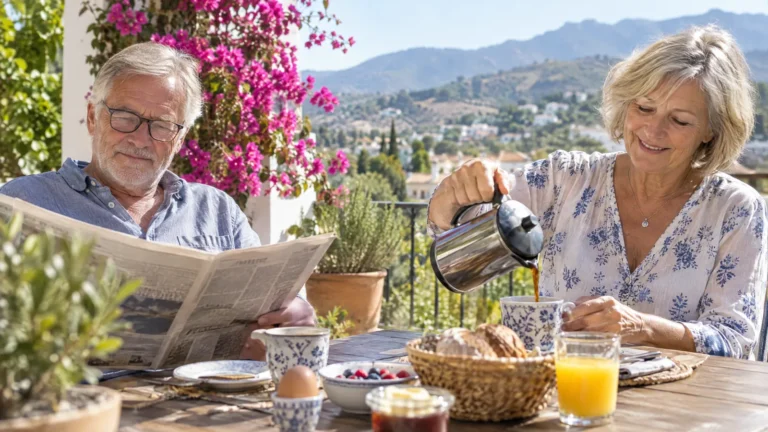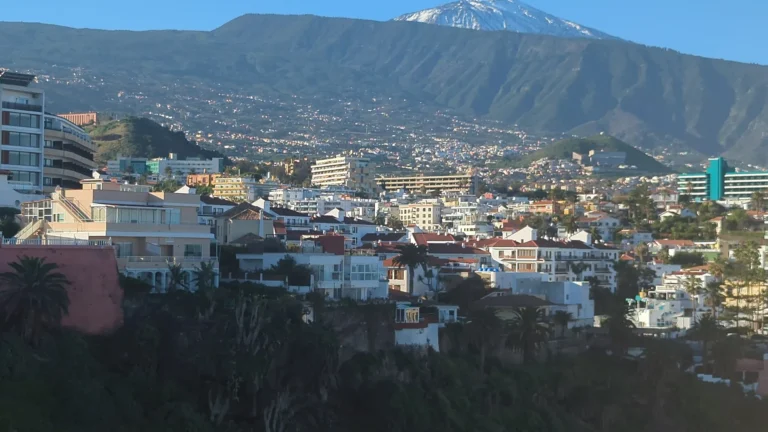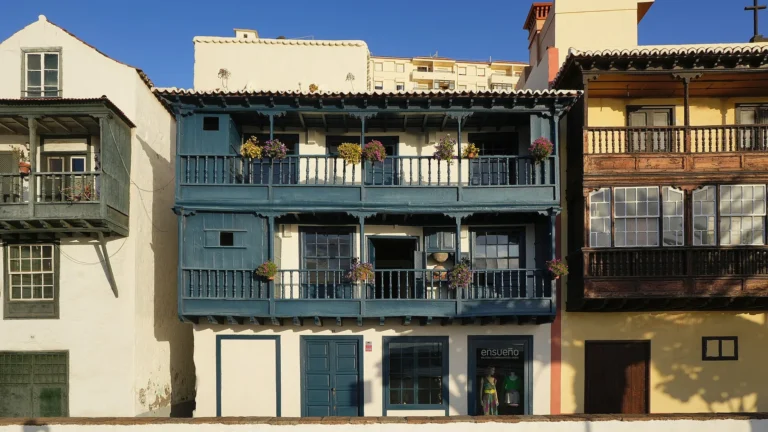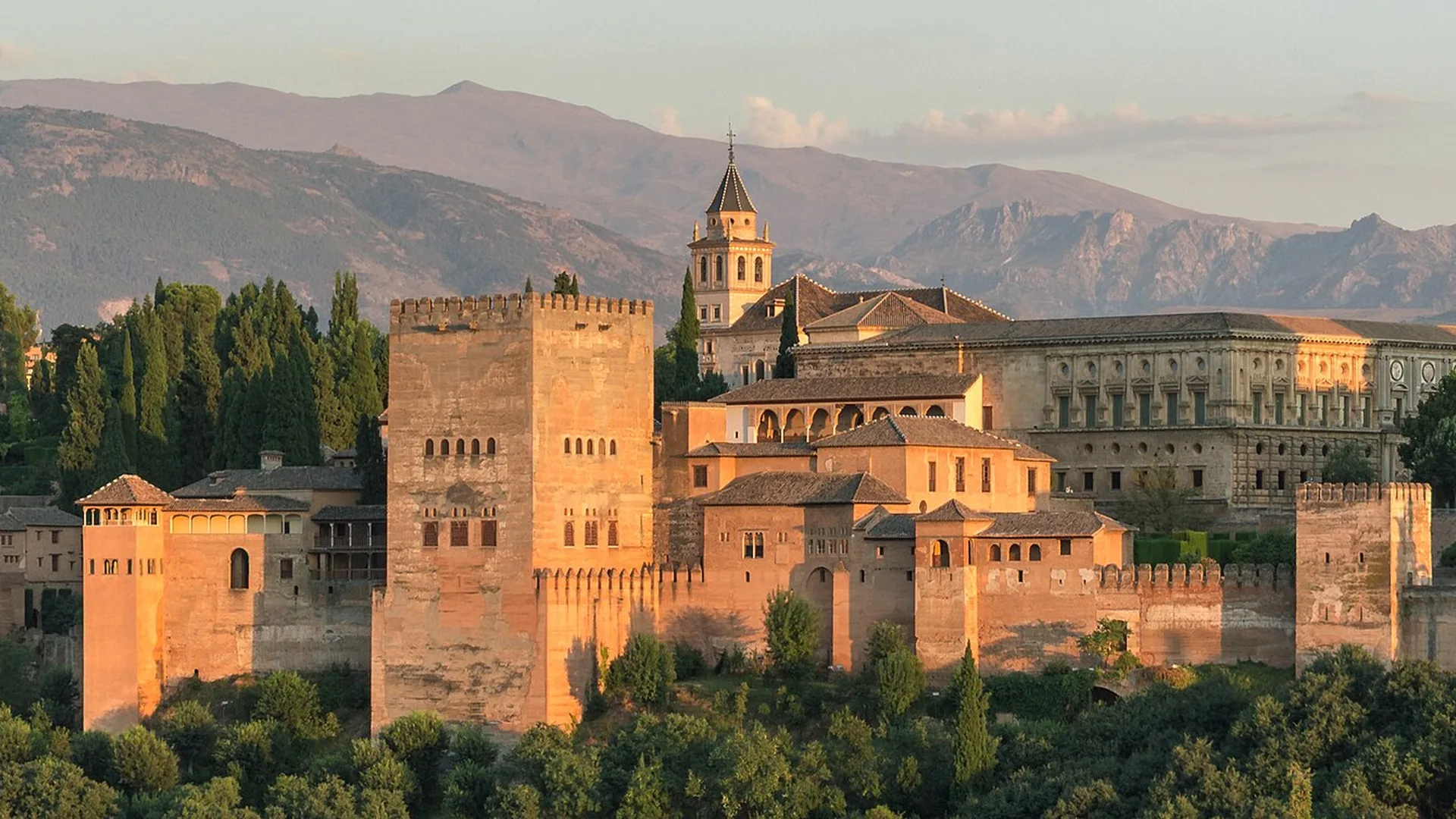
In short: Granada is a lively university city with moderate rents, lots of culture and the mountains of the Sierra Nevada on its doorstep. The city suits you if you bring your own income, enjoy learning Spanish and can live with hot summers and cold winters. If you need a large job market or a beach on your doorstep, you are often better off on the coast.
At a glance
- Population: 232,717 in the city (INE, 2024)
- Rent: 10.8 € per m² on average across the city, 8.7 to 12.8 € depending on the neighbourhood (Idealista, September 2026)
- Purchase price: 2,708 € per m² in the city (Idealista, September 2026)
- Climate: July averages 34.8 °C during the day, January nights around 0 °C (AEMET, Granada Aeropuerto)
- Who it suits: students, remote workers, self-employed people, active retirees
- Difficult for: job seekers without Spanish, anyone who cannot handle heat
Who is Granada right for, and who not?
Granada lies at an altitude of around 680 m at the foot of the Sierra Nevada. The city is compact, the old town is walkable, and the university shapes everyday life. In the evening you go out for tapas, at the weekend into the mountains or, in a good hour, to the sea.
Well suited
- Students and young people: Granada is one of Spain’s big university cities and very popular with Erasmus students.
- Remote workers and self-employed people with clients in Germany or Austria who want city life at moderate cost.
- Active retirees who value culture, short distances and good hospitals.
- Nature lovers: skiing in winter, hiking in the Alpujarras, swimming on the Costa Tropical.
Rather difficult
- If you are looking for a well-paid job locally: in the second quarter of 2026, Andalusia had the highest unemployment rate of all Spanish regions at 14.56 % (INE, EPA). Wages are below German levels.
- If you do not cope well with heat: in July and August the thermometer regularly climbs above 35 °C.
- If you do not want to learn Spanish: Andalusian Spanish is spoken fast, with swallowed word endings. English only helps to a limited extent in everyday life.
- Families who want a German school: there is no German school abroad (Deutsche Auslandsschule) in Granada.
If you want to compare Granada with other places, read Moving to Andalusia and Moving to Málaga.
German-speaking doctors in Granada: 14 verified practices and clinics →
The best neighbourhoods to live in Granada
Granada is small enough that you can reach the centre by bus or on foot from almost any neighbourhood. But the neighbourhoods differ greatly in character, noise and price. The rental prices come from the Idealista report for September 2026 and are asking prices per m².
| Neighbourhood | Rent €/m² | Character |
|---|---|---|
| Albaicín | 12.8 | old town on the hillside, Alhambra views, steep, touristy |
| Realejo | 12.1 | old Jewish quarter, bars, central |
| Centro | 11.8 | cathedral, shops, public offices, noisy |
| Ronda (Arabial) | 10.5 | residential area, many students, good buses |
| Zaidín | 10.0 | large working-class district, markets, very Spanish |
| La Chana | 10.0 | quiet residential area in the west, metro |
| Norte | 9.7 | one of the cheapest districts, some deprived areas |
Albaicín and Realejo: old town with charm
The Albaicín is Granada’s best-known neighbourhood: white houses, narrow lanes, views of the Alhambra. Living here is beautiful but not convenient. The streets are steep, cars can barely get through, you carry your shopping uphill, and many flats are holiday rentals. You can read more about the neighbourhood in Albaicín and Sacromonte. The Realejo is flatter, very central and has lots of bars. It is popular with young newcomers but can be noisy at night.
Centro and Ronda: central and practical
In the Centro around the cathedral and Calle Recogidas, everything is within walking distance, but you get traffic and noise. The Ronda neighbourhood around Calle Camino de Ronda is a little further out, cheaper and well connected by bus and metro. Many students live here.
Zaidín and La Chana: everyday life instead of postcards
The Zaidín in the south is a large, lively residential area with a market, parks and few tourists. Here you live among locals, and your Spanish improves quickly. La Chana in the west is quiet, has the metro right on its doorstep and is close to the motorway. Both neighbourhoods are a good choice for families and anyone who wants more space for their money.
Surrounding area: Armilla, Monachil and the villages
The Granada metropolitan area includes many municipalities connected to the city by bus or metro. Armilla in the south is the last stop on the metro line and has a large shopping centre. Rent there is 9.6 €/m² (Idealista, September 2026). Monachil lies on the way to the Sierra Nevada, and the municipality also includes the ski resort of Pradollano. Here you live in the countryside with mountain views, but you need a car. For places such as La Zubia, Ogíjares or Maracena, Idealista does not publish separate rent figures. They are considered quieter, with more houses and gardens.
Costa Tropical: Almuñécar and Salobreña
The coast of Granada province is called the Costa Tropical and lies about an hour south of the city. Almuñécar is the largest seaside town with many foreign residents, and rent there is 11.5 €/m². Salobreña is smaller, with a white old town on a rock. There is no Idealista figure for Salobreña. Neighbouring Motril is much cheaper at 8.3 €/m², but it is more of a working town than a holiday resort. We present the beaches in Beaches of the Costa Tropical.
Cost of living in Granada
Granada is one of the cheaper large cities in Andalusia. For comparison: in September 2026, Málaga province was at 18.8 €/m² rent, Granada province at 10.3 €/m² (Idealista). The table shows a monthly budget for a single-person or couple household.
| Item | Monthly | Source |
|---|---|---|
| Rent 70 m², city average | approx. 756 € | 10.8 €/m², Idealista 09/2026, our own calculation |
| Rent 70 m², Zaidín or Chana | approx. 700 € | 10.0 €/m², Idealista 09/2026, our own calculation |
| City bus monthly pass | 24.60 € | Fare July 2026, single ticket 1.60 € |
| Electricity | 60 to 100 € | Estimated range, more in summer with air conditioning |
| Groceries (household) | around 470 € | Spanish average per average household according to INE 2025 |
| Mobile and internet | 30 to 50 € | Estimated range |
The estimated ranges are not official figures. Work out your own budget with our cost calculator. Keep in mind: small flats are often more expensive per m² than the average, and competition for flats is fiercest at the start of the semester in September.
Working and being self-employed in Granada
Granada lives on the university, public administration, healthcare, tourism and trade. There is hardly any industry. For newcomers without fluent Spanish, the local job market is tough, and salaries are well below what you are used to from Germany or Austria.
What realistically works
- Working remotely for an employer in Germany or Austria. How this works legally is explained in Working in Spain: 4 ways.
- Self-employed as an Autónomo (self-employed person in Spain), for example with online services, translations or teaching. The process is described in Registering as an Autónomo.
- Teaching German at language schools or privately. The demand is there, but the pay is usually modest.
- Tourism: hotels, guided tours and agencies sometimes look for German speakers, often seasonally.
Studying at the University of Granada
The Universidad de Granada (UGR) is one of the largest universities in Spain. In the 2024/25 academic year, 57,664 students were enrolled in official degree programmes, 46,851 of them in bachelor’s degrees (Grado), according to the UGR’s annual report. The faculties are spread across the city, including the Fuentenueva and Cartuja campuses and the health sciences campus in the south.
For you as a newcomer, this means lots of young people, cheap bars and a wide range of culture, but also strong demand for rooms in shared flats. Everything about admission and costs is in Studying in Granada, and everything about a semester abroad in Erasmus in Granada.
Moving to Granada as a retiree
Granada is interesting for retirees who want a real city with culture rather than just a holiday coast. Doctors, hospitals, theatres and markets are close by, and rents are moderate.
- Health insurance: with a state pension from Germany or Austria, you get the S1 form from your health insurance fund and use it to register with the Spanish INSS. After that you are covered by the Andalusian health system.
- Climate: the summer heat and the cold winter nights are noticeable for older people. A flat with air conditioning, heating and a lift makes a big difference. Many older houses in the Albaicín have neither a lift nor good insulation.
- The coast as an alternative: if you want it warmer in winter, you can live on the Costa Tropical and drive to Granada for doctor’s appointments and culture.
We explain pensions, taxes and insurance in detail in Retiring to Spain.
Moving to Granada with children
Children in Granada usually attend a Spanish public school (colegio público) in their catchment area or a semi-private school (concertado). To register, you need the Padrón (registration at the town hall). The application deadlines for the new school year are in spring, but joining during the year is possible.
There is no German school abroad (Deutsche Auslandsschule) in Granada. The nearest is the Deutsche Schule Málaga in Ojén near Marbella, with kindergarten, primary school and a path to the German International Abitur. For families in Granada, that is not a daily school run. So plan for your children to learn in Spanish. Young children usually manage this quickly, older ones need more time and support. More on this in Moving with your family.
Health and health insurance
Andalusia’s public health system is called the Servicio Andaluz de Salud (SAS). Granada has two large university hospitals, the Hospital Universitario Virgen de las Nieves and the Hospital Clínico San Cecilio. You get access through employment or self-employment, as a retiree via the S1 form, or as a co-insured family member.
You apply for the health card (Tarjeta sanitaria) in person at your Centro de Salud the first time. After that you use ClicSalud+ for appointments and replacement cards. For this you need your ID, proof of entitlement from the INSS and the Padrón in Andalusia. You can choose your doctor freely. If you have no entitlement, you need private insurance. Everything about it in Health insurance in Spain.
Climate in Granada: hot summers, cold winters
Granada does not have a beach climate. Because of its altitude and inland location, the contrasts are great. The figures come from the weather station at Granada airport (560 m, average 1981 to 2010, AEMET).
- Summer: in July the average daily high is 34.8 °C, in August 34.2 °C. There is hardly any rain. At night it cools down to about 15 °C, which makes sleeping easier than on the coast.
- Winter: in January the average low is 0.0 °C. The station records an average of 48.5 frost days a year, most of them from December to February. During the day it is often sunny at around 13 °C.
- Rain: 365 mm a year, mainly from October to January.
Many people underestimate the winter. Spanish flats often have tiled floors, thin windows and no central heating. When viewing a flat, ask about heating, insulation and electricity costs in winter.
The Sierra Nevada on your doorstep
According to the Spanish tourist office, the Sierra Nevada ski resort with the village of Pradollano at over 2,000 m is only about half an hour from Granada; by car you should rather count on 40 to 45 minutes depending on traffic. The season usually runs from late November to early May. In summer the Sierra becomes a hiking area. More in Sierra Nevada: skiing and hiking and Alpujarras.
Getting around: bus, metro, car and flights
You do not need a car in the city. City buses and the metro line between Albolote in the north and Armilla in the south cover most journeys. The old town is largely closed to cars anyway.
- Car: a car is handy for the surrounding area, the mountains and the coast. How to re-register your vehicle is explained in Re-registering your car and driving licence.
- Train: Granada has a high-speed rail connection to Madrid.
- Flights: the small Granada-Jaén airport mainly has domestic flights. For flights to Germany and Austria, most people use Málaga airport, which is about an hour and a half away by car; by bus it takes a little longer.
Public offices and first steps in Granada
The paperwork in Granada is the same as everywhere in Spain. Doing it in the right order saves you time.
-
Get your NIE
The responsible office is the police’s Brigada Provincial de Extranjería on Calle La Palmita. You book appointments online. Process and documents in Applying for an NIE.
-
Find a flat
Through portals, notices and agents. At the start of the semester things get tight. More in Finding a flat in Spain.
-
Padrón at the town hall
In Granada you can also submit the application electronically via the city’s Sede Electrónica. See Padrón: registering at the town hall.
-
Open a bank account
With your NIE and address. More in Opening a bank account and Bizum.
-
Apply for your health card
In person at the Centro de Salud in your neighbourhood, then appointments via ClicSalud+.
The whole process from planning to moving in is shown in Moving to Spain: step by step.
Help with moving to Granada
deinSpanien advises you in English or German and online for all of Andalusia and the Canary Islands. Together with you, we handle appointments, forms and powers of attorney, for example for the NIE, Padrón, bank account or health insurance. You either go to your appointments fully prepared by us, or we complete the steps for you with a power of attorney. We know all these steps from our own experience. You can read more about us on About us, and about our services under Advice and packages.
Experiences and typical mistakes when moving to Granada
Certain mistakes come up again and again among newcomers to Granada.
- Renting in summer without air conditioning: a top-floor flat without air conditioning is barely habitable in July.
- Underestimating the winter: without heating and with tiled floors, it gets uncomfortably cold from December to February.
- Searching only for the postcard view: the Albaicín is beautiful, but steep, noisy during the holidays and impractical in everyday life.
- Searching in September: at the start of the semester you compete with thousands of students. Search earlier or wait until October.
- Hoping for a quick job: if you come without an income, you need a lot of patience and savings.
- Putting off Spanish: in Granada you learn the language quickly in everyday life, but only if you actually speak it.
To help you settle in, read our articles Tapas in Granada and Day trips from Granada. A broader look at life in the country is given in Living in Spain as a German.
Frequently asked questions
How much does a flat in Granada cost?
Across the city, the average asking rent in September 2026 was 10.8 € per m² (Idealista). A 70 m² flat therefore costs around 756 € a month. In Zaidín or La Chana it is about 700 €, in the Albaicín more like 900 €.
Which neighbourhood is best in Granada?
That depends on you. Realejo and Centro are central and lively, Zaidín and La Chana quieter and cheaper, the Albaicín beautiful but steep. Families are often drawn to the surrounding area, such as Armilla or La Zubia.
How cold does it get in Granada in winter?
In January the average low at the airport is 0 °C, and frost is common. During the day it is often sunny at around 13 °C. Good heating is important.
Can I work in Granada without Spanish?
Hardly. The local job market requires Spanish. Realistic options are remote work for clients or employers from Germany or Austria, or self-employment.
Is there a German school in Granada?
No. The nearest German school abroad is the Deutsche Schule Málaga in Ojén. Children in Granada usually attend Spanish public or semi-private schools.
How far is it from Granada to the sea?
You can reach the Costa Tropical with Almuñécar and Salobreña in about an hour by car.
Is Granada a good choice for retirees?
Yes, if you want city life and culture and can cope with hot summers. With the S1 form you are covered by the Andalusian health system, and there are two university hospitals in the city.
Sources
- Idealista: rental prices in Granada by district (September 2026)
- Idealista: rental prices in Granada province (September 2026)
- AEMET: climate values Granada Aeropuerto
- INE: Labour Force Survey EPA, Q2 2026
- Universidad de Granada: Memoria Académica 2024/25
- Servicio Andaluz de Salud: ClicSalud+
- Deutsche Schule Málaga
As of: October 2026
Free
The moving checklist as a PDF (in German)
All steps in the right order to tick off. Plus the key tips by email over the next weeks (in German). Free, unsubscribe at any time.