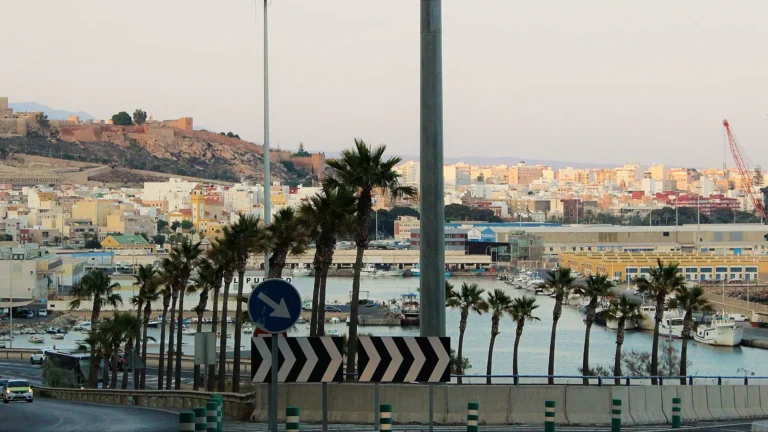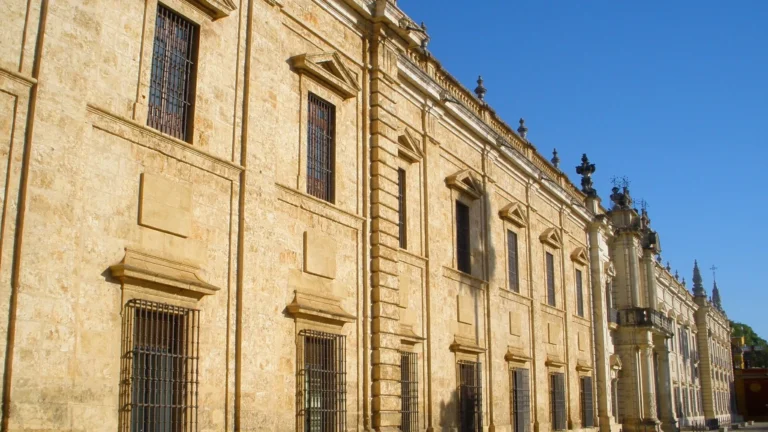
In short: The Universidad de La Laguna (ULL) on Tenerife is the oldest university in the Canary Islands and shapes an entire town. With an Abitur or Matura you apply directly to the ULL; in 2026 the window ran from 12 June to 2 July. Tuition costs 9.47 to 14.59 euros per ECTS, rents are lower than in Las Palmas or Santa Cruz, and the weather is cooler and damper than you would expect from Tenerife.
At a glance
- University: Universidad de La Laguna (ULL), founded as a university in 1792, around 22,000 enrolments (2026/27)
- Offer: 4,967 first-year places in 57 Grados and double Grados (2026/27)
- Application: directly to the university, in 2026 from 12 June to 2 July
- Costs: 9.47 to 14.59 euros per ECTS for a first enrolment
- Rent: 12.7 euros per square metre in La Laguna (Idealista, September 2026)
- Lectures: 8 September to 18 December 2026 and 25 January to 13 May 2027
The Universidad de La Laguna: campuses and strengths
San Cristóbal de La Laguna lies in the northeast of Tenerife at around 550 metres above sea level, directly above the island capital Santa Cruz. The old town is a UNESCO World Heritage Site, and the university is the town’s largest employer and sets its rhythm. For 2026/27 the ULL expects around 22,000 enrolments, 17,452 of them in Grados (as of August 2026). A Grado is the Spanish bachelor’s degree, usually 240 ECTS over four years.
The faculties are spread across several sites, all reachable by bus or tram:
- Campus Central: on the edge of the old town, with the rectorate and central services.
- Campus de Anchieta: natural sciences and engineering, including physics, mathematics, biology, chemistry and computer science.
- Campus de Guajara: the largest site, with law, economics and business, humanities and social sciences, psychology and teacher training.
- Campus de Ofra: the health subjects next to the university hospital, between La Laguna and Santa Cruz.
- Santa Cruz: nautical studies at the port.
- Campus del Sur in Adeje and a site on La Palma: among other things tourism in the south of Tenerife and nursing on the neighbouring island.
The ULL is best known for astrophysics: it works closely with the Instituto de Astrofísica de Canarias, which runs the observatories on Teide and on La Palma. Medicine, nursing, psychology, pharmacy, law and teacher training are also in high demand. Nautical studies are only available here in the Canary Islands.
The language of instruction is Spanish. In its admission rules for applicants from EU school systems, the ULL does not name a mandatory certificate, but you need Spanish from day one for lectures, group work and exams. A solid B2 is the realistic minimum. The university’s Servicio de Idiomas offers Spanish for foreigners in semester courses from A1 to C1; the regular price is around 250 euros per course (as of September 2026).
Admission with an Abitur or Matura
The Canary Islands do not have a joint procedure for all universities. At the ULL you submit a separate application, independent of the islands’ second public university in Las Palmas. The ULL describes the route for applicants from EU school systems like this: you need the certificate from the Spanish distance university UNED, issued through its UNEDasiss service.
The ULL calculates your admission score with this formula: grade on the UNED certificate plus a times M1 plus b times M2. M1 and M2 are up to two passed subject exams, and a and b are the weightings the university sets in a table for each degree programme. For the subject exams you have two routes:
- UNED PCE: the subject exams for applicants from abroad, which you can also take at exam centres outside Spain.
- Voluntary phase of the PAU in the Canary Islands: the Spanish university entrance exam on site, to which the ULL explicitly admits applicants with a UNED certificate. This is only worthwhile if you already live on the islands.
Without subject exams you are capped at 10 out of 14 points. Whether that is enough depends entirely on the degree programme. How UNEDasiss and the PCE work in detail is explained in the guide Studying in Spain.
Deadlines 2026/27 as a guide
The dates for 2027/28 have not been set yet. This is how it went in 2026:
| Step | Date 2026 |
|---|---|
| Ordinary application (preinscripción) | 12 June, 11 a.m., to 2 July, 2 p.m. |
| First list, enrolment | 13 July, enrolment 13 to 15 July |
| Second list, enrolment | 17 July, enrolment 17 to 21 July |
| Waiting list | 23 and 24 July, enrolment 27 and 28 July |
| Extraordinary application (remaining places) | 26 to 28 August, list on 2 September |
How hard is it to get a place?
That depends almost entirely on the subject. In the 2026 ordinary round, 8,176 first choices came in for 4,967 places. The 130 places in medicine drew 1,491 first choices, the 100 places in nursing 528, the 200 places in psychology 491. At the same time, at the end of August the ULL still offered 953 remaining places in 22 degree programmes.
The ULL last published official notas de corte (the score of the last admitted applicant) for the first allocation in July 2025: medicine 12.98 out of 14 points, nursing 12.4, the double Grado in law and labour relations 11.76. Physics, pharmacy, mathematics, biology and sports science were above 11 in that first round. The values drop in later rounds and change every year. For medicine and nursing, though, there is no way around very good subject exams.
What does studying at the ULL cost?
Prices are set by the Gobierno de Canarias for both public universities. On its enrolment page for 2026/27, the ULL refers to Decreto 177/2022 and lists it as extended. The price per ECTS depends on the level of experimentality, meaning the cost of lab and practical work, and on how many times you have enrolled in a subject.
| Level and examples at the ULL | 1st enrolment | 2nd enrolment | 60 ECTS per year |
|---|---|---|---|
| Level 1: medicine, nursing, pharmacy, psychology, physics, mathematics, biology, computer science | 14.59 euros | 26.26 euros | 875.40 euros |
| Level 2: fine arts, design, sports science | 12.63 euros | 22.73 euros | 757.80 euros |
| Level 3: law, business administration, economics, teacher training, journalism, tourism | 10.16 euros | 18.29 euros | 609.60 euros |
| Level 4: history, philosophy, English studies, Hispanic studies | 9.47 euros | 17.05 euros | 568.20 euros |
On top of that come a one-off 36.08 euros for opening your file and 1.12 euros of student insurance (seguro escolar) per year if you are under 28. A Máster that does not lead to a regulated profession costs 12.45 to 15.15 euros per ECTS. From the third enrolment onwards it gets really expensive at 32.12 to 49.49 euros per ECTS: better to register for fewer subjects and pass them.
According to the ULL, reductions are available for, among others, large families with a Spanish large-family card (50 percent in the general category, 100 percent in the special category) and for scholarship holders. For a subject passed with distinction (matrícula de honor) you get a discount at your next enrolment. The 99 percent discount on passed credits that Andalusia offers does not exist in the Canary Islands.
Enrolment: deadlines you should know
Enrolment (matrícula) takes place online. For 2026/27 the ULL published clear cut-off dates that show how much leeway you have:
- 20 July 2026: anyone enrolling provisionally with a school-leaving qualification from abroad had to submit their documents by this date.
- 15 October 2026: until then you could cancel your entire enrolment with a refund or drop individual first-semester subjects.
- 12 February 2027: last day to drop second-semester subjects.
- 17 September 2026: deadline for applying to study part time, useful if you work alongside your studies.
Bring your ID card or passport, the UNED certificate and a bank account for payment. Take care of your NIE (foreigner identification number) early: if you have one, you can identify yourself electronically with the university. Exactly which documents the ULL wants to see for your country of origin is listed on its enrolment page.
Housing for several years
La Laguna is cheaper than the two Canary capitals, but not cheap. Idealista reports an asking price of 12.7 euros per square metre for September 2026, 7.4 percent more than the previous year. For comparison: Santa Cruz is at 14.0 euros, Las Palmas at 14.6 euros. A 70 square metre flat in La Laguna therefore costs around 890 euros excluding utilities.
Because almost everyone here lives in town for the university, the market is geared towards flatshares. The areas at a glance:
- Old town and surroundings: pedestrian zone, bars, short walks to Campus Central and Anchieta. Beautiful old houses, but often damp and without heating.
- Around Guajara and La Verdellada: apartment blocks within walking distance of the largest campus, functional and practical.
- La Cuesta and Taco: on the tram line between La Laguna and Santa Cruz, cheaper, good for Campus Ofra.
- Santa Cruz: the capital by the sea, a few degrees warmer, about half an hour to campus by tram. If you want more city and less student bubble, move here.
For four years it pays to stay flexible in the first year and only then rent a flat with friends. Make sure you get a regular residential tenancy contract: then the deposit is limited to one month’s rent, and the landlord must lodge it with the Instituto Canario de la Vivienda. Flats of your own for one person are rare in La Laguna and relatively expensive. Everything about portals and contract pitfalls is in Finding a flat in Spain.
Colegios mayores and ULL residences
The ULL runs its own halls with income-based prices: the Colegios Mayores San Fernando and Santa María and the residence Parque de las Islas. These public prices apply for 2026/27:
- Colegio Mayor San Fernando: 720.62 euros per month including meals. Depending on family income, the price drops through three reduction levels to 517.98, 401.31 or 258.99 euros.
- Residence Parque de las Islas: 288.77 euros per month plus the Canary sales tax IGIC, with a reduction 200.67 or 129.48 euros.
Anyone enrolled at the ULL in an official degree programme can apply. Places are scarce. The call for applications is published on the page of the university’s accommodation service.
Monthly budget in La Laguna
The figures in the table backed by sources are tuition fees, residence prices and the rent level per square metre. The other rows are our estimated ranges for a frugal to normal everyday life.
| Item | Per month | Basis |
|---|---|---|
| Room in a flatshare including utilities | 320 to 480 euros | Estimate |
| Groceries and canteen | 200 to 270 euros | Estimate |
| Bus and tram | 0 to 30 euros | free in 2026 with a frequent-traveller pass |
| Mobile phone and share of internet | 20 to 35 euros | Estimate |
| Leisure and going out | 80 to 160 euros | Estimate |
| Tuition fees, spread out | 47 to 73 euros | Decree, 60 ECTS on first enrolment |
| Savings for flights | 40 to 80 euros | Estimate |
| Total | around 710 to 1,130 euros |
For your own calculation, use the calculator at Cost of living in Spain.
Working alongside your studies
As an EU citizen you may work without a permit; you need an NIE, a social security number and a bank account. In La Laguna itself the jobs are mainly in bars and tutoring. You will find more positions where German counts in the touristy south of the island, but it is a good hour away and hard to combine with a timetable in Guajara. Holiday jobs and a few hours a week are realistic. The routes into the job market are explained in Working in Spain. For a full degree in another EU country, Auslands-BAföG (German state funding for studying abroad) may be an option; the office responsible for Spain is the Studierendenwerk Heidelberg.
Transport and life in town
The tram (tranvía) runs between La Laguna and Santa Cruz, plus the green Titsa buses, which are called guaguas in the Canary Islands. In 2026, bus and tram are free for frequent travellers with a pass; the conditions are set by the island government. You do not need a car in everyday life. Tenerife North airport is a few minutes from the old town, but many connections from Germany and Austria land at the airport in the south.
La Laguna is a student town in the best sense: during the week the old town’s lanes are full, lunch menus and beer are cheap, and almost everyone you meet studies or works at the university. The sea is close, but not on your doorstep: it takes 20 to 30 minutes to get to the beaches in the north and to Santa Cruz. The Anaga mountains start right behind the town. Ideas for days off can be found in Hiking on Tenerife, Teide National Park and Beaches on Tenerife.
The honest downside is the weather. La Laguna sits in the trade wind cloud: in winter it is often foggy, wet and cool, and the flats have no heating. If you are going to Tenerife for the sun, you will be cold here in January. The difference between the two halves of the island is explained in Tenerife north or south. Add to that the distance from home, with expensive flights during the holidays, and a job market that offers graduates little outside tourism, healthcare and the public sector.
Paperwork for a degree lasting several years
With four years on the island, it pays to set everything up properly right at the start:
- NIE: for university, tenancy agreement, job and contracts. The process is explained in Applying for an NIE.
- Padrón (registration at the town hall): required for the 75 percent resident discount on flights and ferries between the islands and to the mainland, and for many reductions on local public transport. Guide: Empadronamiento.
- Bank account: for rent, university instalments and Bizum, see Opening a bank account.
- Health insurance: The EHIC covers medically necessary treatment in the public system. Before you move, check with your health insurer how you stay covered over several years. The options in Spain are listed in Health insurance in Spain.
Only coming for one or two semesters through your home university? Then read Erasmus in La Laguna.
Frequently asked questions
Where do I apply for the ULL?
Directly to the Universidad de La Laguna, through its online application (preinscripción). In 2026 the ordinary round ran from 12 June to 2 July. Before that you need the UNEDasiss certificate for your Abitur or Matura.
Can I also take the subject exams on Tenerife?
Yes. The ULL admits applicants with a UNED certificate to the voluntary phase of the PAU in the Canary Islands. The alternative is the UNED PCE. Both count as M1 and M2 in the admission score formula.
What does one academic year cost?
For 60 ECTS on first enrolment, between 568.20 euros (for example history) and 875.40 euros (for example medicine or physics), plus 36.08 euros for opening your file in the first year. As of October 2026.
Can I get a place in a residence as a German or Austrian?
You can apply as soon as you are enrolled at the ULL. Places are scarce, and the price depends on family income. Plan for a room in a flatshare at the same time.
La Laguna or Santa Cruz to live in?
La Laguna is cheaper (12.7 versus 14.0 euros per square metre), closer to the campuses and full of students. Santa Cruz is warmer, by the sea and connected by tram. For the health subjects in Ofra, both are equally well located.
Are there remaining places if I miss the June deadline?
Often yes, but not in the popular subjects. In 2026 the ULL offered 953 places in 22 degree programmes in the extraordinary round from 26 to 28 August.
Sources
- ULL: Preinscripción for Grados, deadlines 2026/27
- ULL: Access with a school-leaving qualification from abroad
- ULL: Enrolment in Grados, prices and cut-off dates
- Gobierno de Canarias: Decreto 177/2022 on public prices at Canary universities
- ULL: Enrolment figures and remaining places 2026/27
- ULL: Demand in the ordinary application round 2026/27
- ULL: Notas de corte of the first allocation, July 2025
- Idealista: Rental price report Canary Islands
- ULL: Prices of the Colegios Mayores and residences 2026/27
As of: October 2026
Cover image: -wuppertaler · Wikimedia Commons · CC BY 4.0
Free
The moving checklist as a PDF (in German)
All steps in the right order to tick off. Plus the key tips by email over the next weeks (in German). Free, unsubscribe at any time.