In short: Huelva is the small, affordable university city in the far west of Andalusia, 30 to 40 minutes by bus from the Atlantic beaches and close to Portugal. The Universidad de Huelva has just under 12,000 students, small groups and free places in many subjects. The first year of a Grado (bachelor’s degree) costs 757.20 euros (as of October 2026), and a room in a shared flat costs 250 to 375 euros including bills, according to the university.
At a glance
- University: Universidad de Huelva (UHU), public, founded in 1993, just under 12,000 students
- Campuses: El Carmen (main campus), La Merced, Cantero Cuadrado, La Rábida
- Admission: certificate from UNEDasiss, then application via the Distrito Único Andaluz (2026: 11 to 22 June)
- Cost: 12.62 euros per ECTS for a Grado, from the second year a 99 percent reduction on credits you’ve passed
- Semesters 2026/27: lectures from 11 September to 22 December and from 25 January to 12 May
- Housing: room in a shared flat 250 to 375 euros including bills (university figure for 2026/27)
The Universidad de Huelva and its four campuses
The UHU was founded in 1993, when the Huelva site split off from the Universidad de Sevilla. It is one of the smaller public universities in Andalusia. According to its own figures, it has just under 12,000 students, around 2,000 of them in Máster and doctoral programmes, about 1,000 teaching staff and around 15 percent international students. It promotes its small groups, and you notice it: lecturers know you by name after a few weeks.
The university is spread across four sites:
- El Carmen: the main campus in the north east of the city, a former barracks site with most of the faculties, the library and the canteen. The International Office is based here.
- La Merced: a historic building in the city centre.
- Cantero Cuadrado: also central, home to the rector’s office and administration.
- La Rábida: the engineering school, outside the city in Palos de la Frontera, on the other side of the Río Tinto.
Which subjects are offered?
According to its own figures, the UHU offers 36 Grados and 36 Máster programmes. The range is broad but not complete: engineering (mechanical, electrical, chemical, computer science, energy, agricultural engineering), teacher training, social work, psychology, nursing, sports science, law, business administration, tourism, history, English studies, environmental sciences, chemistry and physics. Medicine has been added recently, and according to the university it is one of the most sought after degrees alongside nursing and psychology. The region’s strengths are reflected in the profile: chemistry and energy because of the industry at the port, environment and agriculture because of Doñana and berry farming.
Language of instruction
The regular degree programmes are taught in Spanish. The university does keep a list of individual courses in English, but they are aimed at exchange students and are no substitute for a degree taught in English. Don’t expect a fully English Grado in Huelva. Realistically you need B2 Spanish when you start. The university’s Servicio de Lenguas Modernas offers Spanish courses from A1 to C1, plus courses in other languages. In Andalusia you also have to prove a foreign language at B1 level before you complete your Grado.
Admission with the Abitur or Matura
Huelva is part of the Andalusian network. You don’t apply to the university itself, but centrally to the region. Before that, you have your school leaving qualification converted.
-
Have your qualification converted by UNEDasiss
UNEDasiss, an office of the Spanish distance learning university UNED, certifies an entrance grade of up to 10 points. The application window in 2026 ran from 4 February to 1 December. You upload your ID, your certificate and the grades of your last two school years.
-
Decide whether you need subject exams
With the PCE (Pruebas de Competencias Específicas) you can go from 10 up to 14 points. In Huelva you mainly need them for medicine, nursing, psychology and sports science. In 2026 the exams at the European centres abroad took place from 8 to 13 June.
-
Apply via the Distrito Único Andaluz
The Distrito Único Andaluz (DUA) is the portal for all public universities in the region. You list as many degree programmes as you like in a binding order of preference, for example Huelva and Seville side by side. In 2026 the ordinary phase ran from 11 to 22 June, followed by allocations on 3 and 16 July and further rounds into October.
-
Enrol
After the allocation you only have a few days. In 2026 it was 3 to 9 July after the first round and 16 to 20 July after the second.
How hard is it to get a place?
That depends entirely on the subject. The nota de corte is the grade of the last applicant admitted, and it is published in the DUA portal after each allocation. In the health subjects it is high in Huelva too. In many technical, business and humanities degrees, on the other hand, places remain free, and in 2026 there is also an extraordinary phase in July and a round for remaining places at the end of September. We don’t give specific figures here, because we don’t have a list from the university itself for Huelva: check the current allocation in the portal for your subject.
If you come from Germany or Austria, you are in the general quota, together with the Spanish school leavers. Grade conversion, deadlines and typical mistakes are explained in the guide Studying in Spain.
Costs: what the university charges
The prices apply to all public universities in Andalusia and have been stable since 2023/24. EU citizens pay the standard prices.
| Item | Amount |
|---|---|
| Grado, first enrolment | 12.62 euros per ECTS, 757.20 euros for 60 ECTS |
| Grado, second enrolment in a course | 25.25 euros per ECTS |
| Máster | 13.68 euros per ECTS, professional qualification programmes 12.62 euros |
| Opening your student file | 59.10 euros |
| Student card | 5.70 euros |
| Grado certificate | 133.40 euros |
From the second year, the Andalusian reduction applies: 99 percent of the cost of credits you passed at the first attempt in the previous year is waived. If you pass everything, you pay almost nothing afterwards. To get it, you submit a declaration when you enrol. You can pay in one go, in two or in up to eight instalments.
For funding from home: from Germany you can apply for Auslands-BAföG (German state student funding for studying abroad) for a full degree in the EU (responsible for Spain: Studierendenwerk Heidelberg), and from Austria for the Mobilitätsstipendium (mobility grant).
Enrolment on site: what to bring
You do the matrícula (enrolment) online, and the faculty offices help if there are problems. The binding list is in the allocation documents. Have these ready:
- ID card or passport
- Certificate from UNEDasiss, Abitur or Matura certificate
- Proof of allocation from the DUA portal
- IBAN for direct debit or instalments
- Passport photo
- European Health Insurance Card or proof of private insurance
Living in Huelva for several years
The housing market is more relaxed than in Seville or Málaga, and the university explicitly describes housing in Huelva as affordable and easy to find. But the city is no longer as cheap as it used to be: Idealista reports an asking price of 10.7 euros per square metre for whole flats in September 2026, 13 percent more than a year earlier and the steepest rise among the Andalusian provincial capitals. That works out at around 750 euros for 70 square metres.
The neighbourhoods
In its housing guide, the university recommends four areas:
- Centre: the most expensive, with a pedestrian zone, bars and the market hall, closest to La Merced.
- Avenida de Andalucía: about five minutes’ walk to El Carmen, good bus connections to the city centre.
- Isla Chica: lively residential area with shops and markets, buses to both city campuses, also good by bike.
- Los Rosales and Fuentepiña: right next to El Carmen, usually the cheapest flats.
If you study engineering at La Rábida, you usually still live in Huelva and commute by bus across the river. Check where your degree programme is based before you sign anything.
Shared flat, your own flat or a residence?
According to the university’s fact sheet for 2026/27, a room in a shared flat costs between 250 and 375 euros a month including bills. For a degree lasting several years, a whole flat with friends is often worth it from the second year: with a standard residential tenancy agreement you can stay for up to five years, and the deposit is one month’s rent.
There are few residences. The university lists a student residence on the El Carmen campus, a central residence with full board (around 580 to 730 euros a month according to the housing guide) and long term places in the city’s youth hostel. The student service SACU keeps a list of available flats and arranges intergenerational housing with older people. Portals and contract pitfalls are explained in the article Finding a flat in Spain.
Monthly budget
The university estimates living costs at 450 to 500 euros a month for rent, bills, food and transport. That is the lower end and assumes a cheap room. The table calculates a little more cautiously.
| Item | Per month | Basis |
|---|---|---|
| Room in a shared flat including bills | 250 to 375 euros | Universidad de Huelva, fact sheet 2026/27 |
| Groceries and canteen | 180 to 250 euros | Estimate; canteen menu 6.55 euros, ten meal card 62 euros |
| Bus and bike | 15 to 30 euros | Estimate |
| Mobile and internet (share) | 15 to 25 euros | Estimate |
| Study costs, spread over the year | 63 euros | 757.20 euros in the first year, much less afterwards |
| Leisure, other | 80 to 150 euros | Estimate |
| Total | around 600 to 890 euros | our own calculation |
For a comparison with other cities: Cost of living in Spain.
Working while you study
As an EU citizen you can work without a permit, but you need an NIE, a social security number and a contract. The job market in Huelva is small. Part time jobs are available in hospitality, in summer on the coast in Punta Umbría, Islantilla or Matalascañas, and as a tutor in German or English. Plan your budget without a fixed side income. The ways into the Spanish job market are shown in Working in Spain.
Transport and getting there
Huelva is small and flat. From the centre to El Carmen it’s a good half hour on foot, faster by bike. The city buses connect the centre, Isla Chica and the campuses, and the municipal operator Emtusa lists current fares and student passes. Intercity buses run from the bus station to La Rábida and the beaches.
Huelva has no airport. You fly to Seville or to Faro in Portugal and continue by bus; with a change, allow around an hour and a half. There is also a rail connection to Seville.
Life in Huelva, with the honest downside
Huelva lies at the mouth of the Tinto and Odiel rivers and has around 145,000 inhabitants. The climate is mild, and thanks to the Atlantic the summers are more bearable than in Seville. The city’s strength is its surroundings: you can reach Punta Umbría by bus in 30 to 40 minutes, and beyond it lie long, largely undeveloped beaches. More on this under Beaches of the Costa de la Luz. To the south east the Doñana National Park begins, to the north the Sierra de Aracena with its famous ham. What the province puts on your plate is covered in Eating in Andalusia.
Two festivals shape the year. In May the pilgrimage to El Rocío passes through the province, and the university suspends classes for it (in 2027 from 13 to 18 May). At the beginning of August the city celebrates the Fiestas Colombinas.
The downside, over several years: Huelva is small. The old town is compact, the cultural offering is limited, and the industrial port and chemical plants are on the edge of the city. Many students come from the province and go home on Fridays, so weekends are quiet. For concerts, the airport and a big city feel, you go to Seville. If you know this and value peace, the beach and low costs, studying here is relaxed.
Paperwork for a degree lasting several years
For three or four years, it’s worth setting everything up properly in the first few weeks.
- NIE: the foreigner identification number for employment contracts, banks and many other contracts. The process is described under Applying for an NIE.
- Padrón: registration at the town hall (Ayuntamiento de Huelva), required for the health card and some discounts: see Empadronamiento.
- Bank account: handy for rent, university instalments and Bizum. See Opening a bank account.
- Health insurance: the university requires the European Health Insurance Card or private insurance at enrolment. For several years, you should clarify with your insurer how you stay covered. Overview: Health insurance in Spain.
Frequently asked questions
Is it easier to get a place in Huelva than in Seville?
In many subjects yes, because there are fewer applicants per place. For medicine, nursing and psychology you need a high grade in Huelva too, and usually the PCE. The current figures are published in the DUA portal after each allocation.
Can I study in English in Huelva?
No, not as a full degree. There are individual courses in English, but the degree programmes are taught in Spanish. Plan on B2 Spanish.
Where is the best place to live?
For El Carmen in Los Rosales, Fuentepiña or on the Avenida de Andalucía, for La Merced in the centre. Isla Chica lies in between and has good bus connections.
What does living in Huelva cost?
The university gives 450 to 500 euros a month as a guideline. With study costs and some leisure, you should budget around 600 to 890 euros.
When does the academic year start?
In 2026/27 lectures started on 11 September and the second semester on 25 January. The first semester exams ran from 11 to 22 January.
I’m only coming for an exchange semester, does this apply to me too?
No, in that case you don’t need regular admission. Only coming for one or two semesters? Then read Erasmus in Huelva.
Sources
- Universidad de Huelva: facts and figures about the university
- Universidad de Huelva: academic calendar Grado 2026/27
- Universidad de Huelva: housing guide
- Universidad de Huelva: fact sheet 2026/27
- Junta de Andalucía: Distrito Único Andaluz portal
- Idealista: Andalusia rental price report
As of: October 2026
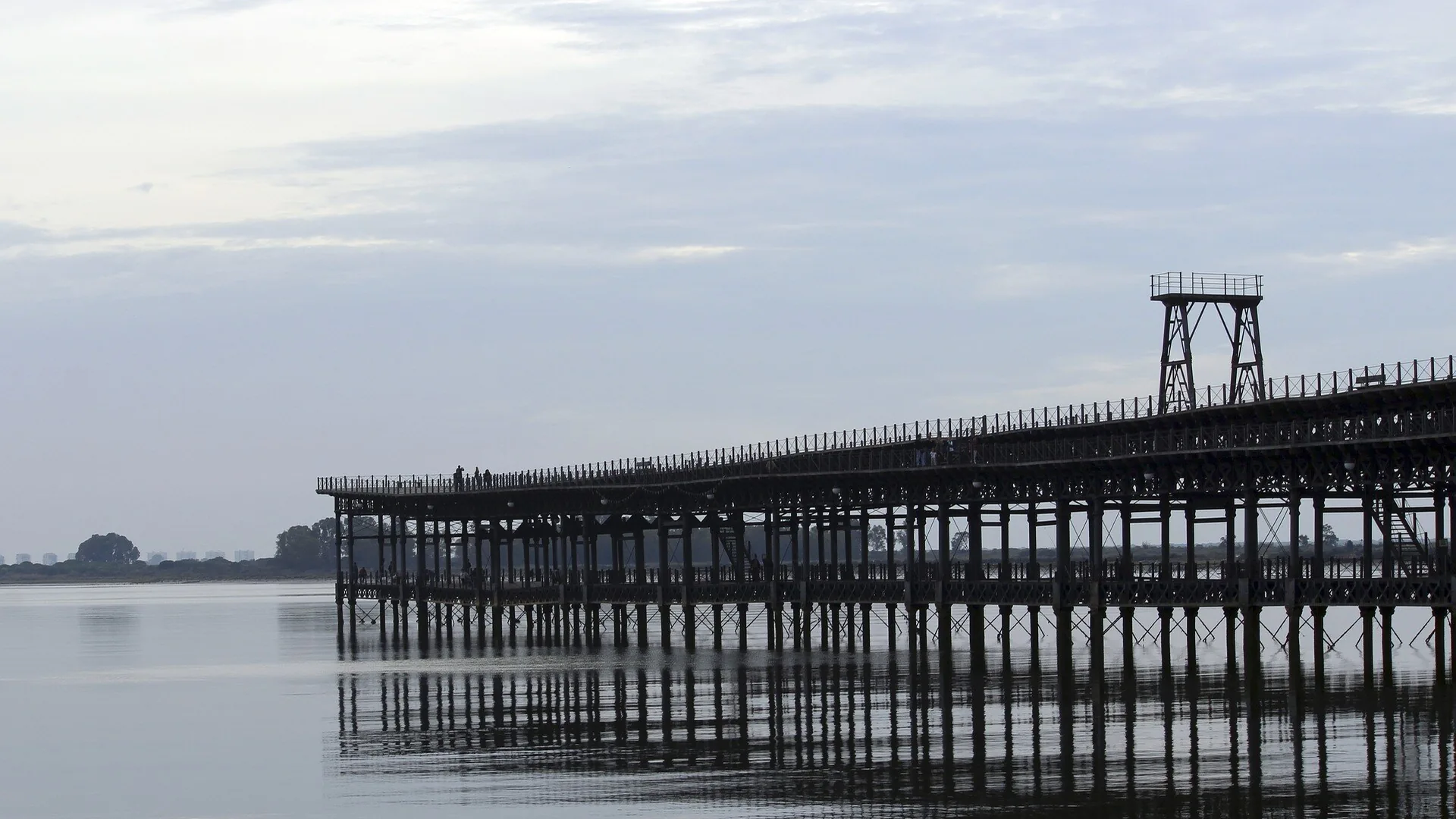
Cover image: Alfonso Cerezo · Wikimedia Commons · CC0
Free
The moving checklist as a PDF (in German)
All steps in the right order to tick off. Plus the key tips by email over the next weeks (in German). Free, unsubscribe at any time.