In short: The most beautiful beaches on the Costa del Sol lie at its edges: in the east, the coves near Nerja and Maro; in the west, the dunes of Cabopino and the beaches of Estepona. In between you will find long town beaches with promenades that are easy to reach by train from Málaga.
At a glance
- Best time: June and September, swimming from May to October
- Duration: one beach day per section, a week for the whole coast
- Admission: all beaches are free to access, sunbeds cost extra
- Getting there: commuter train from Málaga to Fuengirola, otherwise bus or rental car
- Bring: water shoes for the coves in the east, a beach umbrella
East: Which beaches near Nerja are worth it?
East of Málaga, the coast is called the Axarquía. Here the mountains come right down to the sea, and the long sandy beaches turn into coves with clear water.
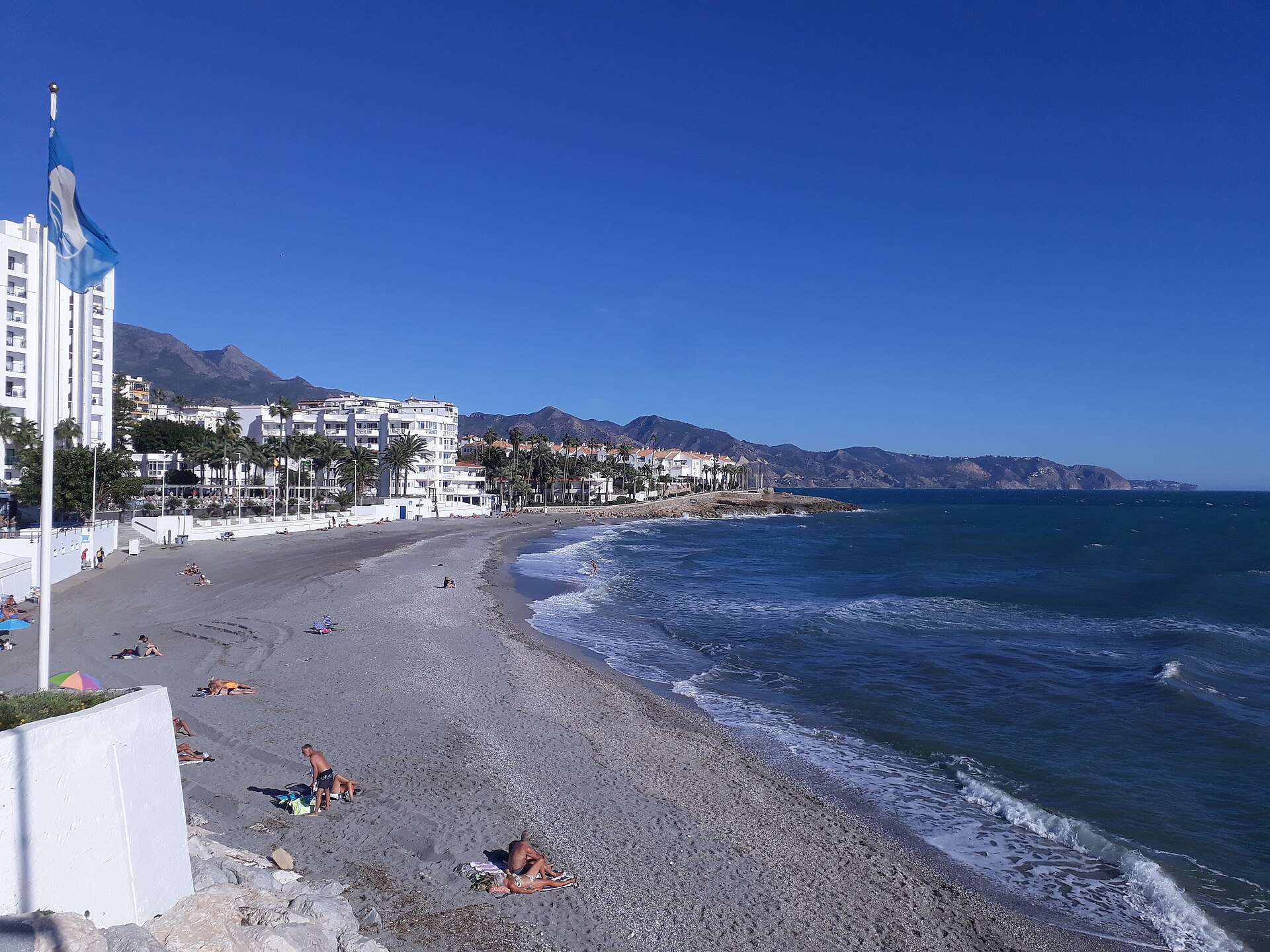
- Playa de Burriana (Nerja): Nerja’s big beach with beach restaurants, kayak rental and everything families need.
- Playa de Calahonda (Nerja): a small cove right below the Balcón de Europa, pretty but quickly crowded.
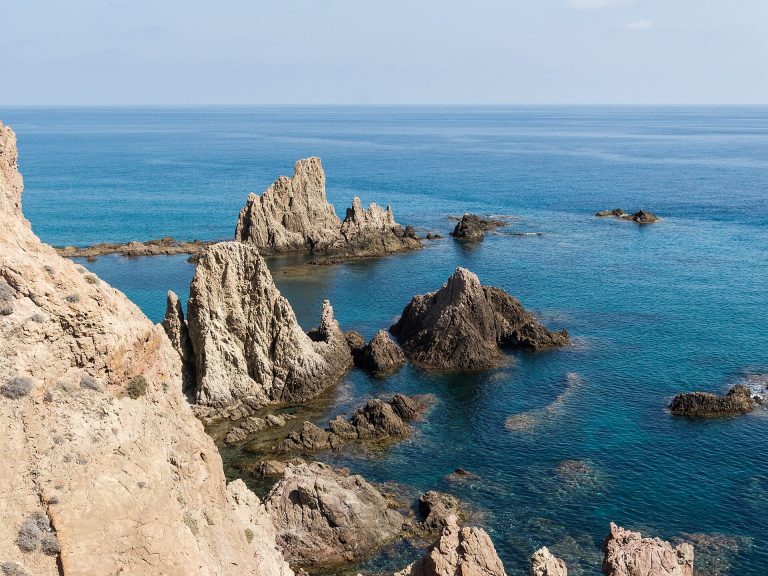
- Playa de Maro: a pebble cove below the village of Maro, good for snorkelling. Little parking.
- Coves of Maro-Cerro Gordo: protected cliffs with beaches you reach by walking down a little way.
Closer to Málaga are Torre del Mar and Rincón de la Victoria, with wide, shallow beaches and a long promenade. More about the town is in Nerja and Frigiliana.
Centre: Where can you swim in Málaga?
Málaga has town beaches you can walk to from the centre. Ideal after a morning at the museum.
- La Malagueta: the local beach next to the port, dark sand, showers, sunbeds.
- Pedregalejo and El Palo: former fishing quarters in the east of the city with small coves protected by breakwaters. Here the beach restaurants grill sardines on skewers (espetos) over an open fire.
You can read about what else the city has to offer in Málaga sights.
West: What awaits you from Torremolinos to Estepona?
West of Málaga, the classic Costa del Sol begins, with hotels, promenades and lots going on.
- La Carihuela (Torremolinos): a wide beach in the old fishing quarter, known for fried fish.
- Fuengirola: kilometres of beaches along a continuous promenade, last stop of the commuter train.
- Cabopino and Dunas de Artola (Marbella): light sand, protected dunes and pine trees, the most natural beach in the west.
- Marbella: town beaches along the Paseo Marítimo, details in Marbella.
- Playa del Cristo (Estepona): a small west facing cove with calm water, good with small children.
How do you get to the beaches?
Without a car you are well served in the west: the C1 commuter train runs from Málaga via the airport, Torremolinos and Benalmádena to Fuengirola. Further on to Marbella and Estepona, and east to Nerja, only buses run. Timetables are on the Renfe and ALSA websites.
By car you have two roads: the toll free A-7 coastal motorway and the AP-7, which charges tolls on some sections in the west but is less busy. What to watch out for when renting is covered in Car rental in Andalusia.
When is the best time?
The coast has mild weather and very dry summers. According to the weather service AEMET (normal values 1981 to 2010, Málaga Airport station), average daily highs in July and August are just under 31 degrees, and practically no rain falls in July. In May it is 24.3 degrees, in October 24.1 degrees.
June and September are the most pleasant months: warm enough for swimming, but without the crowds of high summer. More on this in Best time to visit Andalusia.
What should you know at the beach?
All beaches in Spain are public. You only pay for sunbeds and umbrellas. Pay attention to the lifeguard flags: green means swimming allowed, yellow means caution, red means no swimming. When the east wind (Levante) blows, the sea gets rough.
If you are wondering what it is like to live on this coast long term, you will find the comparison of places in Where in Spain?.
Frequently asked questions
Which beach on the Costa del Sol is the most beautiful?
For nature, the coves near Maro and the dunes of Cabopino; for comfort, Burriana in Nerja. It depends on whether you are looking for peace or facilities.
Can I swim in winter?
Sunbathing yes, swimming only if you are hardy. The air temperature is mild, but the sea is cool. The swimming season runs roughly from May to October.
Which beaches can I reach without a car?
With the C1 commuter train from Málaga, all the beaches of Torremolinos, Benalmádena and Fuengirola. You can reach Málaga’s town beaches on foot or by city bus.
Which beaches are good for families?
Burriana in Nerja, the beaches of Fuengirola and Playa del Cristo in Estepona: gentle entry into the water, showers and restaurants nearby.
Sources
- AEMET: climate values Málaga Airport (1981 to 2010)
- Renfe: timetables and tickets for trains
- ALSA: timetables and tickets for intercity buses
As of: October 2026
As of October 2026. Opening hours, prices and entry rules change. Check them on the official websites before your visit.
Cover image: Jnyssen · Wikimedia Commons · CC BY-SA 4.0
Free
The moving checklist as a PDF (in German)
All steps in the right order to tick off. Plus the key tips by email over the next weeks (in German). Free, unsubscribe at any time.