In short: Almería is the driest and sunniest corner of Andalusia, and most road trips skip it. Yet here you get three very different things in a small area: a large Moorish fortress in the city, the Tabernas Desert with its film sets and the natural beaches of Cabo de Gata. Plan two to four days and a car.
At a glance
- Time needed: city 1 day, with desert and coast 3 to 4 days
- Best time: October to June, in high summer only on the coast
- Climate: around 200 mm of rain and almost 3,000 hours of sunshine a year
- Getting there: Almería Airport or about 165 km by car from Granada
- Getting around: the city on foot, everything else by hire car
What can you see in the city of Almería?
Almería is a port city without big tourist crowds. The main sights are close together and fit into one day.
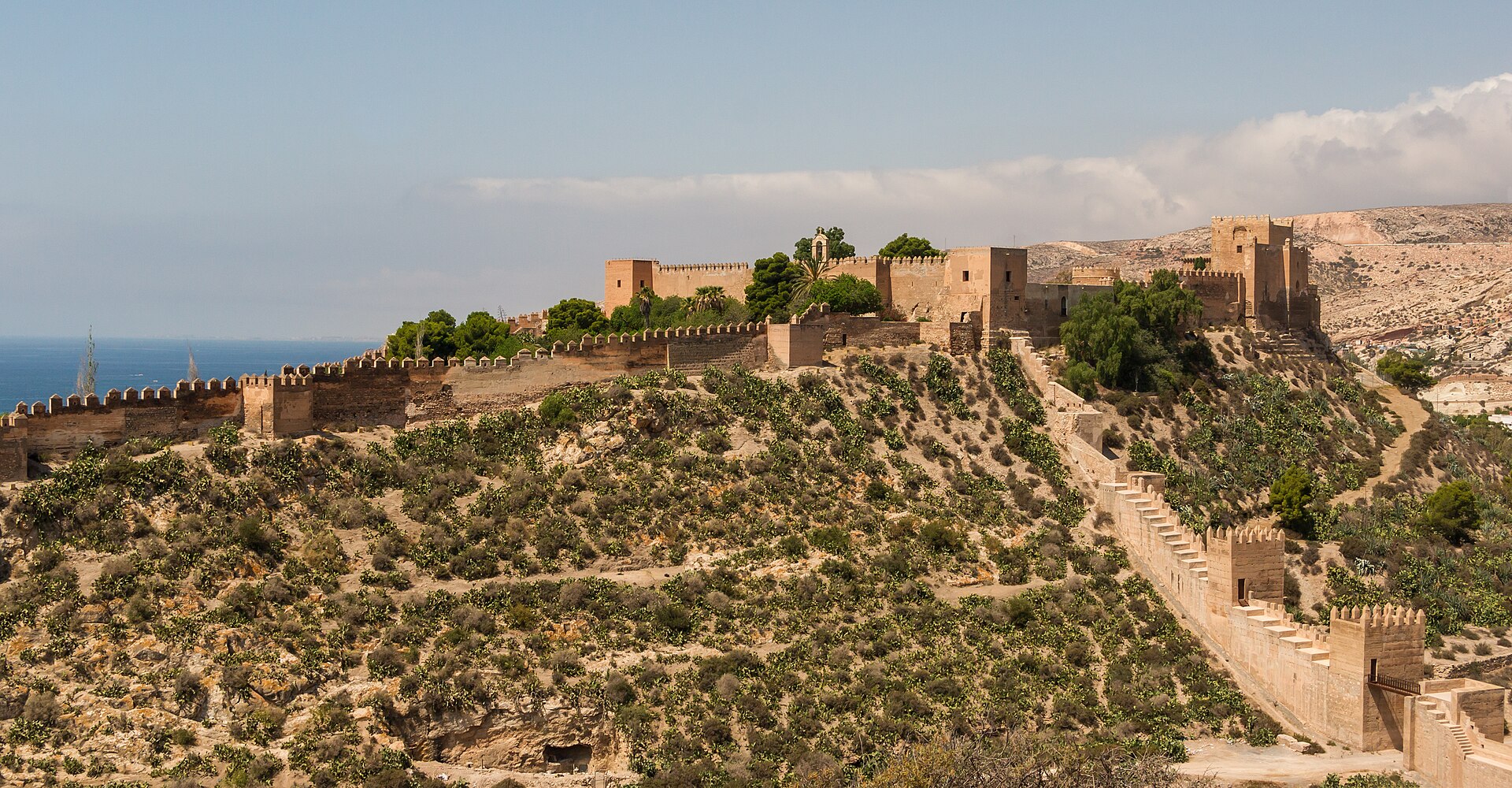
- Alcazaba: one of the largest Moorish fortresses in Spain, on a hill above the old town. From the walls you look out over the rooftops, the port and the sea.
- Cathedral: from the outside more castle than church, with towers and battlements. It was built this way because the coast was threatened by pirates for a long time.
- Refugios de la Guerra Civil: underground air-raid tunnels from the Civil War, accessible only on a guided tour.
- Cable Inglés: a steel loading pier at the port from the days of iron ore mining.
- Tapas bars in the centre: as in Granada, you usually get a tapa with your drink, and here you can often choose it from a list.
The Alcazaba is one of the monuments run by the Junta de Andalucía. Admission, closing days and opening hours are listed on its museum portal. Go up in the morning: the path is steep and there is little shade at the top.
The Tabernas Desert and its Western towns
About 30 km north of the city, the Tabernas Desert begins: furrowed, bare hills and dry riverbeds. It is considered the only true desert on the European mainland. In the 1960s, spaghetti Westerns were filmed here, including “A Fistful of Dollars” and “The Good, the Bad and the Ugly”.
Some of the sets are still standing and are now theme parks with a Western town and stunt shows:
- Fort Bravo: looks the least polished and is still used for filming. According to its own website, it is open daily from 9 am to 7 pm (as of October 2026).
- Oasys MiniHollywood: bigger, with a zoo and pool, more geared towards families.
The operators list prices and show times on their websites, and they change with the season.
Coast: Cabo de Gata, San José and Mojácar
East of the city lies the Cabo de Gata-Níjar Natural Park, with volcanic rocks and undeveloped beaches. San José is the most practical base for the well-known coves of Mónsul and Genoveses. In summer, access to them is regulated, and you will find the details and all the beaches under Cabo de Gata.
Further north is Mojácar, a white village on a hill above the sea, with a long stretch of beach below.
When is the best time for Almería?
At the Almería Aeropuerto weather station, average annual rainfall is only 200 mm, with 2,994 hours of sunshine (AEMET, normal values 1981 to 2010). Even in January, the average daily maximum is almost 17 degrees. That makes Almería one of the best winter destinations on the Spanish mainland.
In July and August, the average daily maximum on the coast rises to 30 to 31 degrees, and in the desert it is considerably higher. Autumn, winter and spring are more pleasant for the city and the desert. The comparison with the rest of the region is in Best time to visit Andalusia.
Getting there and getting around
Almería has its own airport. From Granada it is about 165 km on the dual carriageway, past Guadix and the northern side of the Sierra Nevada. Buses connect Almería with Granada and Málaga, and the timetables are on ALSA.
You explore the city on foot. For Tabernas and the coast you need a car, as buses are infrequent, see Car hire in Andalusia.
What can you combine Almería with?
Almería works as an eastern extension to almost any route. On the way from Granada you pass Guadix with its cave houses, one of the day trips from Granada. A complete route with this variation is in Andalusia road trip.
As a place to live, Almería is also considered cheaper than the Costa del Sol. How the regions compare is shown in Where in Spain?, and for students there is Studying in Almería.
Frequently asked questions
Is Almería actually worth it?
Yes, if you are looking for nature, empty beaches and landscapes. If you mainly want to see magnificent old towns, you are better off in Granada, Córdoba and Seville.
Which Western town should I visit?
Fort Bravo feels more authentic and is smaller. Oasys MiniHollywood, with its zoo and pool, offers more for a whole day with children. Both put on Western shows.
Can I visit Almería without a car?
The city, yes. For Tabernas and Cabo de Gata, without a car you depend on a few buses or organised tours.
Is Almería warm enough for swimming in winter?
Warm enough for sunbathing on calm days, yes, but the sea is cold in winter. The swimming season runs roughly from June to October.
Sources
- AEMET: climate data for Almería Aeropuerto
- Fort Bravo: official website
- ALSA: bus connections to Almería
Last updated: October 2026
As of October 2026. Opening hours, prices and entry rules change. Check them on the official websites before your visit.
Cover image: Jebulon · Wikimedia Commons · CC0
Free
The moving checklist as a PDF (in German)
All steps in the right order to tick off. Plus the key tips by email over the next weeks (in German). Free, unsubscribe at any time.