In short: Andalusia is not one destination but eight very different ones: from the expensive, international Costa del Sol to the big city of Seville and affordable olive villages in Jaén. Rents range from 7.0 euros per square metre in the province of Jaén to 18.8 euros in the province of Málaga (Idealista, September 2026). If you bring your own income, you will live very well here; if you need a local job, you have to reckon with the highest unemployment rate in Spain.
At a glance
- Population: 8,778,051, of whom 986,922 hold a foreign nationality (INE, 1 July 2026)
- Rent: on average 14.1 euros per square metre, with big differences between provinces (Idealista, September 2026)
- Unemployment rate: 14.56 percent, the highest of all Spanish regions (EPA, Q2 2026)
- Climate: mild coast with around 2,900 hours of sunshine, very hot summers inland
- Healthcare: public health service SAS, access through employment, self-employment or form S1
- First steps: NIE, Padrón, bank account, health insurance
On the map
Andalusia
Find German-speaking doctors: every region in Andalusia and the Canary Islands →
Why Andalusia, and what speaks against it?
Andalusia is the most populous region in Spain and, for many Germans and Austrians, the epitome of Spain: sunshine, white villages, flamenco, tapas, sea and mountains all close together. On top of that come low living costs inland, good flight connections via Málaga and Seville and fast trains to Madrid.
To be honest, the downsides are part of the picture too:
- Job market: 14.56 percent unemployment compared with 9.87 percent in Spain as a whole, and around 31 percent among young people under 25 according to the UGT trade union (Q2 2026). The average salary in 2024 was 26,090 euros gross per year (INE).
- Heat: In Seville the average daily high in July is 36 degrees, in Granada just under 35 (AEMET), with peaks well above that.
- Bureaucracy: Appointments at public offices are scarce, and a lot only works in Spanish.
- Coastal rents: On the Costa del Sol you pay almost as much as in big German cities.
Why many people still choose Andalusia is described in the article Why Spain?, and you can find the overall process under Moving to Spain.
The eight provinces compared
Andalusia is made up of eight provinces, each with a capital of the same name. The figures show how different they are. Rents are Idealista asking prices for the whole province (September 2026), unemployment rates come from the EPA for Q2 2026 (INE, analysis by UGT Andalucía).
| Province | Population (July 2026) | Rent per m² | Unemployment rate |
|---|---|---|---|
| Seville | 2,004,487 | 12.2 € | 13.01 % |
| Málaga | 1,820,507 | 18.8 € | 13.57 % |
| Cádiz | 1,267,916 | 11.6 € | 17.34 % |
| Granada | 959,738 | 10.3 € | 17.53 % |
| Almería | 788,934 | 9.0 € | 16.05 % |
| Córdoba | 772,913 | 9.0 € | 14.52 % |
| Jaén | 620,254 | 7.0 € | 15.23 % |
| Huelva | 543,302 | 10.1 € | 9.58 % |
Málaga: international, expensive, lots of jobs
The province of Málaga with the Costa del Sol is the hub for newcomers: almost 20 percent of residents are foreigners, the airport has direct flights to many German cities, and the tech park creates jobs for skilled professionals. The city of Málaga is at 16.5 euros per square metre, Marbella at 23.6. A good fit for remote workers, IT professionals, retirees and families with a solid budget. Everything else is in the guide Moving to Málaga.
Seville: big city with public offices, universities and heat
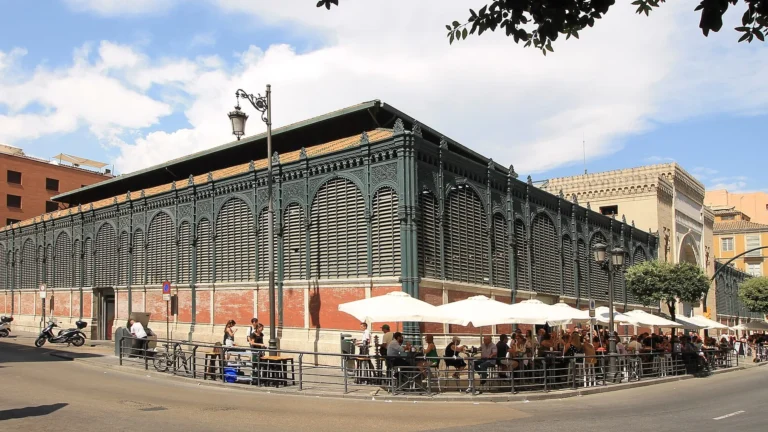
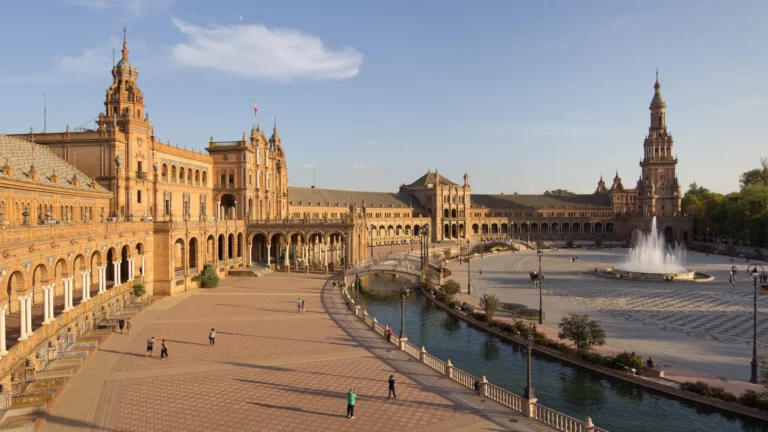
Seville is the capital of Andalusia and the largest province. It is home to the regional government, many administrations and two public universities, plus its own airport. The city is at 13.4 euros per square metre, and it gets cheaper in the surrounding area, such as Dos Hermanas (10.9 euros). The catch is the summer. A good fit for big city people, families (there is a German school) and students, see Studying in Seville and Seville sights.
Granada: Alhambra, university and mountains
Granada is a lively university city at the foot of the Sierra Nevada, with a ski resort in winter and the Costa Tropical just under an hour to the south. The city is at 10.8 euros per square metre, Motril on the coast at 8.3. On the other hand, at 17.53 percent the province has the highest unemployment rate in Andalusia. A good fit for remote workers, students and anyone who wants culture and nature. More under Moving to Granada and Studying in Granada.
Cádiz: Atlantic, wind and sherry
The province of Cádiz has the Costa de la Luz with long Atlantic beaches, Tarifa as a kitesurfing hotspot and Jerez with its bodegas. The city of Cádiz is at 12.4 euros per square metre, Jerez at 10.6, Chiclana at 11.8. Unemployment is high at 17.34 percent, and many jobs depend on summer tourism. A good fit for surfers, remote workers and people who prefer wind to heat. See Costa de la Luz and Studying in Cádiz.
Almería: dry, sunny, affordable
Almería is the driest part of Andalusia: only 200 millimetres of rain a year at the airport and almost 3,000 hours of sunshine (AEMET). Rents are low (city 9.4 euros, Roquetas de Mar 9.2), and the Cabo de Gata nature park is one of the most beautiful coastlines in Spain. The economy relies heavily on greenhouse vegetable farming. A good fit for sun lovers with their own income who are looking for peace and quiet. See Cabo de Gata and Studying in Almería.
Córdoba: history and affordable rents
Córdoba lies in the hot Guadalquivir valley, has one of the most magnificent buildings in Europe in the Mezquita and very moderate rents at 9.6 euros per square metre. By high speed train, Seville and Málaga are close. A good fit for people with their own income who are looking for a quiet, very Spanish medium-sized city. See Córdoba sights and Studying in Córdoba.
Jaén: a sea of olives and the lowest prices
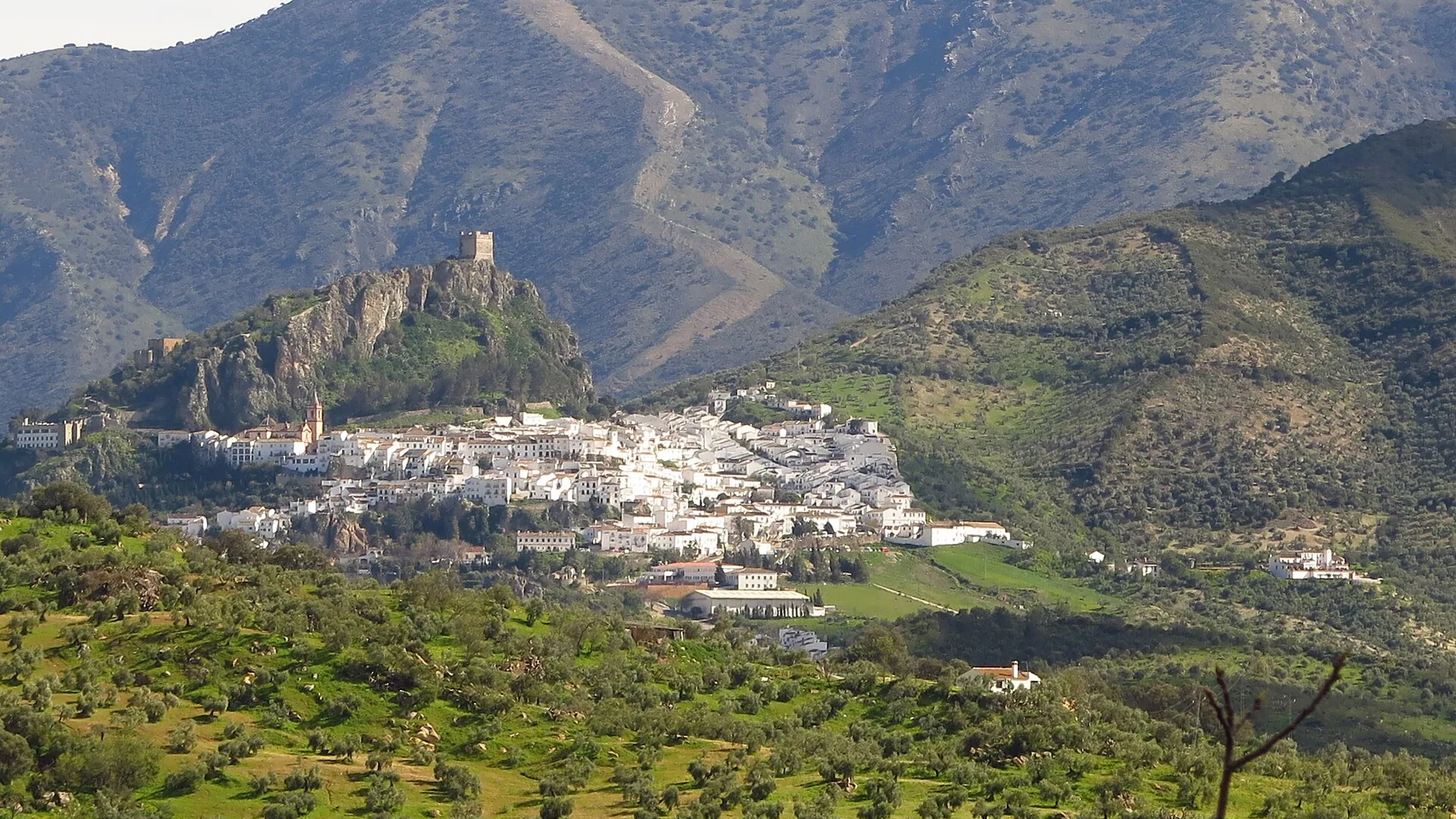
Jaén is the cheapest province in Andalusia: 7.0 euros rent per square metre, the city of Jaén at 8.3, and purchase prices in the province averaging 879 euros per square metre (Idealista). In return it is rural, not very international and very hot in summer. A good fit for people who want a house in the countryside, learn Spanish and bring their own income. See Úbeda and Baeza and Studying in Jaén.
Huelva: border with Portugal and Doñana
Huelva is the least populous and least known province, with Atlantic beaches, Doñana National Park and Portugal on the doorstep. In Q2 2026 its unemployment rate of 9.58 percent was the lowest in Andalusia, supported by agriculture and industry. The city of Huelva is at 10.7 euros, with a sharp increase (up 13 percent in a year). A good fit for people looking for peace, nature and short trips to Portugal. See Studying in Huelva.
Coast or inland?
The most important decision in Andalusia is not the province but the location. Coast and inland differ more in prices, climate and everyday life than the provinces differ from each other.
Coast means: milder summers, warm winters, more foreigners, more English and German in everyday life, but higher rents, seasonal contracts and towns that are half empty in winter. The Costa del Sol is the most expensive; the Costa Tropical near Granada, the Almería coast and the Costa de la Luz are cheaper.
Inland means: real Spanish cities that are lively all year round, much lower rents and purchase prices, but hot summers, colder winter nights and fewer people who speak your language. In Granada the average night temperature in January drops to 0 degrees (AEMET). Many newcomers find a middle ground: living in Granada, Seville or Córdoba and driving to the sea at the weekend.
Climate in Andalusia: where it gets how warm
All of Andalusia is sunny, but the differences are big. The values come from AEMET (airport stations, averages 1981 to 2010).
| Place | January (day/night) | July (day/night) | Rain per year |
|---|---|---|---|
| Málaga | 16.8 / 7.4 °C | 30.5 / 20.5 °C | 534 mm |
| Almería | 16.9 / 8.3 °C | 30.5 / 21.7 °C | 200 mm |
| Seville | 16.0 / 5.7 °C | 36.0 / 20.3 °C | 539 mm |
| Granada | 13.0 / 0.0 °C | 34.8 / 15.7 °C | 365 mm |
For everyday life this means: inland, in July and August you spend the time from midday onwards indoors, while on the coast it stays bearable. In winter, Spanish flats are barely insulated, so plan for heating and warm blankets. When each region is at its most pleasant is also shown in Best time to visit Andalusia.
Working in Andalusia: a realistic look
The Andalusian job market is difficult for newcomers if they need a local job. Most jobs are in tourism, hospitality, retail and agriculture, often seasonal and close to the minimum wage of 1,221 euros gross in 14 payments (2026).
The best chances go to:
- IT professionals in Málaga: at the end of 2025, around 29,000 people worked in 719 companies at Málaga TechPark.
- Remote employees who keep working for an employer in Germany or Austria, after clarifying tax and social security.
- Self-employed people with clients in German-speaking countries, registered as Autónomo. In the first year the Tarifa plana (flat rate) of 80 euros a month usually applies. The Andalusian refund of these contributions (Cuota cero) ran until 30 September 2026; whether it will be relaunched was still open in October 2026.
- German speakers in tourism and real estate on the Costa del Sol.
More on this in the guides Working in Spain and Registering as Autónomo.
Moving to Andalusia with children
School is compulsory in Spain from 6 to 16, and preschool from age 3 is voluntary and free at public schools. Places are allocated by place of residence, so you need the Padrón first. Children who move young usually learn Spanish quickly at public school; for older children the change is harder.
There are two German schools abroad in Andalusia:
- Deutsche Schule Málaga in Ojén near Marbella, from kindergarten up to the German International Abitur (school leaving exam).
- Colegio Alemán Sevilla with over 700 pupils, also up to the Abitur. According to the school, the 2026/27 school year costs around 459 to 507 euros a month, plus, for the first child, a 3,000 euro admission fee and a 4,500 euro refundable contribution.
If you choose neither of these two cities, you rely on the public school or an international private school. Family friendly places are above all those with short distances to school and paediatrician. Everything about nursery, paediatricians and registration is under Moving with your family, and ideas for day trips under Andalusia with kids.
Moving to Andalusia as a retiree
Andalusia has been a destination for retirees for decades, especially the coast between Málaga and Nerja, the Costa de la Luz and the Almería coast. If you want to live more cheaply and more Spanish, you will find houses inland at a fraction of coastal prices, but you will usually need a car there.
Three points are decisive:
- Health insurance: If your only income is a pension from Germany or Austria, you apply for form S1 at your health insurance fund and get access to the SAS in Spain just like a Spaniard. Without an S1 you need private insurance; after one year of residence the Convenio especial is possible (157 euros a month from age 65, Ministry of Health, October 2026).
- Taxes: From more than 183 days a year you are tax resident in Spain. German statutory pensions are then taxed mainly by Spain, and Germany may withhold at most 5 percent for pensions starting between 2015 and 2029.
- Inheritance: According to specialist sources, Andalusia grants children and spouses a 99 percent reduction on inheritance tax. A will with a choice of law creates clarity.
In detail: Retiring to Spain.
Healthcare, housing and first steps
The Servicio Andaluz de Salud (SAS) is responsible for public healthcare. For the health card you need proof from the Seguridad Social and the Padrón in Andalusia; the first time you apply in person at the Centro de Salud, and later you book appointments online via ClicSalud+. The route to insurance is explained in Health insurance in Spain.
Idealista and Fotocasa help with the flat search. On the coast, watch out for seasonal contracts without tenant protection, and to start with it is better to rent furnished for a few months before you commit. More under Finding a flat in Spain.
-
NIE
Your foreigner identification number, the prerequisite for almost everything. See Applying for the NIE.
-
Padrón
Registration at the town hall of your place of residence, needed for the health card and school. See Empadronamiento.
-
Bank account
For rent, electricity and Bizum, see Opening a bank account.
-
Health insurance
Through employment, Autónomo registration, S1 or private.
Decision table: which place suits you?
The table is a rule of thumb, not a verdict. Ideally, take a look at your two or three favourites outside the high season.
| If you… | take a look at | because |
|---|---|---|
| are looking for a local IT job | Málaga | tech park, international companies |
| want a big city on a small budget | Granada, Córdoba | rents around 10 € per m² |
| want the sea and a mild climate | Costa del Sol, Costa Tropical | winter days around 17 degrees |
| want to live as cheaply as possible | Jaén, Almería, inland | lowest rents and purchase prices |
| want to send your children to a German school | Marbella area, Seville | two German schools abroad |
| love wind, surfing and the Atlantic | Tarifa, Costa de la Luz | Atlantic, less heat |
| want comfort as a retiree | Fuengirola, Benalmádena, Nerja | flat paths, doctors, airport nearby |
| are looking for nature and quiet | Alpujarras, Cabo de Gata, Huelva | mountains, nature parks, little hustle |
To get to know the region, try the Andalusia road trip, the white villages and the Alpujarras. A comparison with the Canary Islands is offered in Where in Spain?.
Typical mistakes when moving to Andalusia
- Visiting in August and deciding in August. Inland it is scorching hot then, and the coast is overcrowded. Come in winter too.
- Hoping for a local job. Without an in-demand profession or Spanish, that is hard in Andalusia. Bring your income with you if you can.
- Buying a country house sight unseen. Check access, water, building permit and land registry before you sign.
- Underestimating Spanish. Inland, public offices, doctors and neighbours speak almost only Spanish, with an Andalusian accent.
- Ignoring the order of the paperwork. No NIE, no bank account; no Padrón, no health card.
Help with moving to Andalusia
deinSpanien advises you in English or German and online for all of Andalusia and the Canary Islands. We handle appointments, forms and powers of attorney, so you either go fully prepared or we complete the steps for you. We are on the ground in Spain ourselves and know every step from our own experience, from the NIE to registering as Autónomo. What we offer is under Advice and packages.
Frequently asked questions
Where is it cheapest in Andalusia?
In the province of Jaén with 7.0 euros rent per square metre, followed by Almería and Córdoba with 9.0 euros each (Idealista, September 2026). The most expensive is the province of Málaga with 18.8 euros.
Will I find work in Andalusia?
It is harder than in the rest of Spain: the unemployment rate in Q2 2026 was 14.56 percent. The best chances are for IT professionals in Málaga and for anyone who works remotely or is self-employed.
Coast or inland: which is better for living?
The coast is milder and more international, but more expensive. Inland is cheaper and more Spanish, with hot summers and cool winter nights. Many people live inland and drive to the sea at the weekend.
Are there German schools in Andalusia?
Yes, two official German schools abroad: the Deutsche Schule Málaga in Ojén near Marbella and the Colegio Alemán in Seville, both up to the Abitur.
Is Andalusia good for retirees?
Yes, because of the climate, healthcare and flight connections. With form S1 you are insured in the public system. Check taxes and how easy it is to reach doctors beforehand.
How hot does it get in summer?
Very hot inland: in Seville the average daily high in July is 36 degrees, in Granada 34.8. On the coast it is around 30 degrees (AEMET).
What do I need to do first after arriving?
Apply for the NIE, register at the town hall (Padrón), open a bank account and sort out health insurance. After that come the health card, school and, if applicable, Autónomo registration.
Sources
- Idealista: rent price report Andalusia
- INE: Encuesta de Población Activa, Q2 2026
- UGT Andalucía: EPA Q2 2026 analysis by province
- AEMET: climate values Sevilla Aeropuerto
- Colegio Alemán Sevilla: prices
- Servicio Andaluz de Salud: Tarjeta sanitaria
Last updated: October 2026
Free
The moving checklist as a PDF (in German)
All steps in the right order to tick off. Plus the key tips by email over the next weeks (in German). Free, unsubscribe at any time.