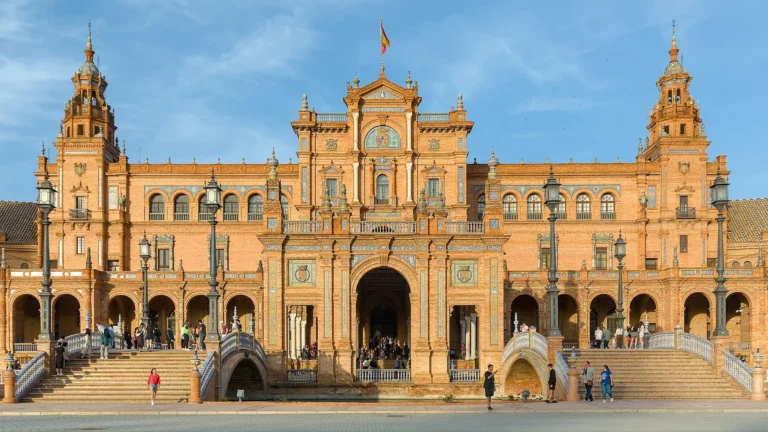
In short: With the German Abitur or the Austrian Matura, you study at public universities in Spain for the same prices as Spaniards: in Andalusia 12.62 euros per ECTS, so 757.20 euros for a full first year (as of October 2026). You need a certificate from the UNEDasiss office, apply in June together with the Spanish school leavers and have only a few days to enrol once you’ve been offered a place. The hard part isn’t the degree, it’s getting in.
At a glance
- Cost: Andalusia 12.62 euros per ECTS for a bachelor’s degree (Grado), from the second year a 99 percent reduction on credits you’ve passed; Canary Islands 9.47 to 14.59 euros per ECTS
- Admission: Acreditación from UNEDasiss, for popular subjects also the PCE subject exams
- Grade conversion: Abitur or Matura 1.0 becomes 10 points, 4.0 becomes 5 points
- Application: Andalusia 2026 from 11 to 22 June, Canary Islands from 12 June to 2 July
- Language: almost everything is in Spanish, a certificate isn’t required everywhere for the Grado
- Lead time: around a year, start in the winter before your studies begin at the latest
This guide only covers a full degree, meaning a Grado or Máster in Spain from the first to the last exam. Completely different rules apply to one or two exchange semesters: you’ll find them under Erasmus in Spain.
How are degrees structured in Spain?
The Spanish system follows the European model with credits (ECTS), but its rhythm is different from Germany or Austria.
- Grado: the bachelor’s degree. It usually comprises 240 ECTS and takes four years, one year longer than most bachelor’s programmes back home.
- Máster: builds on the Grado and usually has 60 ECTS (one year), some programmes more. Professionally qualifying master’s degrees (máster habilitante) are required for regulated professions.
- Grades: The scale runs from 0 to 10. You pass from 5.
- Convocatorias: This is what exam attempts are called. For each subject and academic year there is an ordinary and an extraordinary exam (resit). In Granada they take place in January and February and in June and July.
- Enrolment: You enrol in individual subjects again every year and pay for each one separately. If you fail, you take the subject again and pay more.
- Foreign language: In Andalusia, all students must prove a foreign language at B1 level by the time they finish their Grado.
The academic year starts in September.
Admission with Abitur or Matura: what is UNEDasiss?
You don’t have to go through a complicated recognition process for your Abitur or Matura. With a school-leaving qualification from an EU country, you instead apply for the Acreditación (certificate) from UNEDasiss, a service of the Spanish distance-learning university UNED. It converts your final grade into the Spanish scale.
The application is done entirely online via the UNEDasiss portal. According to UNED, the application window is open every year from 4 February to 1 December.
-
Choose a degree programme and university
First check how high the numerus clausus for your preferred subject was the previous year. This determines whether you need additional exams.
-
Prepare your documents
ID card or passport, school-leaving certificate and the grades from your last two school years. The exact list for Germany and Austria is in Annex I of UNEDasiss.
-
Submit the online application and pay
You upload everything as PDFs. The application is only processed after payment. The current fees are in the price list on the portal.
-
Apply to the university
With the Acreditación, you enter the regional application procedure (see below).
UNEDasiss recommends submitting the application at least six weeks before the university’s application deadline. In 2026, the office was closed from 1 to 15 August.
How your grade is converted
UNED converts using a fixed linear formula, which is the same for the German Allgemeine Hochschulreife and the Austrian Matura (AHS, BHS and Berufsreifeprüfung). As a formula: Spanish grade = 5 + (4 minus your grade) times 5, divided by 3.
| Abitur or Matura | Spanish entry grade |
|---|---|
| 1.0 | 10.00 |
| 2.0 | 8.33 |
| 2.5 | 7.50 |
| 3.0 | 6.67 |
| 4.0 | 5.00 |
The figure on your Acreditación is what counts.
Nota de admisión and PCE: when is your grade not enough?
Spanish admission works with two grades. The entry grade (nota de acceso) goes up to 10 points: this is your converted final grade. The admission grade (nota de admisión) goes up to 14 points.
That’s what UNED’s PCE (Pruebas de Competencias Específicas) are for: exams in individual subjects of the Spanish final school year. Your two best results count. Each is multiplied by a factor of 0.1 or 0.2 and added to your entry grade. Which subject counts at 0.2 for which degree programme is set by the Distrito Único Andaluz in a table (parámetros de ponderación) published on the portal.
Whether you need the PCE depends on the nota de corte. That is the grade of the last applicant who still got a place the previous year. If it’s below your entry grade, the Acreditación alone is enough. If it’s above, for example in medicine, psychology, physiotherapy or double degrees, you won’t get in without the PCE.
Alternatively, you can take the subject exams of the Spanish university entrance qualification (PAU) at a Spanish public university. In Andalusia, passed subject exams are valid for the following academic year and the two years after that.
The 2026 dates for orientation:
- Registration for the ordinary round: 16 March to 28 April 2026.
- Exams: in Spain 25 to 29 May, at the exam centres in the rest of Europe 8 to 13 June 2026. The results came out on 22 June.
- Extraordinary round: registration 1 to 22 July, exams 2 to 8 September 2026.
UNEDasiss usually publishes the dates for 2027 in January. The exams are in Spanish and follow the Spanish curriculum.
How much Spanish do you need?
The Universidad de Granada states explicitly that no proof of Spanish is required for access and admission to the Grado. That’s not the case everywhere in Spain: the Complutense in Madrid requires B2. Ask at every university on your list.
For the Máster it’s different. The Universidad de La Laguna requires applicants whose native language isn’t Spanish to have a certificate at B1 level.
Regardless of the certificate: lectures, exams and administration are in Spanish. Entire degree programmes in English are the exception at public universities. With less than B2, the first semester will be very hard, and failed subjects cost double the next year. The universities’ language centres offer paid Spanish courses, in Granada the Centro de Lenguas Modernas.
Applying in Andalusia: the Distrito Único Andaluz
The application for a university place is called preinscripción. In Andalusia it’s centralised: a single online application for all public universities via the Distrito Único Andaluz portal.
The rules in brief:
- You submit one application per phase and list as many degree programmes at as many universities as you like.
- The order of your preferences is binding. If you get a higher preference, all lower ones drop out.
- You’re in the general quota and compete only on the nota de admisión, on equal terms with the Spanish school leavers.
- You upload documents with a Spanish translation, uncertified for the application.
| Phase 2026/27 | Application | Allocations |
|---|---|---|
| Ordinary phase | 11 to 22 June 2026 | 3 July and 16 July, follow-up rounds on 24 July, 3, 11 and 24 September, 8 October |
| Extraordinary phase | 9 to 14 July 2026 | 24 July and 3 September, follow-up rounds on 11 and 24 September, 8 October |
| Remaining places | 25 to 30 September 2026 | Closes on 15 October |
In the extraordinary phase, only degree programmes with places left over are available. The dates for 2027/28 haven’t been published yet.
Applying in the Canary Islands: each university on its own
There is no shared portal in the Canary Islands. You apply directly to the university, with the UNED Acreditación and in the general quota.
- Universidad de La Laguna (ULL, Tenerife): ordinary application 12 June to 2 July 2026. First list on 13 July, second on 17 July, then the waiting list. Extraordinary round from 26 to 28 August, list on 2 September. There were 953 remaining places in 22 degree programmes.
- Universidad de Las Palmas de Gran Canaria (ULPGC): ordinary application also 12 June to 2 July 2026, up to six degree programmes. Allocations in July and from September to mid-October. In August the university reported 81 percent occupancy, so places remained free.
Admission to a Máster with a German or Austrian bachelor’s degree
For the Máster you don’t need UNEDasiss. Your bachelor’s degree from a country in the European Higher Education Area gives you direct access, no Homologación is needed. Exception: for professionally qualifying master’s degrees leading to a regulated profession, the ULL, for example, requires a degree recognised in Spain.
Andalusia: Distrito Único for the Máster
Andalusia also allocates master’s places centrally via the Distrito Único Andaluz portal. Unlike the Grado, there is an early phase open to you here:
- Phase 1 (foreign degrees only): application 13 to 29 January 2026, allocations on 19 February, 12 March and 9 April. Anyone with a foreign nationality and a foreign degree can take part, including from the European Higher Education Area.
- General phase: application 17 to 26 June 2026.
- Final phase: application 8 to 15 September 2026, only for master’s programmes with free places.
You need: ID, degree certificate (or proof that it has been applied for and paid), an official transcript with average grade and length of study, a certificate of the minimum and maximum grade of your grading scale, and proof that your degree gives access to master’s study in your home country. If the average grade is missing, you’re assessed with the minimum grade. Everything must be translated into Spanish, certified only for enrolment.
Canary Islands
At the ULL, with a degree from the European Higher Education Area you apply directly within the regular deadlines, without legalisation, but with an official translation into Spanish. The application costs 10 euros, which is credited when you enrol. The ULPGC has its own procedure with its own deadlines.
How much does studying cost?
Public universities charge per credit, and as an EU citizen you pay the same prices as Spaniards. In Andalusia, prices have been unchanged since the 2023/24 academic year.
| Item in Andalusia | Price (as of October 2026) |
|---|---|
| Grado, first enrolment in a subject | 12.62 euros per ECTS, 757.20 euros for 60 ECTS |
| Grado, second enrolment | 25.25 euros per ECTS |
| Máster (not professionally qualifying) | 13.68 euros per ECTS, 820.80 euros for 60 ECTS |
| Máster (professionally qualifying) | 12.62 euros per ECTS |
| Opening your student file, one-off | 59.10 euros |
The 99 percent reduction in Andalusia
Andalusia waives 99 percent of the cost of all credits you passed at the first attempt the previous year (bonificación del 99 %). You pay the first year in full. If you pass all 60 ECTS, you pay only around 7.57 euros plus administrative fees for the 60 ECTS of the second year.
The conditions:
- There is no income limit and no nationality requirement.
- You mustn’t receive a grant from the Spanish Ministry of Education. If you meet its requirements, you have to apply for it. Everyone else submits a declaration that they don’t meet the requirements.
- The reduction applies to the Grado and the Máster. For the Máster, the credits passed in the last two years of the Grado count.
Canary Islands
The Canary Islands grade prices by field of study in four levels (grado de experimentalidad). The price decree that the ULL lists as current dates from 2022/23 and remains in force until it is changed.
| Item in the Canary Islands | Price per ECTS |
|---|---|
| Grado, first enrolment | 9.47 to 14.59 euros, so around 568 to 875 euros for 60 ECTS |
| Grado, second enrolment | 17.05 to 26.26 euros |
| Máster (not professionally qualifying) | 12.45 to 15.15 euros |
| Opening your student file | 36.08 euros |
There is no reduction like the Andalusian one in the Canary Islands.
In both regions, the bigger expense is rent, not the university. Figures on this: Cost of living in Spain.
Funding: BAföG, Studienbeihilfe and Spanish grants
The most important funding comes from your home country.
- Auslands-BAföG (Germany’s state student funding for studying abroad): Within the EU, a complete degree is funded. On top of that come supplements for tuition fees (up to 5,600 euros, for one year at most), for travel costs and for health insurance. There is no monthly foreign supplement within the EU. The office responsible for Spain is the Studierendenwerk Heidelberg. Ideally, submit your application six months before you start.
- Mobilitätsstipendium (Austria’s mobility grant): for a complete degree at a recognised university in the European Economic Area. The requirements are social need and no previous degree (exception: a master’s after a bachelor’s). From the second year, you have to prove academic progress. You can apply from 1 March for the following academic year.
- Beca MEC (Spain): the general grant of the Ministry of Education. EU citizens only get full funding with permanent residence or if they or their parents work or are self-employed in Spain. This condition doesn’t apply to the pure tuition fee waiver. For 2026/27, applications ran from 7 April to 18 May 2026, so before admission.
The enrolment process: this is where mistakes happen
An offer isn’t a university place yet. It only becomes yours once you enrol (matrícula), and you only have a few days for that. In Andalusia in 2026, it was 3 to 9 July after the first allocation and 16 to 20 July after the second. If you miss the deadline, you lose the place.
-
Check your allocation
On the day of the allocation, you’ll see on the portal which degree programme you’ve been given.
-
Enrol, reserve or wait
If it’s your first choice, you enrol. If it’s a lower preference, you can reserve the place and wait for a higher one. You have to actively confirm the reservation or your place on the waiting list on the portal in every following round, otherwise you drop out of the procedure.
-
Set up access to the university
With the allocation, you get the login details for the university’s online system. That’s where enrolment takes place (automatrícula).
-
Choose subjects and groups
You enrol in the subjects for the whole year, normally 60 ECTS. The Universidad de Sevilla, for example, requires at least 30 and allows at most 90 credits per year.
-
Choose how to pay
In Andalusia, you pay in one go, in two instalments (the second by mid-December) or in up to eight instalments. Administrative fees and the student accident insurance (seguro escolar) are included in the first payment. In Seville, further instalments are only possible by direct debit from an account in your name. A Spanish bank account makes this easier.
-
Upload documents
ID, Acreditación and whatever else your faculty requires. In Seville, you have ten working days after the end of your enrolment period for this.
-
From the second year: declaration for the reduction
The 99 percent is applied automatically to the credits you’ve passed. If you don’t receive a grant from the Ministry, however, you have to sign the corresponding declaration in the university’s system. Without it, you pay the full price.
The typical mistakes:
- Order of preferences set without thinking: it’s binding, a higher preference cancels all lower ones.
- Reservation or waiting list not confirmed, and so dropped out of the procedure.
- Enrolment deadline of just a few days overlooked.
- Too many subjects taken in the first year and failed: the second enrolment costs double at 25.25 euros per ECTS and doesn’t qualify for the reduction.
- Change deadline missed: at the Universidad de Jaén, first-semester subjects in 2026 could only be changed from 5 to 7 October.
- Documents submitted only in German.
Our advice: during the allocation weeks, keep all documents ready as PDFs and read every email from the university on the same day.
Paperwork after you arrive
For a degree lasting several years, it’s best to sort out the paperwork in the first few weeks.
- NIE: You need the foreigner identification number for your rental contract, employment contract, a bank account at many banks and a mobile contract. Take care of it early: Applying for the NIE.
- Padrón: registration at your town hall. You need it for your health card, for reduced bus fares and, in the Canary Islands, for the resident discount on flights and ferries: Empadronamiento.
- Health insurance: The European Health Insurance Card covers medically necessary treatment in the public system during a temporary stay, but not private doctors or repatriation. Before you leave, check with your insurer how you’ll stay covered during a degree lasting several years: Health insurance in Spain.
- Bank account: for university instalments, rent and Bizum: Opening a bank account.
- Flat: Start searching from the first allocation in July, not in September: Finding a flat in Spain.
Timeline: when do you need to do what?
The process for a Grado starting in September, based on the 2026 dates.
| When | What |
|---|---|
| September to December of the previous year | Choose degree programme and universities, look at the previous year’s notas de corte, bring your Spanish up to B2, decide on the PCE |
| January | Máster in Andalusia only: Phase 1 (in 2026 from 13 to 29 January) |
| From 4 February | Apply for the Acreditación at UNEDasiss, upload documents, pay |
| March and April | Register for the PCE (in 2026 from 16 March to 28 April). Apply for Auslands-BAföG or the Mobilitätsstipendium |
| End of May to mid-June | PCE exams, results on 22 June |
| June | Application: Andalusia 11 to 22 June, Canary Islands 12 June to 2 July. Máster Andalusia 17 to 26 June |
| July | Allocations and enrolment (Andalusia from 3 July, Canary Islands from 13 July). Look for a flat |
| End of July to October | Follow-up rounds, extraordinary phase, remaining places |
| September | Lectures begin. Sort out NIE, Padrón and bank account |
Where to study? Ten cities at a glance
Eight university cities in Andalusia and two in the Canary Islands have their own article. The rents are asking prices for whole flats according to Idealista (September 2026).
| City | Rent per m² | In short |
|---|---|---|
| Granada | 10.8 euros | Large, old university in a medium-sized city, campuses spread across the city |
| Seville | 13.4 euros | Largest city in Andalusia, two public universities, very hot summers |
| Málaga | 16.5 euros | Big city by the sea, by far the most expensive of the eight |
| Córdoba | 9.6 euros | Affordable and manageable, strong in agricultural sciences and veterinary medicine |
| Cádiz | 12.4 euros | Atlantic, but four campuses in four towns: check the campus first |
| Almería | 9.4 euros | A single campus right on the Mediterranean, remote |
| Huelva | 10.7 euros | Small university, quiet city near Portugal |
| Jaén | 8.3 euros | The lowest rents, but far from the sea |
| Las Palmas | 14.6 euros | Big city with a city beach, main campus outside the centre |
| La Laguna | 12.7 euros | Tenerife’s old university town, cooler than the coast |
Paperwork we take care of for you:
- NIE number (from 190 €)
- Registration at the town hall (Padrón) (120 €)
- Bank account and Bizum (150 €)
- Health insurance (150 €)
- Rental flat and rental contract (from 150 €)
Frequently asked questions
Do I have to have my Abitur recognised in Spain?
No, with a qualification from the EU you don’t need formal recognition (homologación). You apply for the Acreditación at UNEDasiss. It converts your grade and is the basis for your application.
Do I need the PCE?
Only if the nota de corte of your preferred subject is above your converted grade. Without the PCE you can reach at most 10 out of 14 points. With two subject exams you can gain up to 4 additional points.
How much does an academic year in Andalusia cost?
In the first year, 757.20 euros for 60 ECTS in the Grado, plus small one-off administrative fees (as of October 2026). From the second year, 99 percent of the cost is waived for credits you passed at the first attempt the previous year.
Can I apply as early as March as a German or Austrian?
Not for the Grado. The March phase is only for applicants without EU citizenship. You apply in the ordinary phase in June. For the Máster, however, Andalusia has an early phase in January for everyone with a foreign degree.
Do I need a Spanish certificate?
Not everywhere for the Grado: the Universidad de Granada doesn’t require proof of language for admission. For the Máster, the Universidad de La Laguna requires B1. Teaching and exams are in Spanish all the same.
Can I get BAföG for a full degree in Spain?
Yes. Within the EU, Auslands-BAföG funds a complete degree. The responsible office is the Studierendenwerk Heidelberg, and you should apply six months before you start.
Sources
- UNEDasiss: dates and deadlines 2026
- UNED: Annex II, conversion formulas by country
- Universidad de Granada: admission with qualifications from EU education systems
- Universidad de Granada: Grado application 2026/27 (Distrito Único Andaluz)
- Junta de Andalucía: guide to the 99 percent reduction
- Universidad de La Laguna: Grado application
- Universidad de La Laguna: current price decree of the Canary Islands
- Deutsches Studierendenwerk: Auslands-BAföG
- Stipendienstelle Österreich: Studieren im Ausland 2026
As of: October 2026
Cover image: Zarateman · Wikimedia Commons · CC0
Rather do it yourself?
Playbook: Studying in Spain
Admission and enrolment step by step: UNEDasiss, PCE, applying in Andalusia and the Canary Islands, matrícula and the 99 percent discount. 21 pages, PDF in German.
Free
The moving checklist as a PDF (in German)
All steps in the right order to tick off. Plus the key tips by email over the next weeks (in German). Free, unsubscribe at any time.