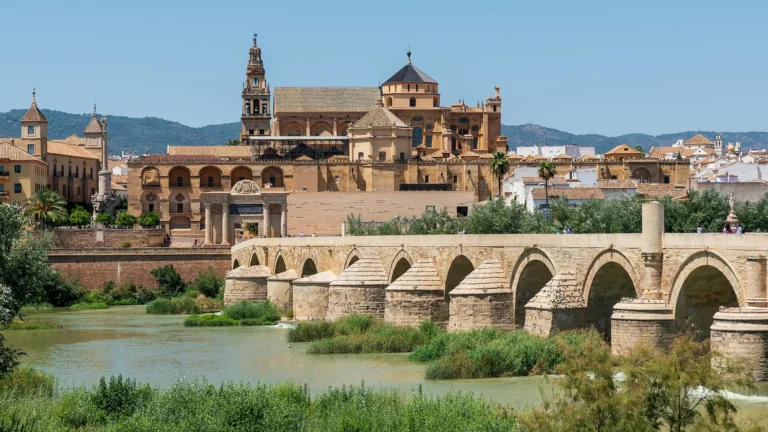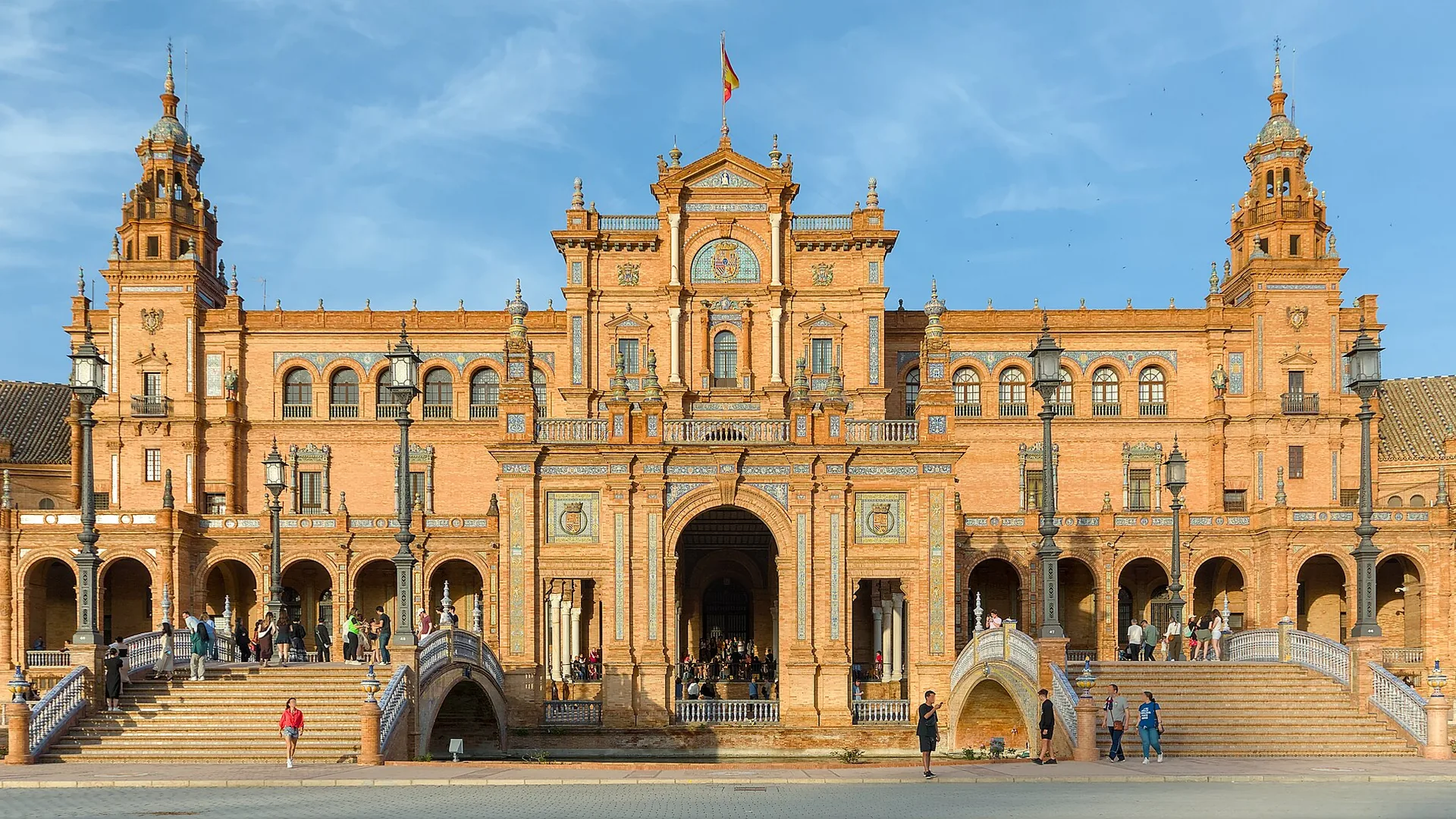
In short: In Seville you can do a full degree at two public universities: the large Universidad de Sevilla with faculties all over the city, or the smaller Universidad Pablo de Olavide with a single campus on the edge of town. Both cost 12.62 € per ECTS for the Grado (as of October 2026), and you apply to both through the same Andalusian procedure. Almost everything is taught in Spanish, and in the popular subjects the admission grade is very high.
At a glance
- Universities: Universidad de Sevilla (US, founded 1505) and Universidad Pablo de Olavide (UPO, founded 1997), both public
- Admission: certificate from UNEDasiss, then application through the Distrito Único Andaluz (2026: 11 to 22 June)
- Costs: 12.62 € per ECTS, which means 757.20 € for a full year of the Grado; from the second year a 99 percent discount on passed credits
- Semester 2026/27: lectures from 7 September (US) and from 14 September (UPO)
- Rent: 13.4 € per square metre as the city average (Idealista, September 2026)
- Bus: monthly student pass 11.40 € (Tussam, as of 2026)
Two universities, two very different everyday lives
Both universities belong to the public Andalusian system, with the same prices and the same application route. The difference lies in size, location and range of subjects. So first check which university offers your degree at all and where the faculty is located.
Universidad de Sevilla (US)
The US was founded in 1505 and is one of the large universities in Spain. Its rectorate is housed in the old Royal Tobacco Factory next to the Prado de San Sebastián, which is also home to parts of the humanities. The other faculties are spread across the city:
- Centro: rectorate and faculties around the Tobacco Factory.
- Reina Mercedes: in the south, including computer science, sciences and architecture.
- Ramón y Cajal and Pirotecnia: east of the centre, including economics, law and education.
- Macarena: in the north by the university hospital, the health subjects.
- Cartuja: on the island in the Guadalquivir, the engineering school and communication.
- Los Remedios: on the Triana side.
The range covers almost everything: medicine, dentistry, pharmacy, engineering including aerospace, law, economics, philologies, teacher training, journalism. Which faculty belongs to which site is stated on the page of each degree. Check this before you look for a flat, because half the city lies between Macarena and Reina Mercedes.
Universidad Pablo de Olavide (UPO)
The UPO has existed since 1997. It has a single campus of around 140 hectares on the south-eastern edge of the city, on land belonging to Seville, Dos Hermanas and Alcalá de Guadaíra. The library, canteen, sports facilities and all seven faculties and schools are close together: economics, law, social sciences, humanities, sports sciences, experimental sciences and the Escuela Politécnica Superior for computer science.
The UPO is known for biotechnology, international relations, sports science, translation and interpreting (also with German as a language) and for many double degrees. Interesting for readers from Germany: there is a Grado in Derecho Hispano-Alemán (Spanish-German law) together with the University of Bayreuth, and a version of business administration taught in English.
What language is teaching in?
Spanish. The UPO itself says that most courses are taught in Spanish and only one business degree is offered in English. At the US, Spanish is also the rule. Realistically, plan on a B2 level before you walk into a lecture: exams, papers and group work are in Spanish. In Andalusia you also have to prove a foreign language at B1 level before you finish the Grado. With German as your native language and English from school, this is usually quickly done; ask your faculty which certificates are recognised.
Admission with Abitur or Matura
The route is the same for both universities and consists of two separate procedures. First you have your Abitur or Matura (German or Austrian school-leaving certificate) converted by UNEDasiss, then you apply to the Andalusia region for a place.
-
Apply for the UNEDasiss certificate
UNEDasiss is the service of the Spanish distance university UNED that converts foreign school-leaving qualifications into the Spanish grading system. You get an access grade of at most 10 points. The application window in 2026 ran from 4 February to 1 December. Apply for the certificate early, because without it you can’t apply.
-
Take PCE exams if needed
The admission grade (nota de admisión) goes up to 14 points. You can only get the four points above 10 through subject exams, the PCE (Pruebas de Competencias Específicas). In 2026 they took place in Spain from 25 to 29 May, and at the centres abroad in Europe from 8 to 13 June.
-
Apply through the Distrito Único Andaluz
The Distrito Único Andaluz (DUA) is the joint application portal of all public universities in Andalusia. You submit a single application and list as many degrees as you like, including a mix from US and UPO. The order is binding. In 2026 the ordinary phase ran from 11 to 22 June, and the first allocation came on 3 July.
-
Accept your place and enrol
After each allocation you only have a few days to enrol or reserve your place (2026: 3 to 9 July and 16 to 20 July). If you miss the deadline, you lose your place.
With German or Austrian nationality you apply in the general quota and compete with Spanish school leavers. Experience shows the dates for 2027 come out in spring. All the details, including deadlines and typical mistakes, are in the guide Studying in Spain.
How high are the notas de corte?
The nota de corte is the grade of the last admitted applicant and changes every year. The following values show the order of magnitude in the general quota.
| Degree | University | Nota de corte |
|---|---|---|
| Double Grado in physics and mathematics | US | 13.570 |
| Biomedicine | US | 13.278 |
| Aerospace engineering | US | 13.271 |
| Medicine | US | 13.264 |
| Nursing (Enfermería) | US | 12.561 |
| Psychology | US | 11.499 |
| Law (Derecho) | US | 9.386 |
| Business administration (ADE) | US | 8.289 |
| History | US | 6.845 |
| Law plus international relations | UPO | 13.244 |
| Biotechnology | UPO | 12.177 |
| Sports science | UPO | 10.990 |
| Law (Derecho) | UPO | 9.300 |
| Translation and interpreting, German | UPO | 5.000 |
US: the university’s list for the second allocation of the ordinary phase on 17 July 2026 (academic year 2026/27). UPO: values published by the university for 2025/26. For anything above 10 points you need PCE. A 5.000 means that all applicants got a place.
What does studying cost?
Prices are set by the region; they are the same at both universities and have been unchanged since 2023/24. Germans and Austrians pay the same as Spaniards.
- Grado, first enrolment: 12.62 € per ECTS, which means 757.20 € for 60 ECTS.
- Máster: 13.68 € per ECTS (820.80 € for 60 ECTS), professionally qualifying Másters 12.62 €.
- Repeating: a subject taken for the second time costs 25.25 € per ECTS, and after that it gets even more expensive.
- Administration: opening your file 59.10 €, student card 5.70 €.
- Discount: from the second year, Andalusia waives 99 percent of the cost of all credits you passed at the first attempt in the previous year. There is no income limit.
You can pay in one go, in two instalments or in up to eight instalments. From Germany, a full degree in the EU can be funded through Auslands-BAföG (German state student funding for studying abroad); the office responsible for Spain is the Studierendenwerk Heidelberg. From Austria, the Mobilitätsstipendium (mobility grant) is an option.
Enrolment (matrícula): what you should have ready
Enrolment is done online through the portal of the respective university, and you receive the exact list of documents with your allocation. Get these things ready beforehand:
- ID card or passport
- UNEDasiss certificate and your school-leaving certificate
- confirmation of your allocation from the DUA portal
- an account for the instalments (IBAN)
- the declaration for the 99 percent discount from the second year
- a passport photo for the student card
Living there for several years
After Málaga, Seville is the second most expensive of the eight Andalusian university cities. For September 2026, Idealista gives an asking price of 13.4 € per square metre for whole flats, 3.5 percent more than a year earlier. On paper that’s around 940 € for 70 square metres. In Dos Hermanas, which borders the UPO campus, it’s 10.9 €.
Which neighbourhood suits which campus?
- Nervión and Viapol: residential area with lots of shared flats, walking distance to Ramón y Cajal and Pirotecnia, metro to the UPO.
- Reina Mercedes, Bami and El Porvenir: in the south, right by computer science, sciences and architecture.
- Macarena: in the north, long-established and a bit cheaper, close to the health subjects.
- Triana and Los Remedios: on the other side of the river, lively, with the metro and a short way to Cartuja.
- Old town (Alameda, Santa Cruz, Arenal): beautiful and central, but more expensive, noisier and heavily let to holidaymakers.
- Montequinto (Dos Hermanas): quiet suburb with a metro, the obvious choice for the UPO.
Shared flat, your own flat or a hall of residence?
In the first year, a room in a shared flat is the normal start. Idealista doesn’t publish a separate room price for Seville; the Spanish average in the first quarter of 2026 was 430 €. If you stay for several years, you’ll often rent a whole flat with friends from the second year. With a normal residential tenancy agreement, the term extends for up to five years, you can give notice after six months with 30 days’ notice, and the deposit is one month’s rent.
There are several halls of residence and colegios mayores (halls with meals and their own cultural programme) in Seville. The US gives advice through its student service SACU on halls, rental flats, shared flats and living with older people. The UPO has the Flora Tristán hall in the south of the city with 220 places in two-person flats, and also lists a hall in Montequinto. The halls publish their prices anew every year.
What do you need per month?
There are no official figures for the budget of students in Seville. The table combines documented individual values and clearly marked estimates.
| Item | Per month | Basis |
|---|---|---|
| Room in a shared flat | 350 to 500 € | Estimate, Spanish average 430 € (Idealista, Q1 2026) |
| Electricity, water, internet (share) | 40 to 70 € | Estimate, more in summer because of air conditioning |
| Groceries | 200 to 280 € | Estimate |
| Bus | 11.40 € | Tussam, monthly student pass 2026 |
| Mobile phone | 5 to 10 € | Tariff comparison 2026 |
| Study costs, spread out | 63 € | 757.20 € in the first year, considerably less afterwards |
| Leisure, other | 100 to 200 € | Estimate |
| Total | around 770 to 1,130 € | own calculation |
How these items compare in other cities is shown in the article Cost of living in Spain.
Working alongside your studies
As an EU citizen you may work in Spain without a permit. You need an NIE, a Spanish social security number and a contract. Typical side jobs are in hospitality, tutoring and teaching German or English, and work in tourism, which runs all year round in Seville. Don’t count on financing your studies with this alone: wages are lower than in Germany or Austria, and timetables change every semester. The options are explained in Working in Spain.
Transport: bus, metro and bike
Seville is flat and compact, and many trips can be made on foot or by bike. The city has a dense network of cycle paths and a public bike hire system.
- Bus (Tussam): single ride 1.40 €, 30-day pass 21.20 €, monthly student pass 11.40 €, pass for the academic year from September to July 162.40 € (as of 2026).
- Metro: there is one line. It connects the west via Los Remedios, the centre and Nervión with Montequinto, and stops at Pablo de Olavide station right at the UPO campus. The price depends on the number of zones you travel through.
- Bus to the UPO: Tussam line 38 runs from Prado de San Sebastián to the campus entrance.
Life in Seville, with the honest downside
Seville is the capital and largest city of Andalusia. You get a real big city with theatres, concerts, flamenco, two top-flight football clubs and a huge old town, and yet everything stays close. What there is to see is in Seville sights. In spring, Holy Week and the Feria de Abril shape the city: the US suspends classes for them in 2027 from 21 to 28 March and from 12 to 18 April. More on this in Festivals in Andalusia.
The downside is the heat. From June to September, temperatures around 40 degrees are normal, and that’s exactly when the exams are: at the US, the first round of the summer semester runs from 25 May to 14 June 2027, and the resit round from 28 June to 10 July. On top of that, Seville has no beach. To get to the Costa de la Luz you need a bus or a car. If you stay for several years, you should also know that many fellow students from the region go home at the weekend.
Paperwork for several years
For a full degree, you should set yourself up properly in the first few weeks. Four things are part of that:
- NIE: the foreigner identification number you need for an employment contract, the bank and many contracts. The process is explained in Applying for the NIE.
- Padrón: registration at the town hall of where you live, needed among other things for the health card and some benefits. See Empadronamiento.
- Bank account: for rent, university instalments and Bizum, a Spanish account is practical. See Opening a bank account.
- Health insurance: the European Health Insurance Card (EHIC) is intended for temporary stays. Before you move, check with your insurer how you stay covered over several years. The options in Spain are in Health insurance in Spain.
Frequently asked questions
Can I apply to the US and the UPO at the same time?
Yes. In the Distrito Único Andaluz you submit a single application and list degrees from both universities in order of preference. You get the highest choice for which your grade is enough.
Is my Abitur enough without an extra exam?
For subjects with a nota de corte below your converted grade, yes. Without PCE you reach at most 10 out of 14 points. For medicine, biomedicine, psychology or aerospace engineering at the US, that isn’t enough.
Are there degrees in English?
Hardly any. The UPO offers business administration taught in English; otherwise both universities teach in Spanish. Plan on B2 Spanish when you start your studies.
When does the academic year start?
In 2026/27, Grado lectures began on 7 September at the US and on 14 September at the UPO. The second semester starts at the end of January.
What does an academic year cost in total?
In fees, 757.20 € in the first year of the Grado, plus small one-off administrative fees. From the second year the amount drops sharply thanks to the 99 percent discount if you pass your subjects at the first attempt. For living costs you should expect around 770 to 1,130 € a month.
I only want to stay for one or two semesters. What applies to me?
Then everything goes through your home university and not through regular admission. Only coming for one or two semesters? Then read Erasmus in Seville.
Sources
- Universidad de Sevilla: notas de corte, ordinary phase, second allocation (17.07.2026)
- Universidad Pablo de Olavide: notas de corte 2025/26 and places 2026/27
- Universidad de Sevilla: academic calendar 2026/27
- Universidad Pablo de Olavide: accommodation in Seville
- Junta de Andalucía: Distrito Único Andaluz portal
- Idealista: Andalusia rental price report
As of: October 2026
Cover photo: Benjamin Smith · Wikimedia Commons · CC BY-SA 4.0
Free
The moving checklist as a PDF (in German)
All steps in the right order to tick off. Plus the key tips by email over the next weeks (in German). Free, unsubscribe at any time.